Gut health and off to Red Rocks

Yes, a natural combination, no?

Since coming back from the City of Rocks, I have been struggling with some pretty severe gastrointestinal issues. It can, understandably, be a bit of an embarrassing topic but it has been severely negatively impacting my life the last while. I have been displaying all the symptoms of severe Irritable Bowel Syndrome (IBS); extremely painful bloating and distention, messed up bowels, etc. The question is why? As most of you know, one of the biggest effects of my spinal cord injury was on my GI tract. Amongst other things, the motility of my intestines is much slower than a normal persons. My sluggish intestines can and have caused some severe problems, including my hospital stay right before I flew out to Salt Lake City.

Like, Salt Lake City, I was not sure if I would be able to follow through with a last minute invitation to climb in Red Rocks, just outside Las Vegas. I have not been to Red Rocks in close to 9 years; before my accident. Things were touch and go but I decided to take a chance and go and cross my fingers that my dysfunctional gut will not give me problems for the short four day trip. I return the day before Thanksgiving, will cook and clean a little, before heading to Northern Vermont (like, Canadian border Vermont) for Thanksgiving and perhaps the first ski day of the season! It will be dinky and there will probably be only a few runs open but what the heck.

I have an appointment with a gastroenterologist soon after that, so hopefully we can identify the issue(s) and possible solutions. In the mean time, I am embarking on a low FODMAPs diet in the hope it might offer some relief. It definitely makes meals and eating out a lot less fun, but it is temporary.

It seems like every one and their mother is in Red Rocks right now, and who can blame them. Unfortunately my stay is a short one and I need to balance my objectives with my partner’s and the group. The approaches in RR tend to be very long however, and that will limit the routes I can do. I would have loved to get on Levitation or Original Route, but with 3 hours approaches for people with two working legs, with significant elevation change, it is pretty much a no-go. As I was looking through routes, I had a hard time not feeling limited. My friend asked how I could feel that way when I was looking at 5.11+ routes. I appreciate his perspective, but still, evidence that I still find it challenging to not feel a sense of loss. I am looking forward to the sun and warmer weather though!

Final pics from City of Rocks

Well, we left the City of Rocks after climbing on Saturday, before the rain and snow arrived. I keep thinking of calling it the Shire of Rocks, or the hamlet of Rocks…but that probably does not capture people’s imaginations as much.

The forecast was for a brisk, sunny day. Instead, we got something more poetic.

The weather and sky makes the Bloody Fingers corridor formations look like guarding sentinels

The weather and sky makes the Bloody Fingers corridor formations look like guarding sentinels

It was nice to experience and see the progress I had made from my arrival to departure. My first leads of the trip were shaky and hesitant due to being out of the game for so long. By Saturday, I was feeling like my old self.

animal-cracker

Sweet off-width higher up on Animal Cracker

I miss this quality, dry rock already.

bloody-fingers-2

Sarah cleaning after my lead of Bloody Fingers

This was my first experience even setting foot in an RV, let alone living in one, and it has many advantages. I have to admit though, after ten days of RV life, I am very pleased to be back sleeping in a proper bed and having daily showers. And while there is always that dirtbag climber bit of me, I like “culture” and urban amenities too. I really do need it all, which is a really useful piece of information to have as I continue to think about next steps, but a slightly inconvenient truth as well.

City of Rocks, Idaho (mainly)

What do you two days after being discharged from the hospital, after two ER visits and admission for SCI-related problems? Why, fly to Salt Lake City to climb with a friend you have not climbed with in over six years (just before my accident), of course.

While I was eager to go to Indian Creek, my friend was eager to stay closer to Salt Lake City, and climb at the City of Rocks near Almo, Idaho, a few hours away.

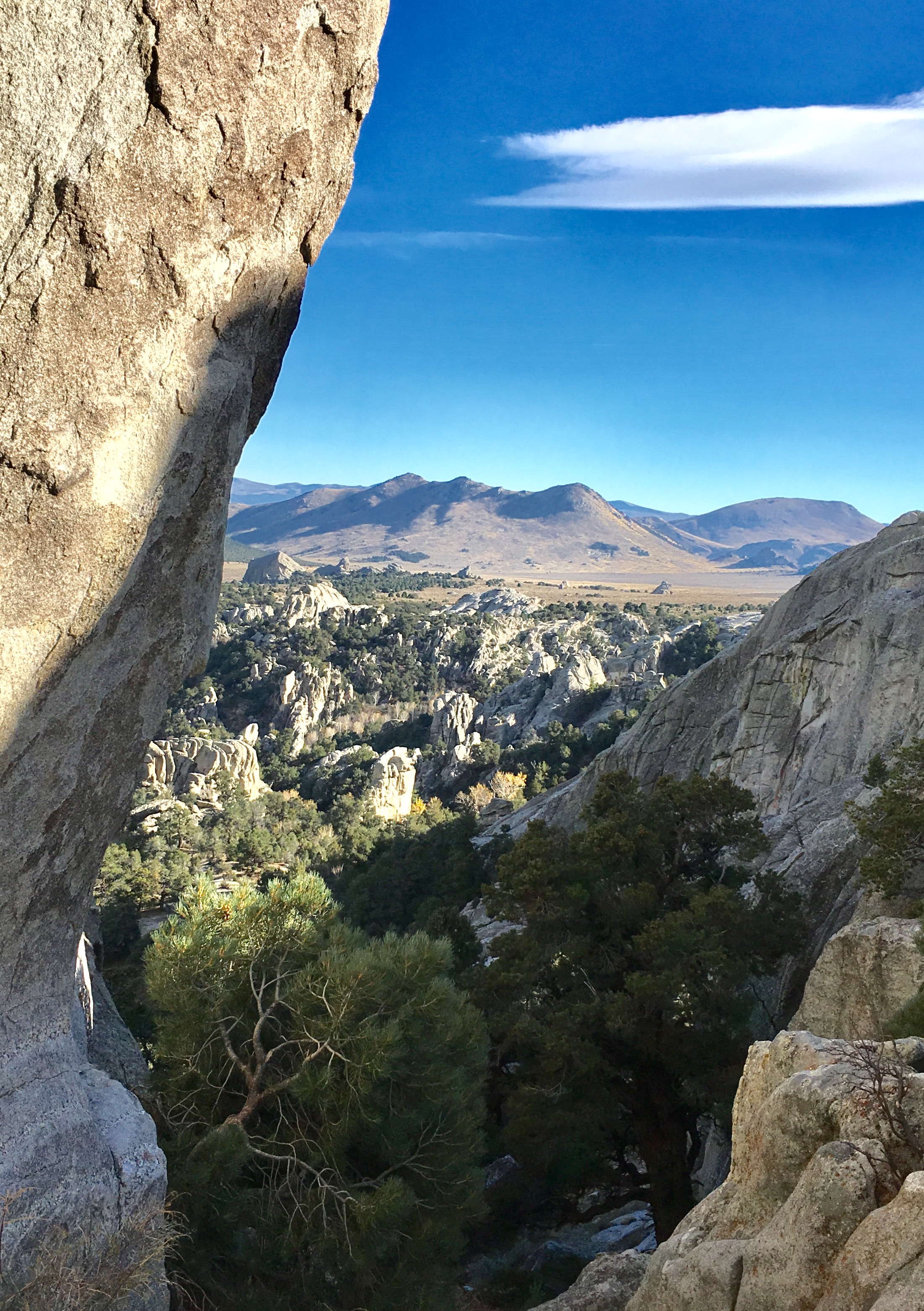
Window into the City of Rocks

Window into the City of Rocks

Two climber chicks in this RV

Two climber chicks in this RV

This trip really was my first time climbing outside and leading this “season”, due to all the health setbacks I experienced this year. It took me a pitch or two to dust off my trad lead cobwebs, and I was also winded on approaches from the hospital stays and elevation change. However, I was soon back in the game.

While climbing routes that you are comfortable with is a lot of fun, it is also quite satisfying to climb routes that do not play to my strengths. For example, the route below requires stemming, which is a challenge for me as exerting outward pressure on the left leg/foot is difficult. So to climb such a route in good style feels pretty good.

Stemming action

Stemming action

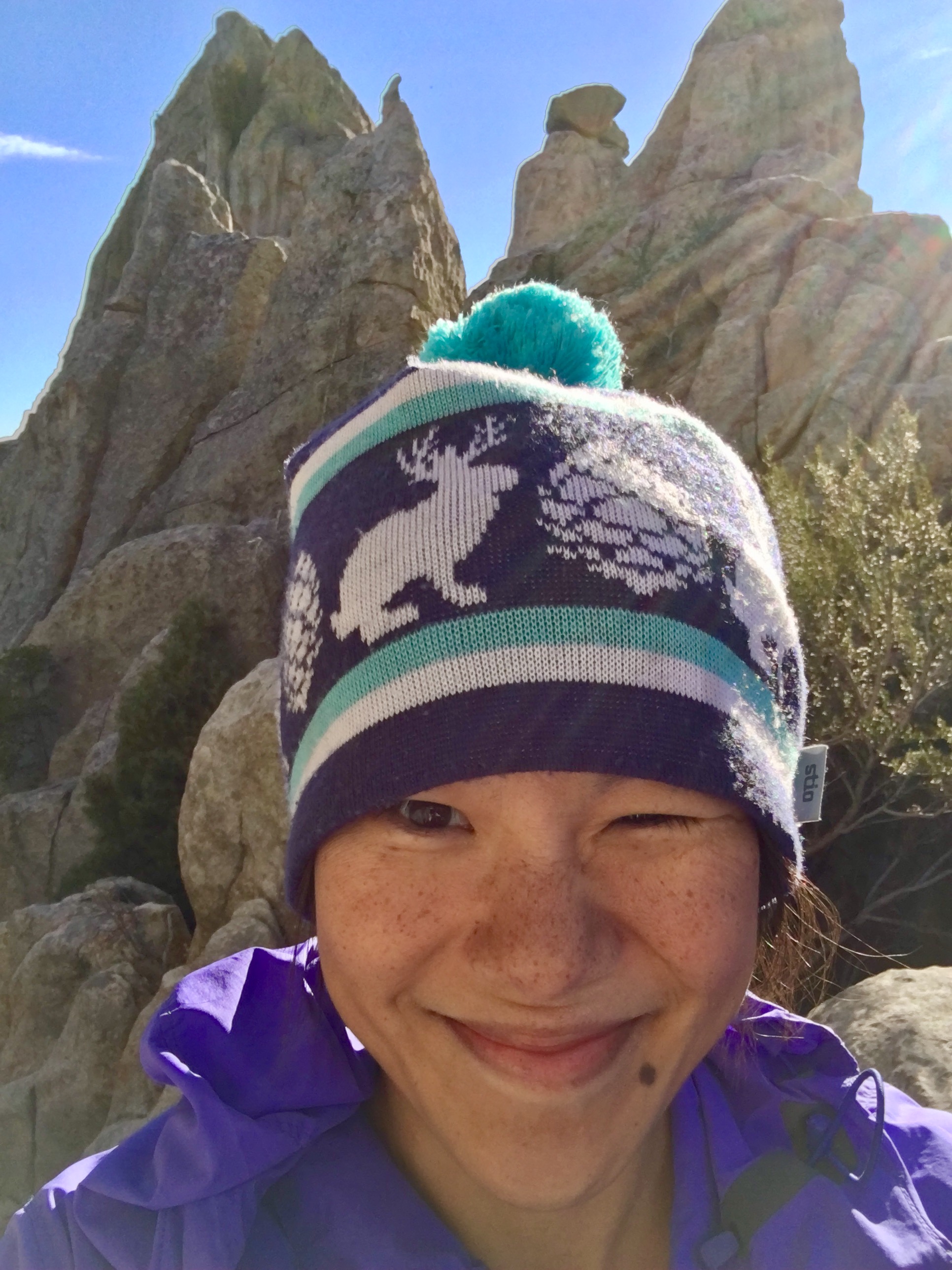
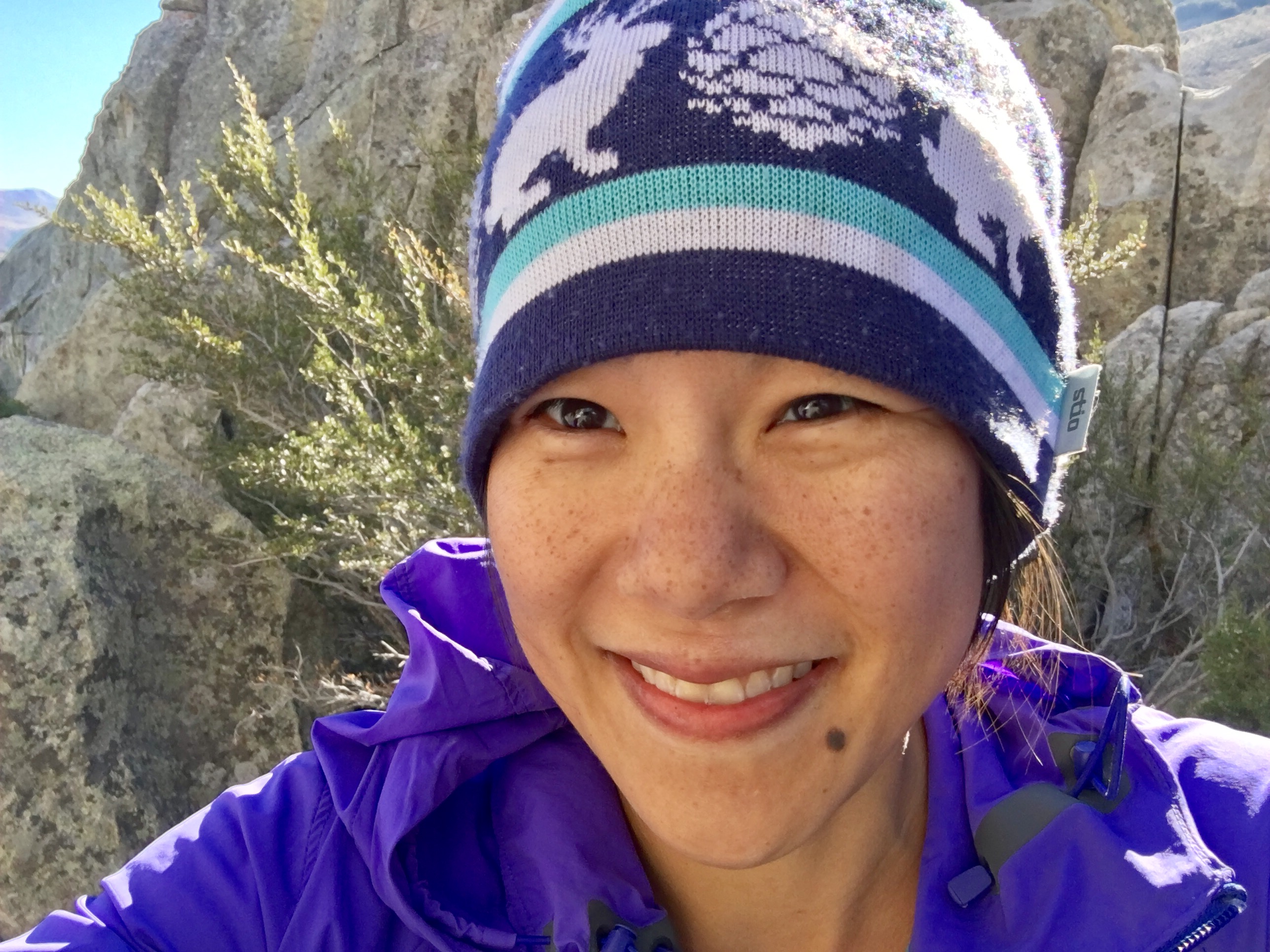
Goofy selfie

Goofy selfie

Cruising up another City of Rocks classic

Cruising up another City of Rocks classic

It has been interesting, roping up with a friend I had not climbed with since a week before my big climbing accident. I wondered how she would feel; sadness for how I/we “used” to climb, or happiness that I was even climbing at all. Fortunately, it seems like my disability has not affected our climbing at all, except for Sarah carrying the heavy rope and more gear in her pack (she is an ox).

sunrise

Impending bad weather makes for cool sunrises

Happy.

Happy

We are taking a rest day in Almo, ID due to rain (and, in my case, torn up finger tips) before spending one last day at the City of Rocks tomorrow. It is always great to check out new climbing areas, and I am already looking forward to seeing where I will go for some winter rock climbing. As usual, there is a tension between rock climbing, ice-climbing, and skiing; we will have to see what Mother Nature brings us this year.

Accident Anniversary losing its significance

While the significance of my accident has not diminished with the passing years, it seems marking the day itself, October 16, becomes less and less important. What is important is acknowledging all the strangers, friends, and family who have supported me the last six years. I am filled with love and gratitude; co-existing with many many other mixed emotions.

It is good to process and re-contextualize life-altering, demarcating days. A friend put it well when she explained why she no longer marked the day her best friend died:

“When I was in 5th grade one of my best friends died. There was before April 8th, and every April 8th afterwards for a long time, until it became less important to mark that day not because I missed her less or that day didn’t wake me up to mortality or how rotten people can be around things like death, but because I remember her and think about mortality and in different ways now and I’m glad that date has shifted for me.”

In my mind, there is still a bit of a “Before Accident” and “After Accident” divide. But this divider, even barrier, has blurred and become to come down over the years. That being said, my plan of climbing that day was thwarted with two Emergency Room visits and a hospital admission (again). Even a nurse recognized me during a procedure I had to undergo, because of the renal failure/septic shock episode from the summer! It really is not good to be memorable to hospital staff in that way! I joked with the nurse that we needed to stop meeting each other in this manner.

The cause for my distress were abdominal complications due to my Spinal Cord Injury.  After an overnight stay of highly uncomfortable proportions, it was fortunate to learn that there was nothing more serious. However, I have to be more vigilant about managing another issue, which is a bit depressing. I was completely drained from this hospital experience, and unsure whether I would have recuperated enough to go on a climbing trip just a few days later. I am certainly not fully recovered but fuck it, I am going anyway!! So I am writing to you on a plane en route to Salt Lake City.

While I had really wanted to go to Indian Creek, my friend injured her finger. Thus, we will likely be climbing in Idaho and around Salt Lake City. The last time I climbed with this friend was in Yosemite, one week before my accident.

I think this trip will recharge me in a much needed way, even if we are not climbing the most difficult routes. Just being outside with good company is enough for me right now.


Some thoughts on paraclimbing competitions

Let me preface all this by saying it is a tremendous honour and privilege to represent the USA in climbing competitions. The point of this post is start a dialogue about this, not express sour-grapes, or whatever the saying is.

As many people know though, my relationship with paraclimbing competitions is frustrating at times. In Paris, it was a lot of the time. I wrote down some thoughts about this right after the competition. What should “paraclimbing” be? Should it be a measure of how climbers with a “disability” (not all paraclimbers do) climb in absolute grades, or a measure of how paraclimbers have been able to overcome and accommodate their physical deficits?

On the one hand I feel very strongly about people not looking down upon paraclimbing as if we are not athletes who train hard. I may not be able to climb 5.14s in my sleep, but I am still a pretty darn good climber by any “normal” person’s standards. Sure, there are some people at the competitions who just to show up and enjoy the experience. There are others who take it a lot more seriously. The venue for the Paris competition was amazing, and the crowds were brilliant. However, I was quite upset at over a number of things related to placing climbers in their categories and route-setting.

Categorizing the climbers

The main principle needs to be to group people as “fairly” as possible, grouping each person by the impact of their deficit on their ability to climb. This could be done by replacing or augmenting the medical check-in with a quick test of abilities, maybe guided by a questionnaire which is completed before the medical check-in. Furthermore, each agreed-upon category needs to stay open; closing out categories (e.g., combining RP-2 and RP-3 (I was placed in RP-3 who had climbers with no discernible physical limitations climbing, when by the official IFSC characterizations, I should have been placed in RP-2) before all climbers have checked in should not be done. Combining categories should be done only as a last resort; at IFSC Paris 2016, RP-2 and RP-3 climbers were put into the same categories, which is no more appropriate than combining B(lind)-1 and B-2. Finally, a reasonable level of deficit needs to be set. The definition of being disabled for paraclimbing competitions is a 5% reduction in ability. What the fuck does that mean? 5% “less” is me after a bad night of sleep. For example, is a 5% deficit in strength a “disability” or just “normal” variation? What about a 5% deficit in motor control? What if person has both deficits? Another example might be a wholly missing limb vs a partly missing limb vs a shortened limb; are these categories defined well? The point is to be fair about how people are grouped.

Objectives of route-setting

For my first qualifying route, a number of competitors (other than myself) could not even get off the ground. That was how ridiculous the setting was. This is not a bouldering competition. A well-set route-climbing competition route will get progressively harder to separate people out, not shut them down at the very beginning. The objective of route-setting in paraclimbing is not to eliminate the “weakest” at the start of the route, but to present greater and greater challenges to weed out people based on the extent to which they have overcome their disability. For example, it is not appropriate to single out people who don’t have the use of the right arm, and then set routes with widely-spaced holds that trend sharply to the right. Should the objective be to measure how well adaptive climbers have adapted: how much skill have they developed, how much strength, how much stamina?

Setting the routes

Setting routes for paraclimbers is not the same as setting routes for fully able-bodied climbers. In particular, setting routes that have difficult sections with a single way to climb them is not appropriate(**). Whereas most able-bodied climbers are pretty much the same, this is not true of paraclimbers who, for example, can be very “asymmetric” (think single-limb lower- or upper-limb amputees, spinal injuries that affect a single side, etc). Para-climbing routes need to have options, especially at the most difficult points. For example, one thing that could be done is to set routes with “mirror images” at crux sections so that climbers can choose a route that runs either left or right based on their asymmetries. Of course, each direction should be equally difficult. I recognize the route-setting is a highly creative craft and that there will always be subjectivity involved, but there are additional measures of “fairness” that need to be taken into account when setting for paraclimbers.

(**) In my case, both qualifying routes involved mandatory use of a high left foot. Usually I can find a workaround, but in these routes, there was absolutely no other way to get beyond a certain point without full use of your left leg. Or both legs for that matter. Which a number of women in the category I was competing in did have.

Paris bits and bobs

We got back to Boston last Friday, and even the morning of our departure, I was terribly down. I find myself torn between wanting to be in the mountains/by the ocean, but also wanting the culture and amenities of a proper city. Boston has a pretty good Western food dining scene, but I would not call it a city. I miss the ethnic diversity of major cities, the different neighbourhoods, a proper public transportation system. I am struggling to map out next steps, because I am not sure what the concrete end goal is. Do I try and pursue skiing and climbing as a full-time endeavor, while trying to make a difference in the world and in the lives of others? To do these things simply for fun is not enough. Or do I choose to have these be hobbies, while trying to find meaning and purpose in a career? How do I achieve either of these given constraints – financial, personal, physical etc.?

In the mean time, I am posting some of my favourite photos from my trip. Paris is just a hop-skip away so I know I can always go back. Yet, right now, it seems so so far away.

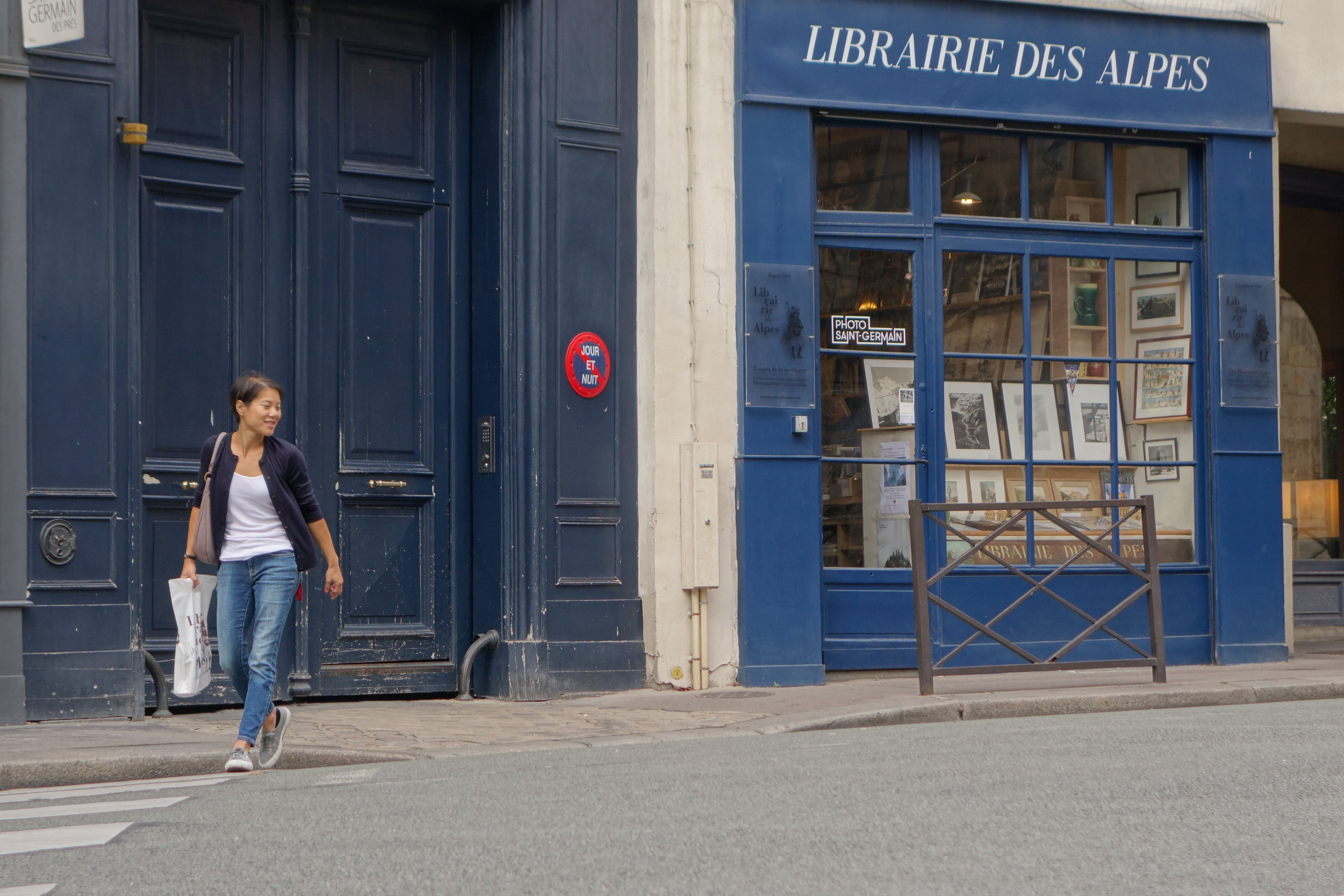
By total chance, I stumbled into a total gem of a shop: the Librairie des Alpes in the 6th arr. along the Seine. I highly recommend this book store if you are in Paris and at all interested in alpine climbing/mountaineering and the history of it. I got talking with the store owner and expressed my interest in old manuals for climbing, skiing, mountaineering.
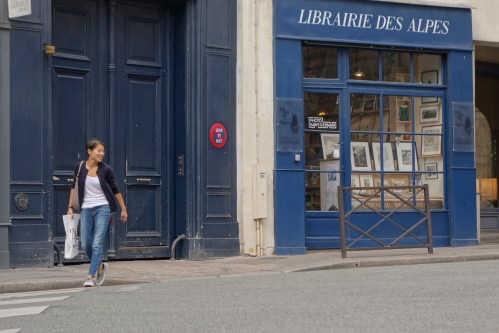
librairie-des-alpes

I am not sure if there are enough shades of blue in the photo. (Photo credit: Scott McKay)

These are not the oldest texts I own, but they are still pretty damn cool. This is the 1934 publication of the Alpinism manual from the French Climbing and Mountaineering Federation. The two volumes together are remarkably comprehensive. The first volume covers the “Science” of alpinism e.g. meteorology, geology, snow science and much more. The second volume covers techniques and skills for alpine travel and climbing. It even had a diagram on how to do a hand-jam. Who said the French don’t climb cracks?

1934 publication of the Alpinism manual from the French Climbing and Mountaineering Federation

1934 publication of the Alpinism manual from the French Climbing and Mountaineering Federation

When I am in Boston, my back pain and leg neuropathy can get quite intolerable from work, driving, and the generally sedentary lifestyle outside of being in a gym/weekends. However, I found my pain levels were much lower when I was in Paris, due to all the walking/standing and not sitting at a desk.  This is a clear job requirement, but it is tricky because I need to move/can’t sit (or stand) for extended periods of time, but I also can’t take on a job that revolves around manual labour.
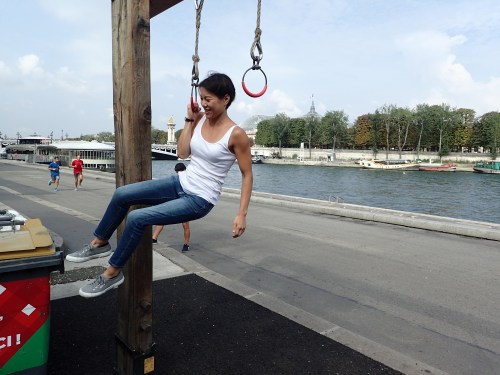
Morning calisthenics along the Seine

Morning calisthenics along the Seine. It is funny, one arm pull-ups are quite easy for me yet there are many other goofy exercises I cannot do. (Photo credit: Scott McKay)

All the walking in Paris meant that I could eat like this every morning. The croissants and baguettes at Blé Sucré are honestly the best I have ever had, and there other pastries are fantastic too (the madeleines are considered some of the best in Paris).
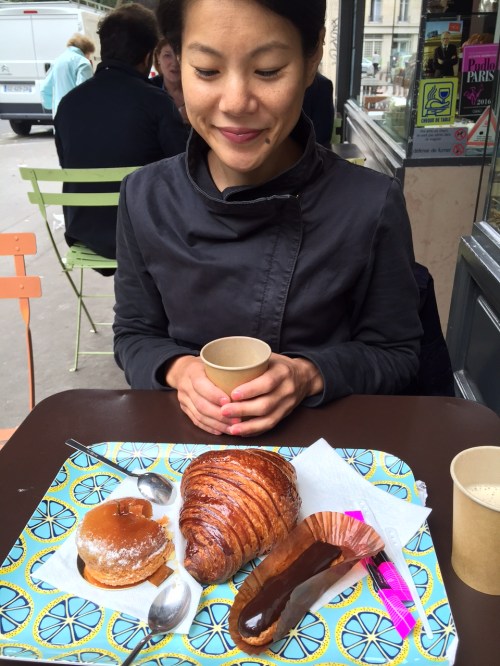
Blè sucre's pastries are unaware of the impending demise.

Blè Sucre’s pastries are unaware of the impending demise. (Photo credit: Scott McKay)


While I never tired of going to this bakery for breakfast every morning, I did tire of the museums and old architecture of Paris. Yes, that sounds a bit awful, but I feel like my tolerance/interest in these things is quite low. For our last day, I did not want to see yet another monument, building, etc. So we went to Belleville. This neighbourhood was a big surprise for me, in that I was not expecting to enjoy it so much. Quite a few things there reminded me of Hong Kong, and not just because there are lots of Asian people there: the slightly hillier residential areas, with lots of stairs, the density of restaurants (lots of Thai, Vietnamese, Chinese, Lebanese restaurants)…

I really enjoyed the Parc des Buttes Chaumont in Belleville because the paths, foliage, people using it reminded me a lot of the parks in Hong Kong.
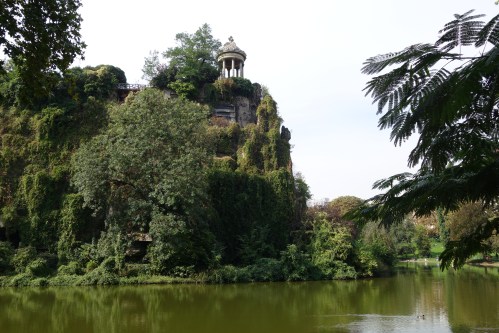
Parc des Buttes Chaumont

Temple de la Sibylle in Parc des Buttes Chaumont, Belleville, Paris. (Photo credit: Scott McKay)

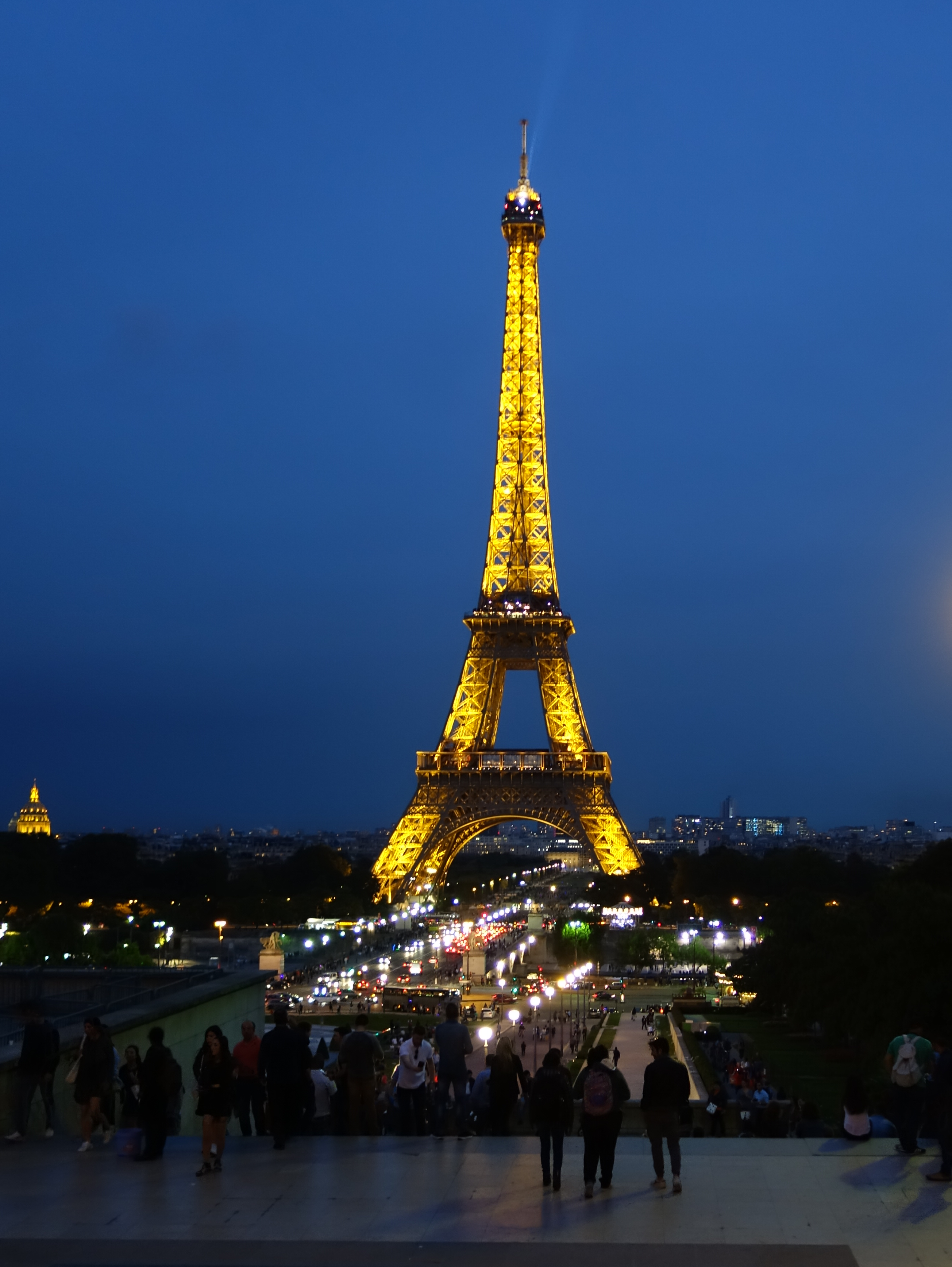
And, of course, we got up close to the Eiffel Tower. My friend Yves lives very close by to the Eiffel Tower, and picked a wonderful spot for dinner with a great view of it.
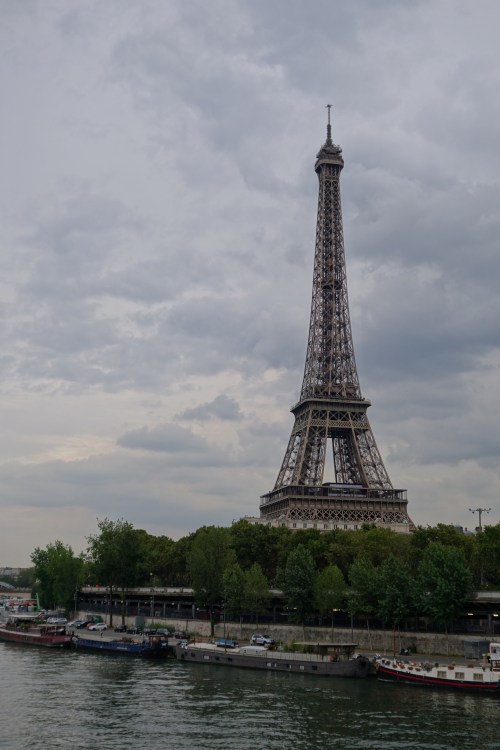
eiffel-tower_portrait

Eiffel tower from the Pont de Bir-Hakeim

View of the Eiffel tower from the restaurant on our last night in Paris.

View of the Eiffel tower from the Café de l’Homme on our last night in Paris. (Photo credit: Scott McKay)

The Eiffel tower later that night.

Same view, different light. (Photo credit: Scott McKay)

As a total aside…we were riding the Paris Metro and opposite from us, an African man dressed in baggy jeans, a flat brimmed hat, was carrying an instrument I had never seen before. He saw my quizzical look and said in English, It is a Kora. He proceeded to pluck a few strings casually. Beautifully. Then launched into a song in an African language. I have no idea what the origins are of that song, but the spontaneous act of playing this instrument and singing while riding a train, making the people around him smile…this man who would not look out of place on a basketball court in an inner-city neighbourhood…brought me to tears.
Sold out Finals

(I will be writing about my own climbing soon.)

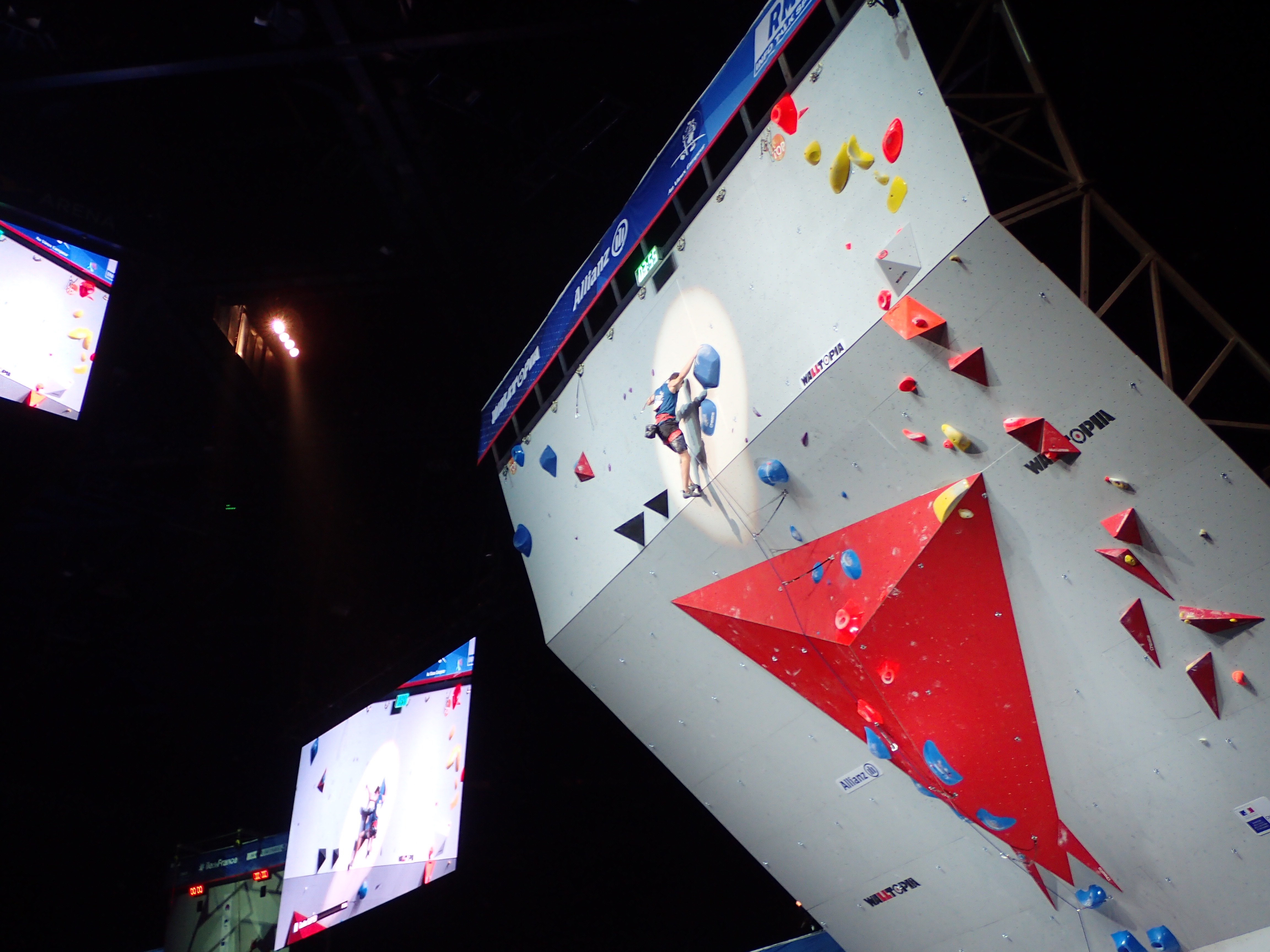
I went to watch the Mens Lead Finals this afternoon. The climbing was at such a high level; but I found the audience to be just as, if not more, amazing. The AccorArena was sold out. There were even people scalping tickets outside the arena. For a climbing competition! That would never happen in the U.S. Climbing, in all its varieties, is a much more recognized and appreciated sport in Europe, as are climbers of all kinds. But I certainly was not expecting so much energy and noise!

Amazing! You would never see even a fraction of this number in the U.S.

Amazing! You would never see even a fraction of this number in the U.S.

A lot can be, and probably has been written about why sport climbing competitions like this do not attract such numbers in the States, and questions asked about why climbing, of all varieties, is less visible/appreciated/attractive in the U.S.  Previously, I had asked a friend how much more do guides in Europe get paid versus guides in America. This led to my friend telling me that in Europe, Guiding as a profession is regarded just as well as any other profession; tailor, doctor, mechanic, white-collar jobs, etc. One reason for this is that for a long time, Europeans had/have to hire a guide to access mountains. Another one might be that climbing and guiding is so much more visible to the public, e.g. on television, non-climbing magazines, more competitions.

Anyway, I was able to watch some very very impressive performances by the finalists.

OLYMPUS DIGITAL CAMERA

This photo shows the entire wall. The Italian in motion.

The finalists are introduced.

The finalists are introduced.

The Japanese climbing doing something like a Figure 4!

The Japanese climbing doing something like a Figure 4!

I really enjoyed watching Gautier Supper from France climb. He moved so elegantly. He eventually finished third.

He climbed to third place so beautifully.

He climbed to third place so beautifully.

Adam Ondra was the last finalist to climb.

Adam Ondra about two-thirds of the way up

Adam Ondra about two-thirds of the way up

The crowd went wild when he stuck a very difficult hold at the top and knew he was going to reach the top.

Adam Ondra nearing the finish hold, which he reaches.

Adam Ondra nearing the finish hold, which he reaches.

So that was a fun way to spend part of an afternoon. It felt weird to be sitting in the athletes section, dressed in jeans and a cardigan with a handbag. In some ways, I felt like the other non-paraclimbing athletes must be judging me. Maybe a few did, but it is likely that is just me projecting onto other people.


Tourist overload mode

We found ourselves unexpectedly in tourist mode yesterday, just because we could piece together a number of things along the way to our final stop, dinner.

A large part of me is just not all that interested in seeing the usual tourist sites. It is not the lines and crowds (those suck too). It is worse; I just do not always grasp the significance of a lot of these sites. This is something that worries me quite a bit because I think, wow Wendy, if visiting these places/sites does not make you happy, what will? The explanation is pretty obvious though: a) I tend to be drawn to natural wonders and b) I have experienced so many beautiful/majestic/awesome places and things that I am somewhat jaded to places/things that many people would consider beautiful/majestic/awesome. And that sucks right? I will say though, there are many non-conventional experiences that I enjoy and value.

Is there a difference between being unimpressed (which I often am) and being unappreciative/not realise how lucky you are (which I am often not, but sometimes do forget)? I think so.

With that being said, we found ourselves unexpectedly in tourist mode yesterday. It just so happened we could piece a number of things between our first stop and our final stop (dinner).

We started off at the Marche aux Puces (so literally, a flea market). I realize I do not have as fine an appreciation of some antiques, furniture etc. , but even with this in mind, I was soon bored. The perimeter was just like an oversized Stanley Market, and the interior did not appear to be a place to find deals. The one exception was a shop owner showing us really cool stone implements, the oldest being 24,500 years old. And these.

A Curta: a small mechanical calculator

A Curta: a small mechanical calculator (Photo credit: Scott McKay)

Makes total sense.

Makes total sense. (Photo credit: Scott McKay)

We found out a lot of the following sites are along the number 1 (yellow) metro line, aka the Tourist line, so why not?

Arc de Triomphe. You can probably make out all the people who are at the top of the structure

Arc de Triomphe. You can probably make out all the people who are at the top of the structure

Sacre Coeur Basilica is rather unsightly. It has a somewhat interesting history.

Sacré-Cœur Basilica, located at the highest point in the city (it's not very high).

Sacré-Cœur Basilica, located at the highest point in the city (it’s not very high). Photo credit: Scott McKay

Today was considerably more relaxed. For once, we did not get a croissant or other pastry from Blé Sucré (baguette, cannele and madeleines don’t count) and had breakfast closer to the March d’Aligre. We went to the market to shop for a light Sunday night and Monday night dinners (we have been frequenting this fromagerie) because we have the lunch tasting menu at Arpege in between! I honestly have no idea how I will fit 12+ courses in me.

Scott had to have his falafel sandwich at L’As du Fallafe, so off we went.


The fallafel shrine

The fallafel shrine (Photo credit: Scott McKay)

Scott’s tolerance for lines is about as bad as mine, so the fact that he would wait in this line says something about the fallafel.

This is the takeout line in front of us. Not pictured is the takeout line behind us and the restaurant seating line. All are very long.

This is the takeout line in front of us. Not pictured is the takeout line behind us and the restaurant seating line. All are very long.

It was good. Very good.

OLYMPUS DIGITAL CAMERA

Behold. The best fallafel sandwich in Paris (to some/most)

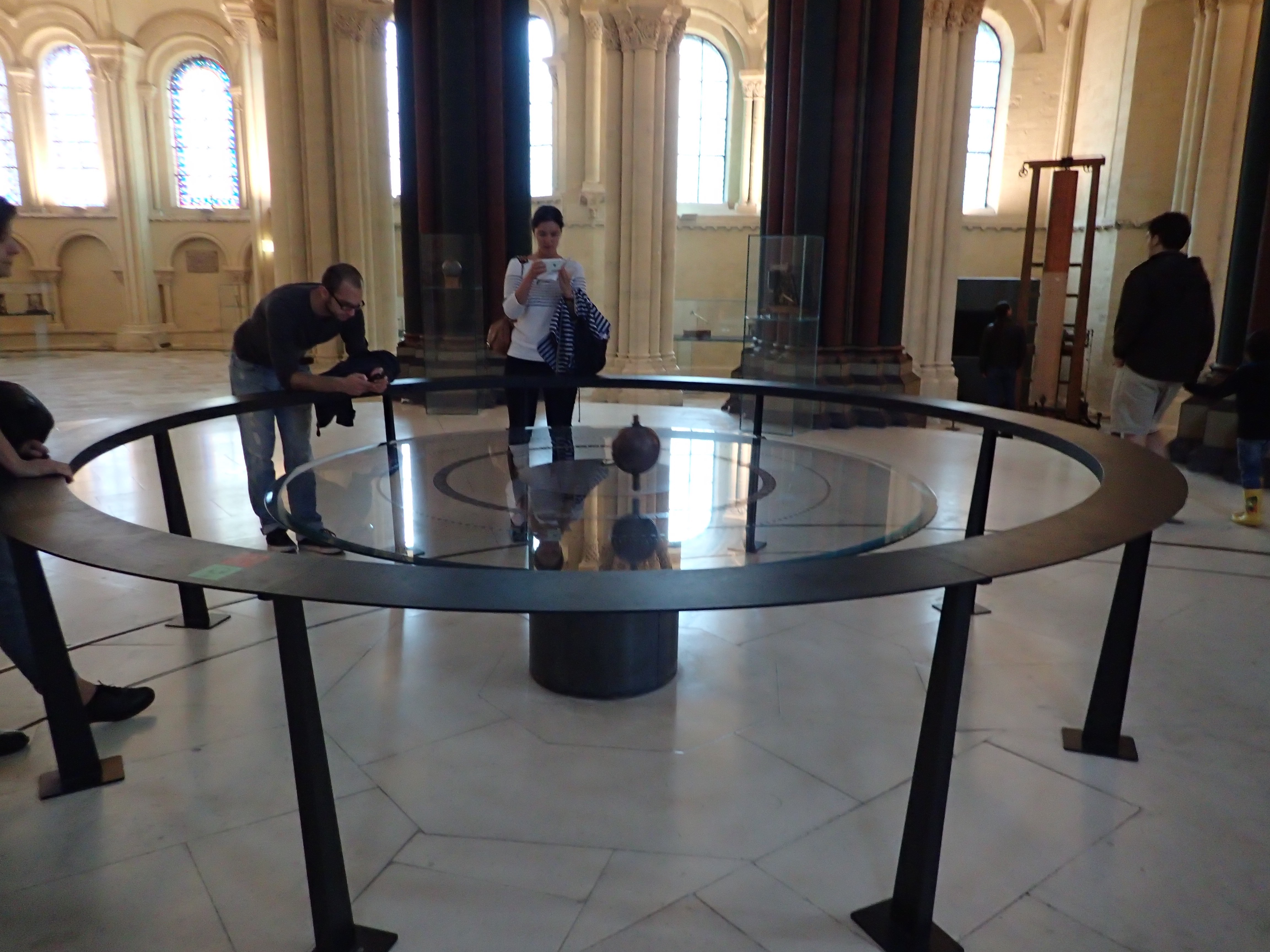
Our next stop at the Musée des Arts et Métiers isn’t really touristy at all, but it felt like it as our feet grew more tired.

It was worth it though. I mean, it’s not every day you get to see this.

Foucalt's ACTUAL pendulum!!

Foucalt’s ACTUAL pendulum!!

Or this.

Pascal's calculator. I mean, that's pretty f'ing cool.

Pascal’s calculator. I mean, that’s pretty f’ing cool.


Another side of Paris

After the disappointment of just how poorly I had done in Qualifiers (future post on this), Scott proposed walking along Canal Saint Martin. With the lovely weather, I thought this was a very good idea. We decided to start our walk out of the metro station Juares (look along orange line 5 on the right bank side), and were immediately struck by all these tents right outside the station and all along the canal. These tents went on a fair distance and looked like fairly long-term residences for what seemed to entirely Middle Eastern people. My first thought was, are these refugees?

There were tents both at canal and street level (Photo: https://c2.staticflickr.com/8/7012/26979091772_3732fd8b95_b.jpg)

There were tents both at canal and street level (Photo: https://c2.staticflickr.com/8/7012/26979091772_3732fd8b95_b.jpg)

It turns out they are. I had no idea such a large encampment could exist so visibly and in a gentrified area such as Canal Saint Martin.

This picture gives you a bit of a clue of the litter around the camps (Photo: wikimedia.org)

This picture gives you a bit of a clue of the litter around the camps (Photo: wikimedia.org)

As I approached each section of tents/men, I quickened my pace, clutched my handbag, to get past them. It made me wonder, why do you feel threatened by these refugees? Part of the answer is I did not know for certain they were refugees. And I think that a long row of men, of any race/status is threatening. Except for frat boys or guys at a American football game.

canal-saint-martin

One of the locks along the canal.

While our walk was not as scenic as we expected, it yielded information on one of the many issues Paris deals with.