Pre-competition

Having one of Paris’ best croissants at Ble Sucre: Check

Purchase produce at Marche d’Aligre for tonight’s dinner: Check

Visit Notre Dame: Check

Obligatory ice-cream stop at Bertillon: Check

Attempt to go to Centre Pompidou to see the Beat exhibit , and find that it is closed on Tuesdays: Check

Go to the AccorArena for medical check: Check

Try and get a decent night’s sleep: Uhhhhh…


Paris: MurMur, Le Marais

It is only Monday but we have had such full and tiring days that it seems like we are further into the trip.

This morning

This morning

Scott sneakily took this picture of me this morning

Scott sneakily took this picture of me this morning (Photo credit: Scott McKay)

To keep things loose, I wanted to stretch out a bit at a climbing gym. My friend Yves very kindly procured a day pass for me to climb with him at Mur Mur, a climbing gym located outside the Peripherique. It took us about an hour to get there via metro and walking. It was interesting to see neighbour hoods outside the Peripherique. Mur Mur’s seems heavily North African. The gym itself is fantastic. It has really interesting routes on all sorts of topography. The variety and features of the walls was particularly impressive. I also like that you have to lead to put a rope up (and Mur Mur has ropes you can use) rather than just have all these top-ropes hanging.

Part of the Mur Mur lead area

Part of the Mur Mur lead area (Photo credit: Scott McKay)

Mid-afternoon sustenance:

Raspberry Millefeuil with Yuzu cream filling. This is how Millefeuil should be. And a chocolate eclair.

Raspberry Millefeuil with Yuzu cream filling. This is how Millefeuil should be. And a chocolate eclair.

lenotre

Lenôtre

After a break at home to let outside temperatures cool down a bit, we headed to the Marais. The architecture is nice but, frankly, the pricier shops/chains were pretty boring.

We had dinner at Cafe des Musees in the Marais, mostly because they are open on Mondays (most French establishments are not), and it got good reviews online. We were, yet again, surprised by what amazing food could come out of a bistro kitchen.

My appetizer: "Notre spécialité : Champignons de Paris farcis aux escargots." The escargot stuffed mushrooms are covered in simple clarified butter, garlic, parsley, some kind of spinachy/herby puree.

My appetizer: “Notre spécialité : Champignons de Paris farcis aux escargots.” The escargot stuffed mushrooms are covered in simple clarified butter, garlic, parsley, some kind of spinachy/herby puree.

Paris, arrival!

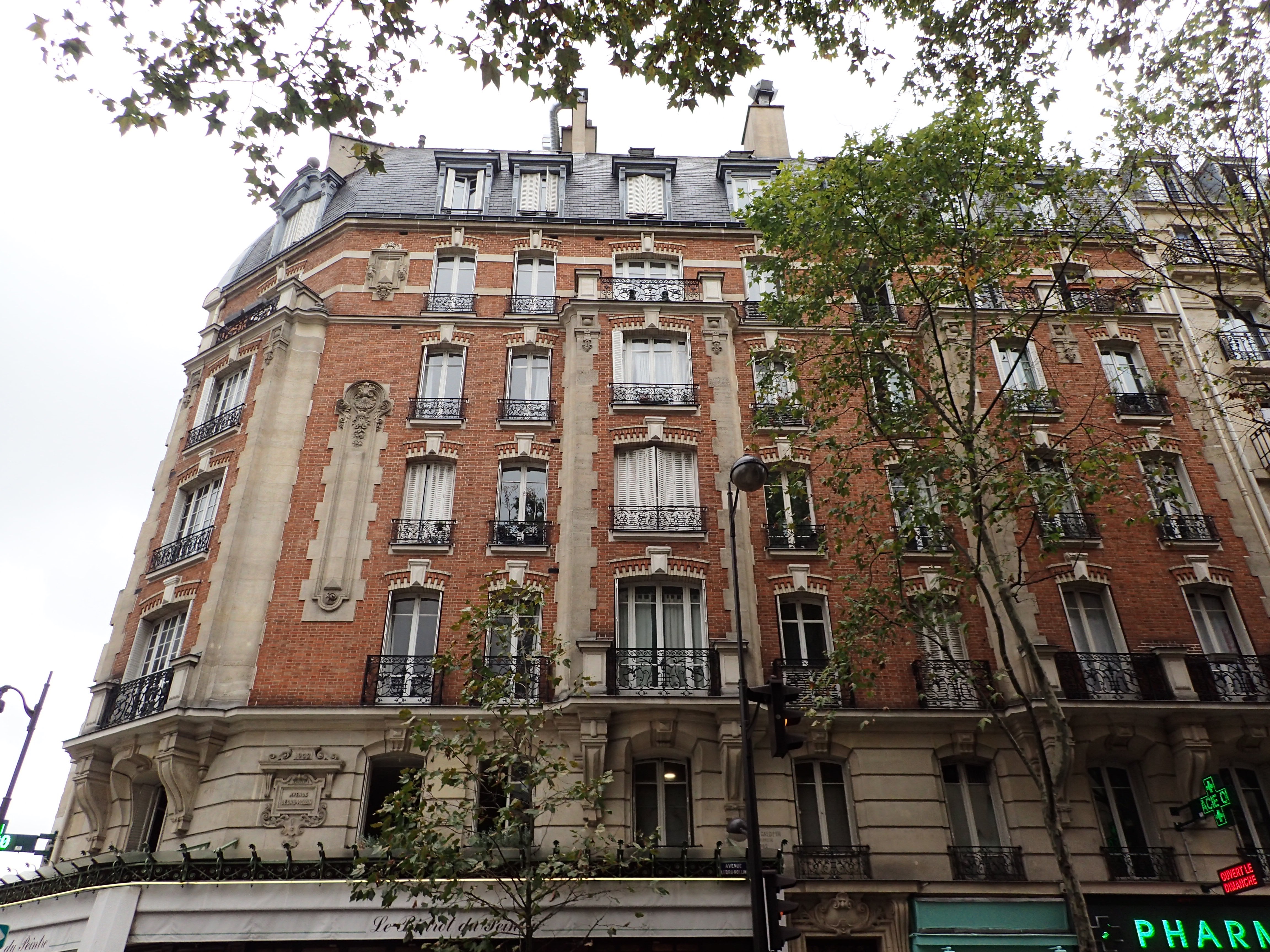
We arrived! Our journey from Boston to CDG was uneventful, and the taxi ride from the airport to our apartment was perhaps the fastest I have experienced (it was a Sunday morning I guess). It’s a bit hard to characterize exactly what neighbourhood we are in. We are in the 12th arr. near Bastille, a short walk to marche d’Aligre, right near the Ledru-Rollin metro. Maaaaybe the edge of Canal St. Martin? Feels more like Bastille to me. I already love the area. It is full of real people.

Our apartment on Avenue Ledru Rollin

Our apartment on Avenue Ledru Rollin

OLYMPUS DIGITAL CAMERA

We are on the 4th floor (U.S. 5th floor)

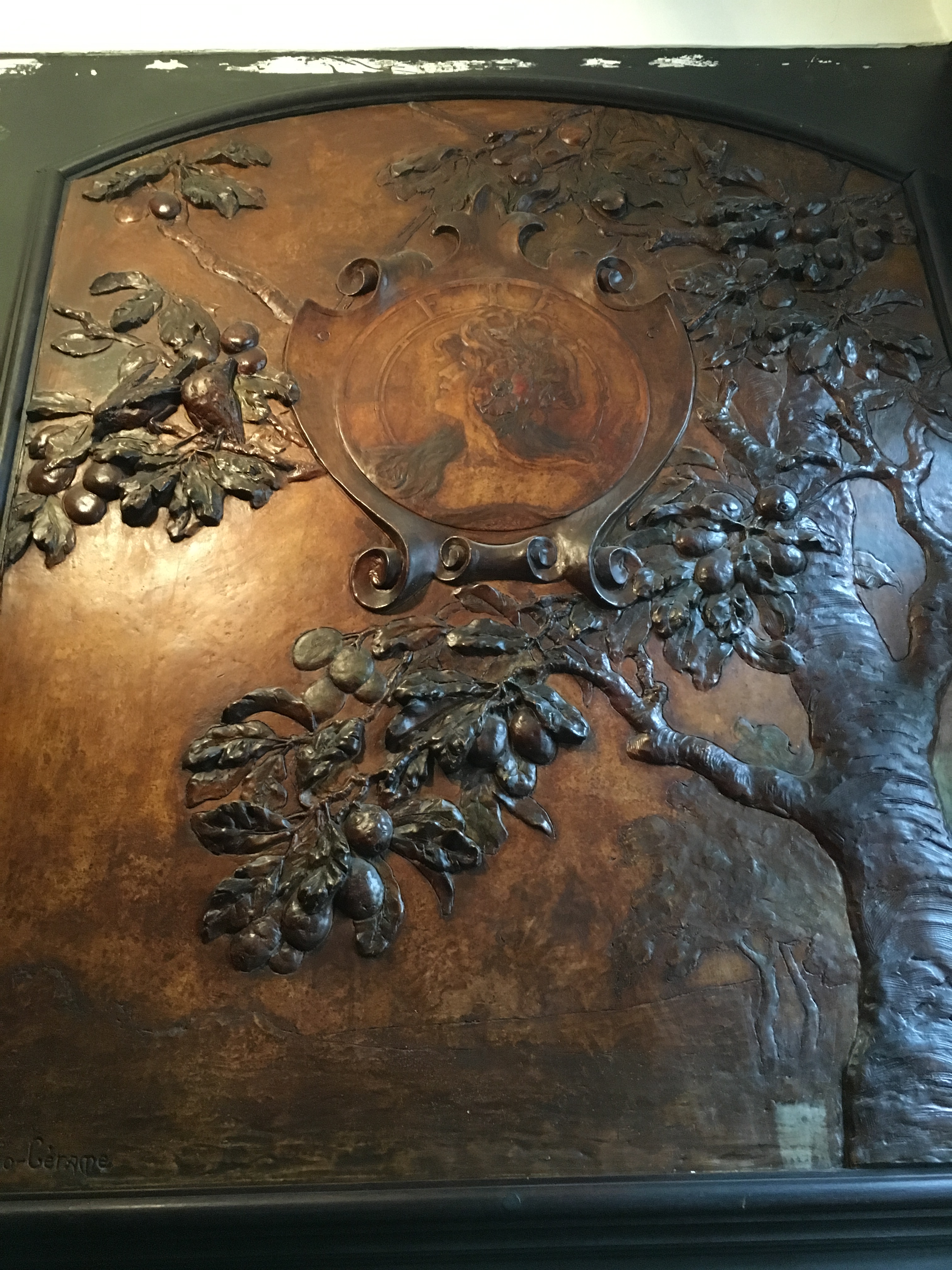
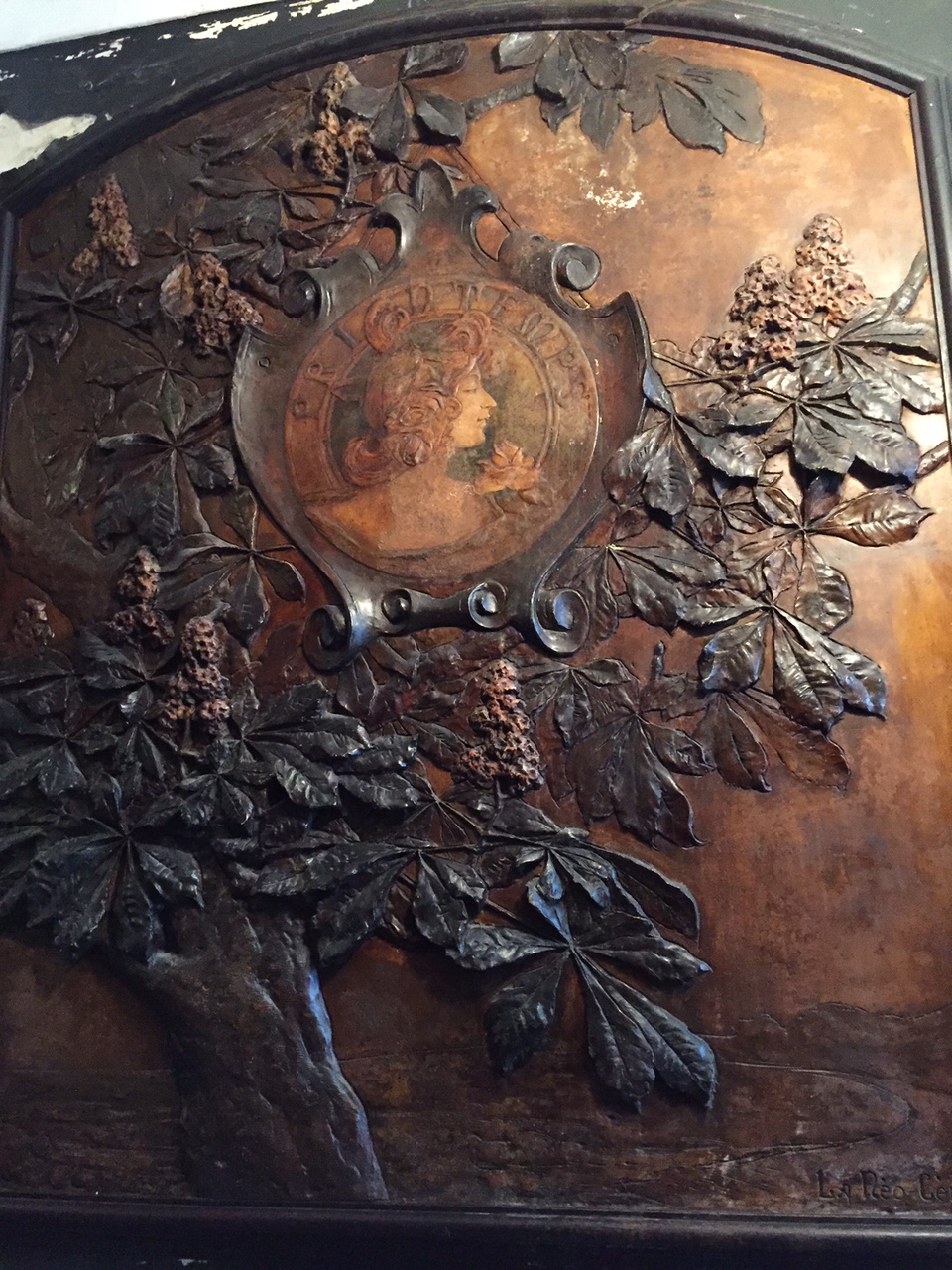
The bas reliefs in the entrance way of our apartment building are really beautiful.

ete_summer

his is ete (summer).

hiver_winter

Hiver (Winter)

printemps_spring

Printemps (Spring)

Automn (Autumn)

Automn (Autumn)

To my pleasant surprise, the apartment has a lift. Not having to trudge up five flights of stairs (the ceilings of each floor are very high too) will save me a lot of energy. The lift is very small and without ventilation. I sure as hell would not like to be stuck in it.

The lift is very small one and without any ventilation. Myself and those two bags are the maximum it can hold. Just Scott and me is pushing it too.

Myself and those two bags are the maximum it can hold. Just Scott and myself is pushing it too. (Photo credit: Scott McKay)

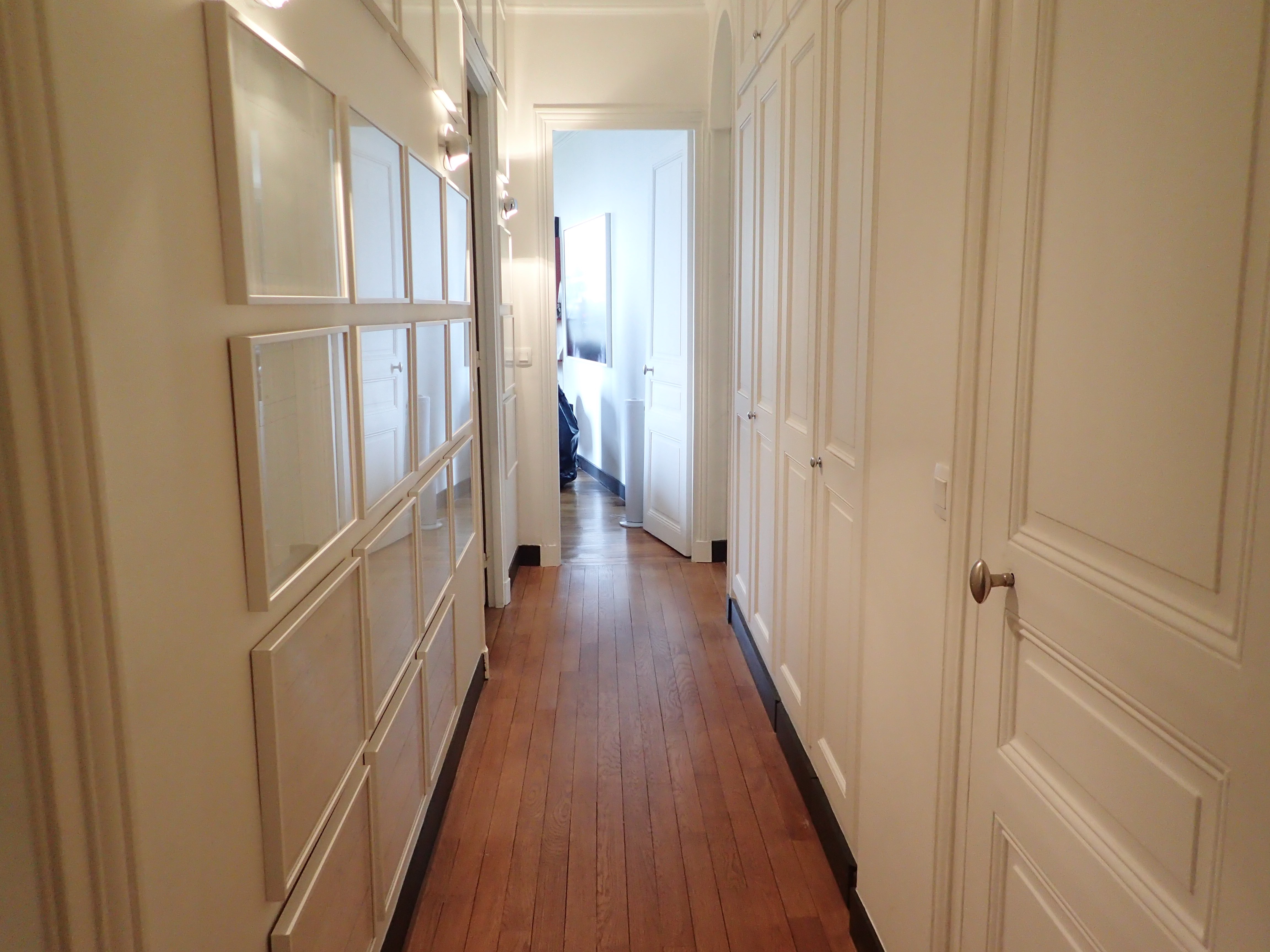
The apartment was larger than expected. It is so great to have a welcoming and comfortable place to have as home base for the next fortnight.

Home for the next 2 weeks!

Home for the next 2 weeks!

View down from our apartment down to the street. It is very important to have a cafe at every possible corner.

View down from our apartment down to the street. It is very important to have a cafe at every possible corner.

Keeping in line with the building's shape

Keeping in line with the building’s shape

OLYMPUS DIGITAL CAMERA

Our breakfast balcony

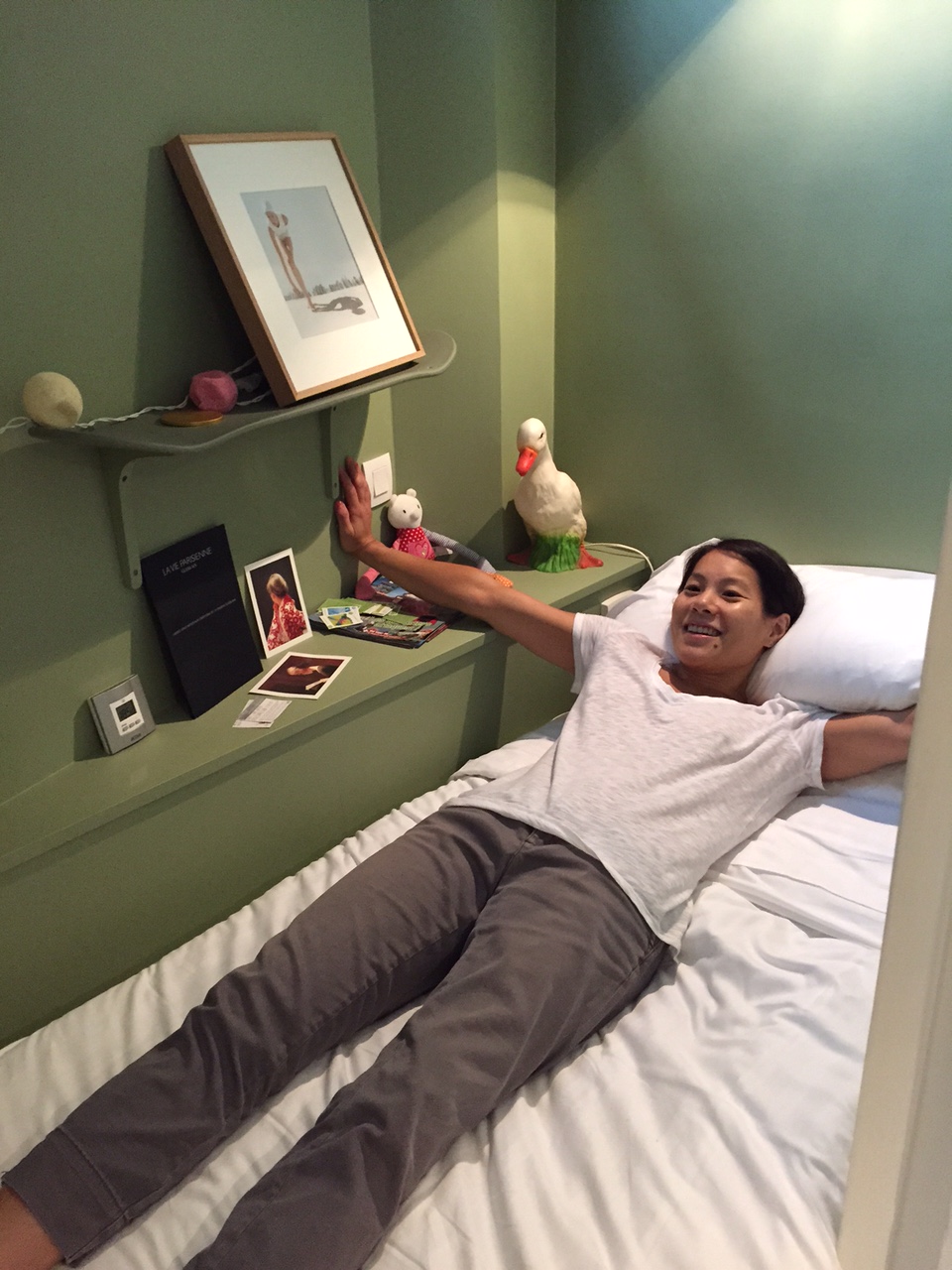
This is a teeny-tiny "bedroom" in the apartment. Probably where you send your child into banishment. Yes, even being 5'1" with a negative ape index, my arm-span is wider than the "room"

This is a teeny-tiny “bedroom” in the apartment. Probably where you send your child into banishment. Yes, even being 5’1″ with a negative ape index, my arm-span is wider than the “room” (Photo credit: Scott McKay)

We managed to get to the marche d’Aligre before it closed early on a Sunday. The market is just a 5 to 10 minute walk from us, meaning we have access to ridiculously good boulangeries, pâtisseries, fromageries, produce and vegetable stands, fish, and meat. It is, conveniently, somewhat on the way to the Accor Arena where the climbing competition will be held.

After a much needed break in the apartment, we headed to the place de la Bastille. It looks like a pretty happening neighborhood which we will explore more later.

place-de-la-bastille

Colonne de Juillet, place de la Bastille

We took another slight detour to walk through the place des Voges.

place-des-vosges

place des Voges

The topiary in the place des Voges is pretty cool

The topiary in the place des Voges is pretty cool

One wonderful thing in Paris is the unexpected courtyards hidden behind closed doors. At first I thought the facade of this gallery was some kind of industrial looking store-front, but upon walking in, we discovered this cool space.

me_gallery-space

A totally unexpected art gallery in an industrial courtyard. Here I am looking quite disheveled and tired. (Photo credit: Scott McKay)

All the walking took a toll on my back and left leg, so I was very happy to eat at the well-regarded bistro our apartment sits above. The bistro surprised us with their incredibly interesting, well-made and well-presented food.

A lovely close to not even a first full day.

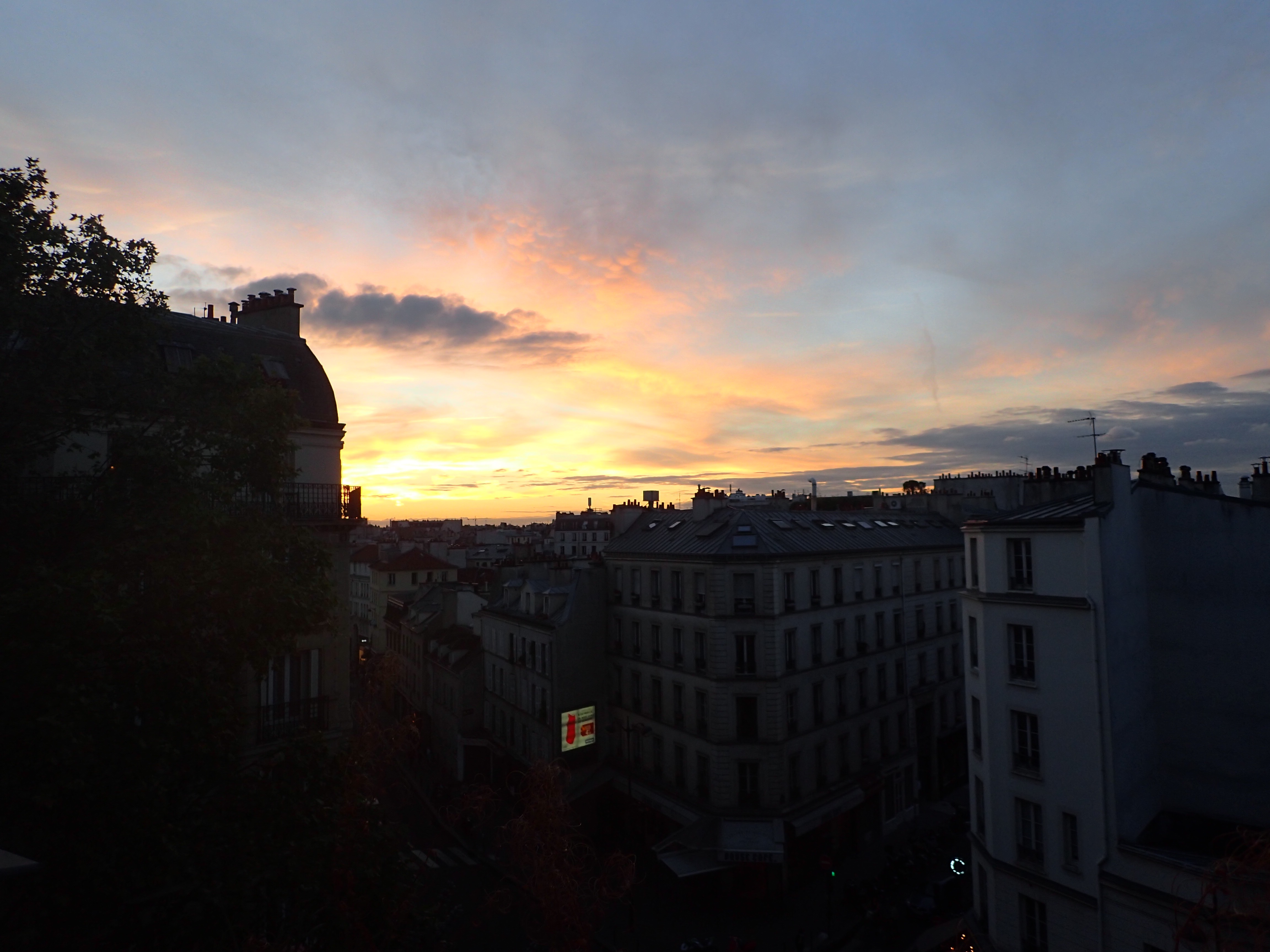
Sunset from our apartment. Notice the cool mammatus clouds, which I rarely see (at least in the U.S.)

Sunset from our apartment. Notice the cool mammatus clouds, which I rarely see (at least in the U.S.)

It’s getting real…

My USA Climbing kit arrived today. It feels a bit strange…one of the reasons why I am drawn/suited to climbing is that I thrive on being high up on a rock and alone for the climb. Now, I am only just starting to feel like I am going to be competing as part of a team. As usual, I am nervous about the competition and my ability to on-sight a route well. I may not be climbing as well as I did this time last year, but I am reminded that I came back from nearly dying to being close to full-strength.

I guess it is official.

I guess it is official.

A description of my sepsis episode

My partner sent a Washington Post article to me (copied below since I do not have a paid subscription), titled “Sepsis is a medical emergency, CDC says. It can be stopped if caught in time.” It is as if the article’s author was watching a video of me. Quite sobering to think that I fell in the 40 to 70 percent mortality range.

Sepsis is a medical emergency, CDC says. It can be stopped if caught in time.

By Arlene Karidis August 23 at 2:43 PM
The Centers for Disease Control and Prevention has declared sepsis a medical emergency, reporting Tuesday that about 72 percent of patients with this fast-moving and deadly illness have recently been seen by doctors and nurses, representing missed opportunities to catch it early or prevent it.The most common illnesses leading to sepsis include pneumonia and infections of the urinary tract, skin and gut, the CDC said in its report. There is no specific test for sepsis and symptoms can vary, which means it is often missed. But the report outlined several ways medical personnel could act, including vaccinating against pneumonia, preventing infections by washing hands and increasing general awareness of sepsis.“When sepsis occurs, it should be treated as a medical emergency,” CDC Director Tom Frieden said in a statement.

[The bacteria-fighting super element making a comeback in hospitals: Copper.]

While the deaths this year of actress Patty Duke and boxing legend Muhammad Ali (and Muppets creator Jim Henson in 1990) have brought attention to sepsis, fewer than half of Americans know what the condition is, according to Thomas Heymann, executive director of the Sepsis Alliance.

“There is a lot of work to do to change that,” he said, and noting that, despite common belief, sepsis is more often contracted in community settings than in hospitals. Tuesday’s CDC report said sepsis began outside of the hospital for 80 percent of patients.

Megan Jones is an example of how quickly sepsis can develop. She went in for knee surgery after a sports injury one day in 2004 and was home eating pizza a few hours later. She tossed away her crutches the next day; then a 20-year-old living near Annapolis, she was feeling pretty good.

But a week later she was back in the operating room: Her knee had swollen to about triple its normal size; it throbbed intensely, and she had spiked a high fever. “As I was drifting off from the anesthesia,” Jones recalled, “I heard my surgeon say, ‘If we don’t move now, she is going to die’ ” as the doctors began working to clean out the infection she had contracted, probably from the first surgery.

In addition to the severe swelling, pain and fever that Jones experienced, classic symptoms include a body temperature that is too low, an elevated heart rate, a high respiratory rate and white blood cell counts that are too high or low. Sepsis can ravage tissue; it causes organ dysfunction, and it kills: According to the CDC, more than 258,000 Americans die of the condition annually, more than the number of deaths from heart attack.

Sepsis deaths are difficult to track because there is no test for it and no standard definition. As a result, death certificates may not offer a reliable count. But some figures suggest death rates are climbing. In-hospital deaths rose from 128,766 in 2009 to 159,690 in 2013, the Agency for Healthcare Research and Quality reported. Mortality is probably even higher than that, according to AHRQ, because its figures account only for primary and not secondary sepsis diagnoses.

Sepsis is most common among older people, the very young and those with compromised immune systems, particularly if they have chronic diseases such as AIDS, have had surgery or take immunosuppressant drugs such as steroids or chemotherapy. Along with antibiotic resistance and invasive surgeries, a rise in the use of those drugs is believed to be responsible for the higher sepsis numbers.

Jones’s second surgery was the start of a rocky ride to rid her body of the aggressive microorganisms. She has since had numerous others to prevent or control re-emerging sepsis, to rebuild part of her leg damaged by spreading infection and finally to amputate the limb above the knee.

Sepsis is so difficult to control that even though Jones went to her doctor quickly and he diagnosed her condition by the severity and rapid onset of her symptoms, the infection wasn’t eliminated.

One of the biggest hurdles in treating sepsis can be identifying it, and quickly, because the condition can rapidly advance to septic shock, where blood pressure drops so low that blood does not reach vital organs.

Aside from specialists in critical and intensive care, it is not uncommon for doctors to miss sepsis, according to Steven Simpson, a professor of pulmonary and critical care medicine at the University of Kansas Medical Center.

Even those well versed in sepsis debate how best to diagnose it.

“It gets tricky,” Simpson said, “because some symptoms result from multiple conditions. Also, not everyone has the same responses, often because something else may be going on to mask symptoms, such as the effects of certain medications. But we know you can improve mortality with the right actions.”

His hospital, he said, made an astounding reduction in its sepsis mortality rate, from 49.1 percent in 2004 to 7 percent in 2015. The turnaround, Simpson said, came about not because of medical breakthroughs but from persistent efforts to catch it early and treat it quickly and aggressively, with antibiotics a mainstay of treatment.

Attention to the condition has been encouraged by a Medicare rating system that includes sepsis outcomes in hospitals. Yet many still fall behind, Simpson said.

In 2011, sepsis was the No. 2 reason for readmissions, following congestive heart failure. Forty percent of those sepsis readmits could have been prevented with timely and appropriate care, according to a study in the journal BMJ in 2015.

When sepsis is caught early, prognosis is very good, but mortality climbs to 25 to 30 percent for severe sepsis and 40 to 70 percent if septic shock occurs. “Early” can mean within a matter of hours. One study found that once a person goes into septic shock, chances for survival decrease 7.6 percent for every hour that it goes untreated.

Physicians trained to look for sepsis typically see warning signs in fever, elevated heart rate, elevated respiration and low blood pressure, said Henry Masur, chief of critical care medicine at the National Institutes of Health Clinical Center in Bethesda.

“We use these vital signs and supplement with a history and preliminary lab work [such as white blood cell count] to determine whether to admit and whether to go straight to the intensive care unit or a general medical floor,” he said.

If he suspects sepsis, he will first address low blood pressure by administering fluids, ideally increasing pressure so blood will circulate to organs.

If the fluids don’t work, he begins IV drugs to constrict blood vessels and raise blood pressure. He starts patients on broad-spectrum antibiotics that are likely to attack multiple organisms while he awaits culture results to reveal the actual offender. Then he narrows the drug arsenal to those most likely to target the problem. If he can identify the original source of infection, he drains that spot.

“So basically, outcome depends on fluids, blood pressure, antibiotics and source control. But it also depends on what organs are affected and underlying health status. Some people turn around in a few hours; some in days, weeks or months. Some will, unfortunately, die,” Masur said.

Knowing the symptoms

A rapid pulse, fast breathing, and swelling and red tissue should put people on guard. The most troubling symptoms are a combination of intense pain and mental confusion that worsens within a few hours, Simpson said. “If you have these symptoms, ask the doctor in these words: ‘Is this likely sepsis?’ ”

Practitioners also urge that people of all ages get vaccinated for the flu, that those older than 65 get vaccinated for pneumonia and that teenagers get vaccinated for meningococcal meningitis. These are among the infections that can lead to sepsis.

For Megan Jones, “having one leg and the ongoing risk for serious infection changes how you live,” she says. “Everything has to be handicap-accessible; you need antibiotics for when you travel, just in case; I have all my doctors’ home and cell numbers.”

After a fever triggered seizures last August, she gets post-sepsis headaches. Still, she calls life “stable and normal” overall.

“I am doing my graphic design and writing. I get around well with crutches or a wheelchair, and I drive. I realize waking up is a good day when you know you came close to not being able to do that again.”

World Championship bound

Well, I can parallel park (both sides) like a champ again, so I must be fully recovered!

The World Championships in Paris are just over three weeks away. Since the last World Championships, the various categories have changed, mainly to discretize formerly broad groups into smaller groupings that better represent different ability levels. This applied to my category, which is basically the “you don’t fall into any of the other categories, so we will just plop you here.” This meant that my category was the largest and most competitive in the competition (men and women). This year, my category was broken down to better separate climbers of very different abilities. Some competitors do not have any apparent impediments. Others have minor ones, such as having one leg slightly shorter than the other, but with full muscle function. I was probably the most “disabled” and would have fallen into the “less able” category this year. However, because the minimum number of participants was not met, I will be competing with the big group. The competition this year looks even fiercer and larger. All the women stand a good 5 to 10 inches taller than me!

Short (5’1″), negative ape-index, gimpy. I picked the perfect sport!

Tickets have been purchased, accommodation has been arranged, the list of food destinations is long.


Progress

I had been extremely worried and upset about possible permanent cognitive damage that may have resulted from the sepsis (getting very upset about a lot of things was probably one of the effects too). As recently as 1 to 2 weeks ago, I just felt so dumb. I knew I had come a long ways from being easily distracted and aphasic, but I was still having difficulty absorbing information and just generally not my usual sharp self. I was getting constant headaches from tensing my head muscles hard all the time, trying to comprehend concepts that are not usually difficult to me. I had difficulty writing up thoughtful and clear analyses for work; my memory was still impaired. There were a few times where I would be staring at my computer screens and start crying. It was hard to feel like I could not tell anyone at work about all this. I felt like tasks were taking longer than they should, and this affects the project budget. “Ummm, could I bill part of my time to Temp Project – Stupid from Sepsis?” Fortunately, my work space is quite private, so I could wipe away the tears without anyone noticing.

My handwriting had morphed from its usual small, fairly neat font to highly slanted, large, messy handwriting, which scared the shit out of me. If I concentrated really hard and wrote slowly, I could write close to my normal handwriting, but it was not natural. It made me think of the stories you hear of stroke victims speaking a foreign language post-stroke. My parallel parking skills had totally gone to shit and I was now either bumping the curb in parking spaces as big as a boat, or having to pole vault from the car to the side-walk because I had parked so far away (and totally not parallel) with the curb. I was petrified that dendrites had just been decimated, that I would not be able to get back to my “normal” self.

I decided I needed to make a concerted effort in neural regeneration. For example, by concentrating on writing how I used to until it became natural again, and taking as many opportunities as I could to parallel park. It seems like the effort, and just time perhaps, has paid off and I think I am back to my whip-smart self again :p I have to say though, the idea of losing even bits of ones cognitive abilities and personality was one of the most upsetting things I have felt in recent memory (ha, but since my memory isn’t as good, this must cover a very short time-period. Yes, I can still make un-amusing quips :))

I have certainly noticed progress physically, as has my partner. I think a certain activation energy needed to be overcome before I could put on muscle as easily as I usually do again. I am pushing/pulling considerably heavier weights than even just a fortnight ago. My shoulders are no longer bony; my biceps are approaching their usual Popeye size; my back muscles are bigger. I have basically added on a significant amount of muscle-mass. Obviously, a lot of hard work has gone and continues to go towards this. But it is slightly gratifying (and at the very least reassuring) to see the effort paying off. The question is, am I progressing quickly enough to put on a good show of things at the World Championships in September? August is going to be very condensed, training-wise, which is far from ideal. I will not be able to do proper periodization, and will have to smush a lot of things e.g. strength-power-endurance all together.

A very very small part of me does think it would have been nice for me to have defended my US National Paraclimbing Champion title for the third year running. However, I knew that I would not be well prepared for this competition, but did stand a good shot of being decently prepared for September’s competition. More importantly though, I knew that I would benefit much more from continuing with my training versus having to take time to travel to and take part in this past weekend’s competition. I am fortunate to have received USA Climbing’s blessing for me to be on the US Team in September despite not competing yesterday, based on my very strong track-record and this freak health thing that appeared out of nowhere.

I am going to continue doing the best I can to prepare for Paris, while also reminding myself to enjoy the experience no matter how well (by my standards) I climb. My partner noted this morning that I “clearly did not have the killer instinct,” in response to me saying something like how I was not interested in competing if my competition was not strong. It was hard not to feel a bit dismayed about this, as if this was a failing of mine. His point was, if I did have this highly competitive instinct, I would show no dismay whatsoever in taking advantage of a weak field, or a rival’s off-day etc. But I have to acknowledge that Scott’s assessment is indeed true. I do not possess this trait, and never have. It is why I know free-skiing is what nourishes me versus hurtling down ice, around gates, in spandex so that I could beat other people. It has always been about pushing myself as far as I can, and being disappointed when injuries/circumstances/whatever prevented that. Sure, one can think about pushing oneself locally (i.e. against a current situation) versus globally. But for some reason, I have a difficult time with the former. Thus it will, and does, take a very conscious effort to remind myself that I went from almost dying in June, to competing at a World Championship.

I think it is essential to have purpose (which is a major reasons why I have been struggling with life the last while). But I am only just learning that maybe muddling ahead, putting one foot in front of the other slowly and unassured, is not incompatible with intention and objective. This seems to describe the lives of the overwhelming majority of Earth’s population, who by just “continuing on” show tremendous courage.

The road back!

I had not been in the mood to write about how I have been feeling in the weeks after my hospital discharge. I was bummed about my physical state, but in the last 2 weeks, I have gotten back into doing strength and climbing exercises. Still haven’t spent much time roped in, but that is due to the lack of partners. After my first sessions for strength, climbing, I was pessimistic about regaining strength and muscle mass rapidly. Fingers, contact strength, still there. But I had lost all my deltoid, bicep, lat muscles, which meant I could not lock off, do pull-ups etc. I was also dejected about losing muscle mass in both my legs, including my left one which I have worked so hard on to strengthen.

Anyway, I am feeling much more positive about things. I started hangboarding, bouldering, lifting and see the progress I have made in just 2 weeks. I think it is still possible for me to compete at the IFSC World Championships in Paris this Fall. I probably will not climb at my absolute best; I just want to climb at a level that  acknowledges all the time and hard work I would have put in to doing this.

But life is not all about climbing, right? Yet, one reason why I was feeling so down was because I was not exerting myself. I need whatever chemicals are released when I am active. Unfortunately, the only “sport” I play now is, well, climbing (and skiing and the time spent maximizing strength for those). I feel like I have fallen back to where I was before my accident. I felt unsure, anxious about the future, feeling like I was not really leading a meaningful and purposeful life. I am angry at myself for letting things fall back to that, and now I must find a way to correct this.

Climbing is a very personal thing, but the main thing I remember from these trips/climbs are my partners. It’s the people. And I have found it difficult to find that sense of community here. Is it partly my fault for not, like, advertising myself as a gimp who can climb pretty well? Or is it a function of where I live, where a lot of people just do not get it. I am not criticizing them at all! It’s just that our interests and personalities are so divergent.

We can muddle ahead, placing one foot after another. And that often takes courage too. Or, we can move ahead more purposefully, with intent and live life as much as possible. Obviously the latter is more desirable, but practical, personal constraints can impede this.

I mean, what I want to do is just move back West. Not necessarily the Bay Area. Maybe some place in Colorado (although I do like the ocean). A place where I can obtain the fulfillment that kind of geography gives me. So why the hell am I not doing this?? It is partly due to anxieties about how I would support myself, getting my significant other’s buy-in, being farther away from my sister and her family

[

Error
This video doesn’t exist

So how to satisfy your obligations (e.g. family), remove some, of these constraints? That is the tricky part.


Training setback – worse than I thought

While I am very thankful that I am still alive and my organs are functioning, the events of the last three weeks have been even more of a physical setback than anyone thought. We, including myself, all knew I would not be as strong as I had been before my hospitalization. But everyone thought that I would bounce right back, and it would probably only take 2 weeks for me to return to full strength again.

After I lost all the water weight from all the edema, I found that I had lost all the muscle I had worked so hard to put on over the last few months, and more. I find myself in a far weaker state than I have been in years. I have lost all the muscles on my upper body, my left leg muscles had gone, as well as my usually very strong right leg. I was incredulous that my body could have wasted away so quickly. My weakness is definitely not the result of just a few weeks of bed-rest. I am pretty sure that the muscle loss is a thing that happens when you have massive organ failure/ blood toxicity etc. (I have heard of that happening in that context). Basically your body is dying and it is using all of its resources to focus on staying alive, so the muscles are among the first to go (not sure if you metabolize them to maintain energy, or if it is that the cells die because they aren’t getting nutrients). It did not help that I didn’t have much body fat going into this.

It is incredibly disheartening to be unable to do the most basic of exercises (e.g. lift feet to the bar you are hanging from or even simpler leg lifts), be struggling on 5.9’s. I am trying to be positive, but some times it is hard to do so.

I came across this paper about the topic. I didn’t realize Intensive care unit—acquired weakness (ICUAW) and muscle wasting in critically ill patients with severe sepsis and septic shock was a thing. While this paper talks about patients who were far more ill than me, I am experiencing the same effects. Actually, this paper on Sepsis-induced myopathy is probably more accurate in my case.

All this has made me very anxious about preparing for these climbing competitions. Clearly, there is no way I will be in any shape to compete at the US Adaptive Climbing Nationals in the second half of June. But, if I decide to compete anyway and try to win a spot on the team, will I be ready for the World Championships in September? Does it even matter?? It was sobering to find out that sepsis has a mortality rate of 53 percent. I was fortunate enough to fall in the other 47 percent.

Unintended consequences of an SCI

Clearly I made it out of the ICU alive. Some people with my vital signs do not. The infection in my kidneys had spread to my heart, lungs, brain…pretty much everywhere. Even with all the fluid that was pumped into me (6 lbs!) I was not producing urine. I suppose it was not a surprise to learn one of my diagnoses was acute renal failure and sepsis; and I was experiencing septic shock. I was put on antibiotics and diuretics; and learned that I was “this close” to dialysis, but my kidneys started up just before they were about to resort to that.

I did not think I would be seeing the ICU less than 6 years before my last stay. While everything is familiar, it does not make it pleasant to revisit. Without going into details, the next few days were filled with delirium, discomfort, pain, a lot of blood work and close monitoring. Within a few days, my blood pressure and heart rate got back to “normal” range; my kidneys were still not functioning well. I was told that when I entered the ICU my creatinine levels were 4.8. A normal adult’s is ~0.5-1.0. My kidneys were the hardest hit organs and it would take longer for them to recover. The only question was how low did my creatinine levels have to get before I could continue my recuperation/treatment at home as an outpatient.
How did a simple UTI escalate into near death?
  • I lost most sensation in my urinary tract, making me unable to feel the typical signs of a UTI: urge to pee frequently, burning sensations
  • The back pain associated with a kidney infection was masked by my chronic back pain. I had also been deadlifting around that time and attributed the back pain to that.
  • I had no fever!! This is pretty crazy given the raging infection in me.
  • I self-catheterize. There is no escaping this result of my SCI. Every time I cath myself, is an opportunity for bacteria to enter me.
  • While not a cause, not drinking enough fluid is a risk factor for UTIs, kidney stones and kidney infections. In the past, would not drink very much if I knew there was not going to be a clean bathroom nearby.

I am thankful to the team at Mount Auburn hospital for keeping me alive, and to Scott, for even suggesting going to the ER, when no such thought had crossed my mind.