Lake Louise, AB

Lake Louise, even though you started off at around -32 degC (with wind-chill) this morning, I still like you. A lot. As usual, I was one of the first people to arrive so that I could score as good a parking spot that did not require any special fees or permit.

There was not much in the way of new snow; just a few cm, which made for hard pack, even in the back bowls. I still find it amusing how signs stating “Marginal Conditions” or “Closed” out West are, like, the best conditions ever on the East Coast. And, sadly, I’m finding that I ski well in such shitty conditions.

I really like how the mountain and vertical drop are big (991 m (3250 ft) vertical drop, longest run of 5 miles, Lake Louise is the largest ski resort in the Canadian Rockies), yet the main base area has an old-school cafeteria/ non-swanky resort feel to it. Indeed, lift-ticket prices here are considerably cheaper than lift tickets in the U.S., and even more so if you take into account the current favourable exchange rate. I wonder why that is. Are operations more efficient here? Are the owners just less into price-gouging than other ski-group goliaths?

gopr0075-edit

Striking views every where.

I thought the ski area was well laid-out too. I did not encounter any cat-tracks, shitty ski-outs, choke points for accidents to happen at the end of the day when every one is returning to the main base area on a narrow trail, weak on their legs, racing to get to the bottom (I’m looking at you, Sunshine Village).

View around mid-mountain, on the way back to the main base
View around mid-mountain, on the way back to the main base

Yes, it looks like a ski fell off a foot

Yes, it looks like a ski fell off a foot

Can a girl get a break?

Can a girl get a break?

I’m feeling pretty worked but I guess this is good preparation for Revelstoke, which boasts North America’s largest vertical drop of 1,713 metres (5,620 ft). I’m bloody intimidated by this, and by how deep it is going to be and get over the next few days, as I still struggle in deep powder with my ski and outriggers. It seems like I am very good at blocking out the sun wherever I go.
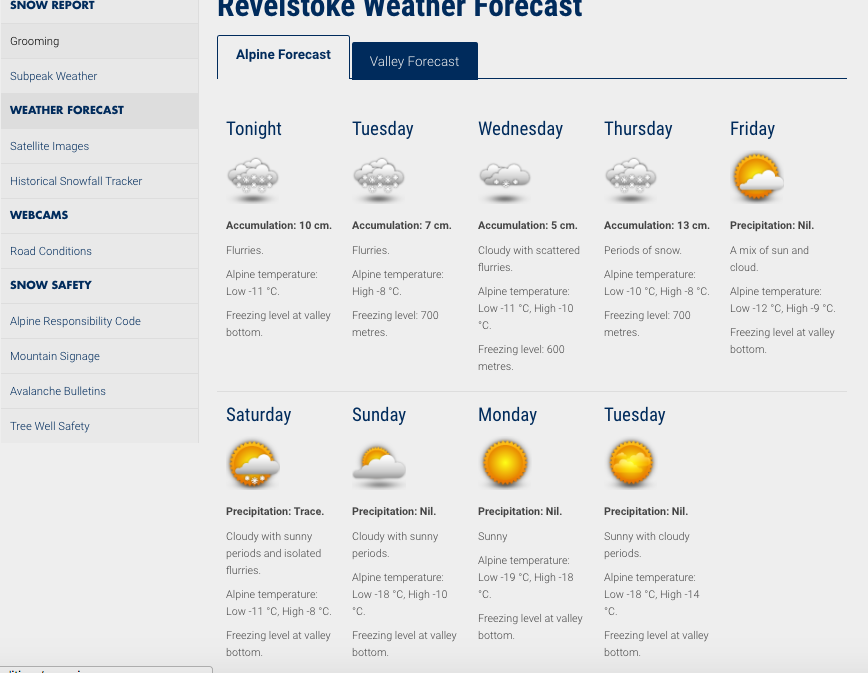
The forecast for Revy.

The forecast for Revy.

It seemed like the temperature rose a good 10 degC the moment I crossed into British Columbia. It was 22 degF when I rolled into Revelstoke, and I was positively sweating.

The drive from Lake Louise to Revelstoke is exactly how I imagined driving into the interior of British Columbia would be: misty and starting to snow. For some reason I thought that the Mountain and Pacific time zones followed the BC and AB province boundary, but they do not, and I liked how there was a sign along the Trans Canada highway indicating the point where the time-zone changed.

I find it interesting that the legislated time-zone boundaries and observed time-zones do not always coincide (Source: http://www.nrc-cnrc.gc.ca/obj/doc/services-services/time-heure/TZ06BWE.png)

I find it interesting that the legislated time-zone boundaries and observed time-zones do not always coincide (Source: http://www.nrc-cnrc.gc.ca/obj/doc/services-services/time-heure/TZ06BWE.png)

How to change from ski to crampons

Petzl put out a useful instructional video on how to change from skis to crampons in tricky terrain/a tricky situation. As I think more about whether it is possible for me to ski mountaineer again, I wonder how will I manage to do this, with a ski boot and ski on my right leg, and a snow boot (Sorel) on my left leg which does not have a ski attached to it. My left leg will be clipped up as usual. What I am thinking is:

  1. Create anchor (ice-screw) as shown in video and secure myself
  2. Release left foot down
  3. Have one crampon be adjusted to fit my Sorel. However, I am not sure this is possible because my Sorel is so wide and big. Assuming this is possible, I balance on my right leg/ski and put on the crampon on my left boot
  4. This is the tricky part. I will then need to put my weight on my left leg and make sure it is secure with crampon points in the snow.
  5. Release right binding. Again, this could be hard because I set my DIN to be very high (8-9) for someone of my stature because I do not want my ski to release and I have to retrieve it (with great difficulty)
  6. Put right crampon on ski boot

Stuff like this makes me wonder whether I should even bother contemplating moving in this kind of terrain again, or whether just sticking to more mellow skiing is just fine. I am really not sure. It might be the case that this idea continues to poke/bug me, and I just have to try/experiment and assess the results.

First ski stop – Sunshine Village, AB and travel as a privilege

I decided to check out Sunshine Village in Banff, Alberta the day after my arrival as it is a relatively short drive from Canmore.  I am in awe of the convenience and proximity to so much awesome climbing and skiing (backcountry and resort) there is around here. I had no time (and energy) to do any research on backcountry options, and the avy danger also seemed to be increasing with the cold front moving in with snow and winds, after some ridiculously cold weather (-30 degC last week) followed by warmer weather prior to my arrival. So inbounds it was.

Sunshine Village location

Sunshine Village location

This whole late sunrise thing is definitely still something I am getting used to. I arrived at Sunshine Village around 7.45am, and was one of the first few cars there. It meant that I scored an excellent parking spot which made the walking with my gear easier. I did not see any handicap parking; I think I am going to be skiing in areas where there really isn’t much accommodation for people with disabilities, so I just might have to try and get to places early.

I was on first lifts at 9am and it was still a very dark grey. Visibility was worsened by the very windy and gusty conditions, kicking up snow. A cold front was moving in, bringing in snow (yay) but definitely made for a white-out conditions day. If nothing else, the conditions at Jay Peak, VT can be so shitty that they prepare you well for such conditions. Staying near the trees was definitely the MO for the day, versus featureless bowls.

I have not been around the big international/holiday crowd in awhile…e.g. women wearing tight fitting ski pants and the like, casual skiers who you can tell ski/board a bit, but are really about the apres-ski. I lost them quickly but it still felt a little strange, probably because of my lack of exposure to them. There are also no adaptive skiers around here, so I was getting asked questions all the time about my set up. People asked me in a very polite way, so I didn’t mind giving them a very brief answer, unless they prodded for more information. Skiing alone on one ski is definitely challenging because of the clipping and unclipping of my left leg; it can be quite a balancing act, especially in deep snow if I fall, and I hate having to take my left glove off in cold conditions.

All the Aussie workers here, combined with the Canadians, have made me revert back to this weird Canadian-Aussie-British accent. Fortunately, I have the Aero and Mars bar consumption to back it up. Again, I feel this weird sense of familiarity with these surroundings.

As I was skiing and managing all the logistics that accompany skiing solo with my setup (e.g. negotiating various stairs, dealing with a tricky bubble chair with outriggers, , I was keenly aware that someone with more physical limitations than myself, would have an even more difficult time. Indeed, these “obstacles” could be deal-breakers for other people. As I said in an earlier post, I think there was no other non-fully-able-bodied skier (I don’t know what other term to use) than myself here, and I am not sure how I feel about that. Neat because I’m forging ahead and “breaking new ground”? Sad that some people are excluded from this experience, not just due to physical barriers, but income, socioeconomic status etc. which blows up a whole ‘nother can of worms (is that even a saying?) Acceptance that this is just the way the world is; and even wheels turning to figure out how to change this. As you can tell, there is a great deal of awareness and ambivalence about my athletic passions and pursuits.

I came across this article, which articulates some of these concerns/thoughts, and serves as a reminder that traveling is indeed a privilege. I like this line: “There’s an implication here that people who don’t travel lack a sense of adventure, that they simply need to be braver and venture out into the world. But it’s patronizing – ignorant, even – to imply that this is the only thing keeping people from traveling. It isn’t. ”


Reached the Promised Land – Arrival! driving across the continent (Day 3)

Wednesday’s drive started off very windy, slick, and dark. The doesn’t start to rise till around 9am, so the majority of the drive from Minot, North Dakota to the Canadian/U.S. border checkpoint in Portal, ND into Saskatchewan and to the Trans-Canada highway was not relaxing, as freezing rain turned to snow.

Once I hit the Trans-Canada Highway, things got pretty awesome fast. Conditions were now cold enough that the road was fairly dry, and being the main Canadian highway, it was much better maintained than the small provincial road I had been on. I would not want to live there but I really enjoyed the beauty and atmosphere of the Canadian plains. Had I not been on a schedule, I would have pulled off the highway to check out the various dinosaur remains sites.

As I was driving along US Interstates-90 and 80, I liked the reassurance that there was going to be a big rest-stop with gasoline, food, restrooms  etc. quite frequently, especially as I would be likely sleeping at one of them. This is not the case on the Trans Canada highway, but I actually liked this fact. Then again, I was driving the long quiet stretch in broad daylight, in good weather conditions, and not anticipating needing to spend the night along the highway. Despite not having some of these huge rest stops, there are fairly periodic/frequent pull-outs for recycling and rubbish (good, because I eat a lot when I drive to stay away), and some times bathrooms. There was only one point where I was anxious about not knowing when the next gasoline station would be, and very much hoped my mental conversion from the distance on the road signs (in km) to the estimated range shown on my car dashboard (in miles) was correct. Fortunately, it was.

It's a bit hard to tell but it was extremely windy - I didn't feel that welcome.

It’s a bit hard to tell but it was extremely windy – I didn’t feel that welcome.

Saskatchewan winds, I found out, are also something. I was literally blown over as I was filling up my car, and I had never had most of the windshield wiper fluid I was pouring (despite my efforts to orient myself correctly and block the wind), travel horizontally away from my target.

I have to admit I was surprised by how well my car and the cargo box held up to some pretty inhospitable driving conditions (roads and very very high winds across the plains and driving from Calgary to Canmore, actually).

My trusty steed when she was about to start off i.e. she is clean.

My trusty steed when she was about to start off i.e. she is clean.

There was enough setting light for me to see the Canadian Rockies as I drove along the Trans-Canada highway towards Banff; I always forget how my heart and chest swell to the point of hurting when I see the Rockies rise up from the flat lands. It has been a long time since I have been in Canmore, and I was struck by the dramatic drive in to town.

3 days, 2609 miles, and too much junk food and too many McDonalds hashbrowns to count, I arrived at my destination of Canmore, Alberta.

2609 miles later, I arrived at my destination.

2609 miles later, I arrived at my destination.


Reached the Promised Land – driving across the continent (Day 2)

Despite getting up very early, making coffee, eating numerous hashbrowns at the McDonalds, and getting a 0530 start on the driving, I managed to get caught in crappy Chicago area traffic. Things got worse around Madison on I-90. I had no idea there could be such bad traffic jams around there, with many long haul trucks lined up. I had to take a lengthy detour on backroads to get around the traffic on I-90, and it cost me a lot of time.

I am not sure whether the day was long and boring because of the location itself, or because it was Day 2, I was tired, I was a little anxious about making it to my goal destination of Portal, ND (the Canadian entry point), and knew I had another day of long driving ahead of me. I had some slight anticipation of driving through Fargo, ND, as popularized by the fantastic Coen brothers film of the same name. It was quite a large town (strip malls etc) compared to the rest of the very large state.

A slightly dirty windshield and iPhone mounted near the dash.

A slightly dirty windshield and iPhone mounted near the dash.

I was somewhat disappointed not to be stopped by Officer Gunderson on my drive through Fargo (you will have to know the film to get that reference). I thought the spacer bars between the electricity lines were pretty neat. It must be because of the huge temperature differences experienced by the place throughout the year.

I have to say though, driving through dark, deserted, North Dakota backroads and small highways, in uncertain conditions (slick, wet, black ice) and uncertainty about when the next gas stop will be, when very tired, ranks alongside least favourite things ever. Being a planner, I played out scenarios of my car running into problems (mechanical or running out of petrol) and what I would do to get help.

I was far too tired to make it to Portal, ND (in retrospect, I am very glad I did not spend the night) and decided to bed down about 1.5 hrs away in Minot, ND, as it was a sizable town with amenities.

The drive took MUCH longer than the estimated Google Maps drive time.

The drive took MUCH longer than the estimated Google Maps drive time.

Despite stopping short of my planned destination, enduring the very tiring and mentally taxing day put me in a good position for Day 3 driving.

Reached the Promised Land – driving across the continent (Day 1)

Well, I reached Canmore, Alberta after three days of driving. I have never driven across the continent, or for more than a day even, before – it was an interesting but very tiring experience. I was glad to reach my destination in the prescribed time I had set for myself, but driving for ~15 hours each day was definitely taxing on the body and mind. I’m writing this a few days late, just because it has taken me some time to sort other things out, like skiing, dealing with logistics and unpacking (for this first stop).

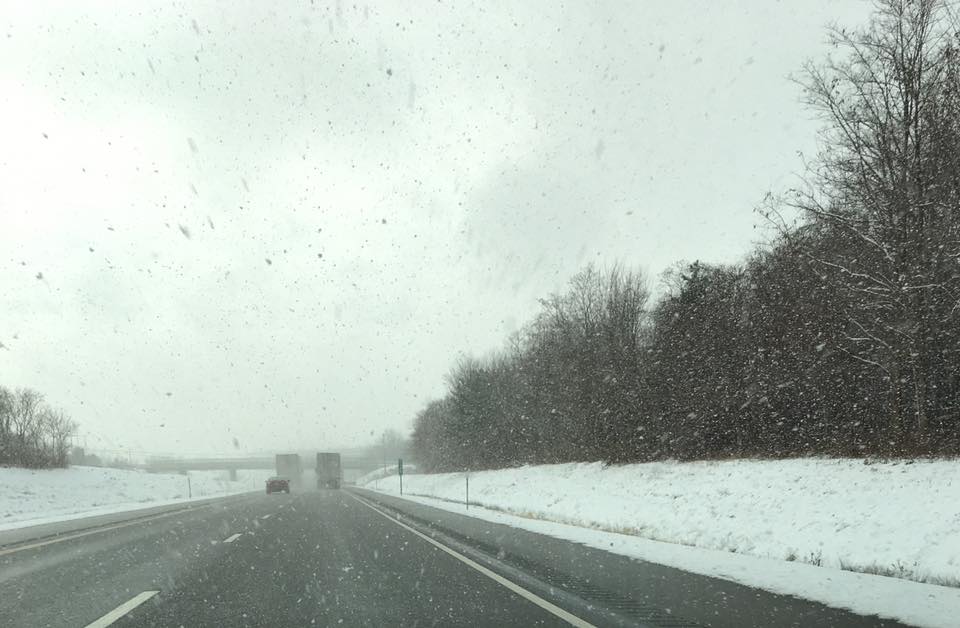
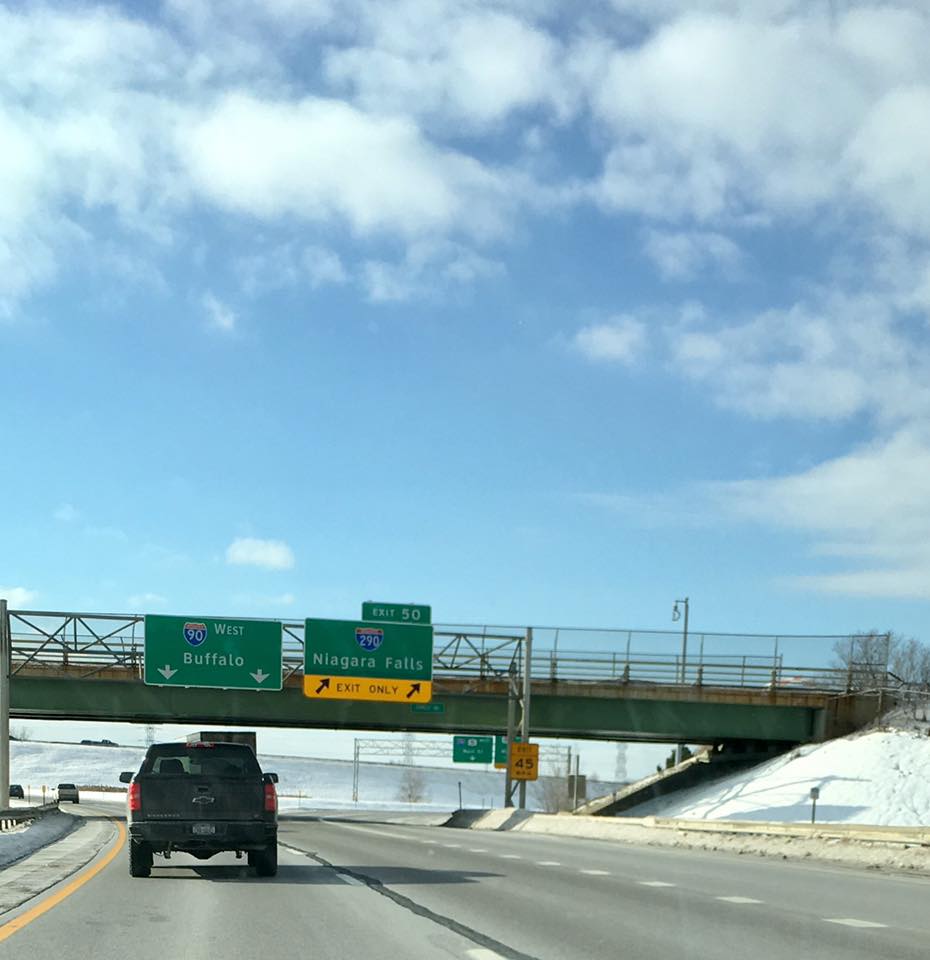
My goal for Day 1 was to get as close to Chicago as possible, although I had been told reaching Cleveland, OH was a realistic goal. The route took me along the Great Lakes (Buffalo, Niagra Falls, Erie (PA)). Fortunately, temperatures were cold, so the roads were dry. There was some Lake effect snow that made for an atmospheric interlude.

Flurries around the Great Lakes.

Flurries around the Great Lakes.

day-1-buffalo-niagra

I’ll get to you, Canada, farther down the road…

The estimated drive time is not indicative of the actual drive time, but on this day, I made good progress.

The estimated drive time is not indicative of the actual drive time, but on this day, I made good progress.

Being on large interstates (I-90 and I-80) meant that there were frequent rest stops and opportunities to refuel the car and myself. It made for easy and relaxing driving. I ended up bedding down for the night at a rest stop near South Bend, IN. I deliberately chose to sleep surrounded by the dulcet hum of large long-haul trucks under the very bright mood lighting of the truck parking area. I am very aware of being a small female sleeping alone in my car, but I felt like the best choice was to sleep amongst truckers versus being the only car (or one of very few cars) in a car rest stop/pull-out.

It was cold. Thank goodness for having a very warm sleeping bag.

It was cold. Thank goodness for having a very warm sleeping bag.

I managed to get some sleep in the car. I had set aside the length of the car behind the drivers seat for me, and it was the perfect length. I even had a duffel bag at the foot of my feet and there was still room, although I do tend to sleep curled up in the foetal position. It would certainly be a little less comfortable for someone of taller stature; they would likely have to sleep diagonally. I wanted to get an early start for the next day as I wanted to get a lot of driving in to make the third, and final, day manageable and have me arriving in Canmore not too late, giving me time to unload the car etc. I have a tendency to stress out a little about planning and logistics. I am good at it, but it does occupy my mind a fair bit, especially on big trips like this.


An insane travel season and a cross-country skiing road trip

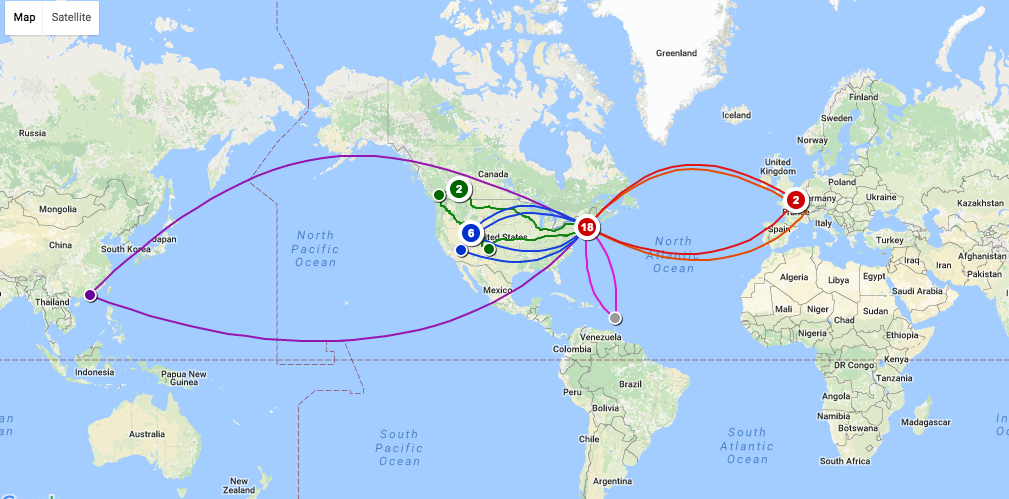
September to February has been, and will be, an amazing and slightly insane travel season. From September to December, I did round-trips to Paris; Salt Lake City/City of Rocks, ID; Red Rocks, NV; and Hong Kong.

December to mid-Febrary are looking like this:

– Boston <-> SKIING ROAD TRIP (see below)
– Boston <-> Martinique
– Boston <-> Chamonix

sept-feb-travels-world

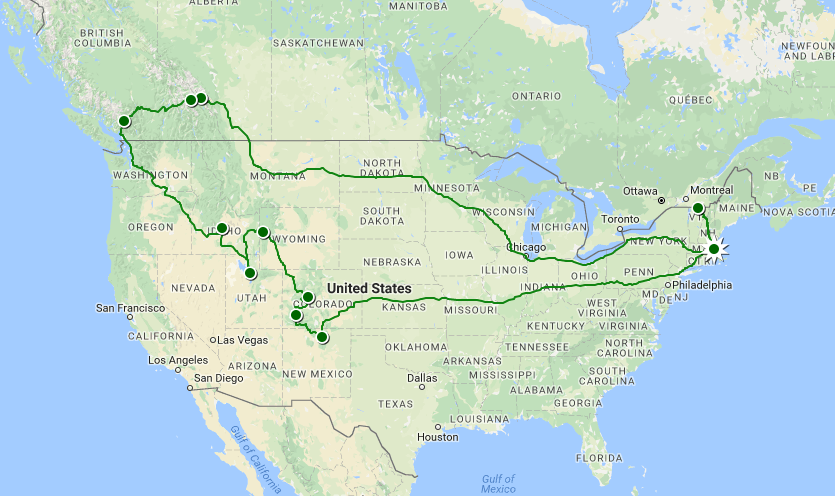
I am using the time between when I return from Hong Kong to Francophile lands, to do something I have always wanted to do: a skiing road trip across America! Hopefully I’ll fit in a little bit of ice-climbing too. My itinerary will be dependent on weather, but tentative plan is based around the places that are a part of the Mountain Collective Pass.

I will return to Cambridge from Hong Kong, outfit my car for sleeping, storage, and the driving; dress up and go to a holiday party; ski in Vermont the next day hopefully, and then try and hit the road as soon as possible after that. I absolutely love planning for and preparing for big trips.  But there is a lot to cram in in a very short period of time.

My rough itinerary, subject to weather etc. is:
Cambridge, MA -> Lake Louise, AB -> Kicking Horse, BC -> Revelstoke, BC -> Whistler, BC -> Sun Valley, ID -> Salt Lake City -> Jackson, WY -> Aspen/Snowmass, CO -> Telluride, CO -> Taos, NM

The tentative plan. I may choose to go anti-clockwise instead.

The tentative plan. I may choose to go anti-clockwise instead.

I do not think I will be able to make it to Tahoe, given time constraints and without incurring enough speeding tickets to make me a fugitive from many states. Which sucks because I miss Squaw and Kirkwood. I’ll try and make it happen. I am going to get my ass kicked the first few days. I cannot wait to see friends in many of these places.

I am so excited about skiing and ice-climbing in/around Chamonix with my friend Yves in February! I have heard such amazing things about the place. It will be interesting to see how I handle the gnarlier lift-served terrain. I actually learned to ski in Switzerland when I was 12 years old, so maybe this counts as a home-coming of sorts? :)

Pins I collected as an excited 12 year old in Switzerland.

Pins I collected as an excited 12 year old in Switzerland.

I will try my best to document this once in a lifetime experience.

So. Much. Stoke.

Crested Butte

I was not sure what to expect of my extended weekend in Crested Butte. Arriving feeling physically poor certainly did not help. But as I write this en route back to Boston, I can say with confidence that my time in Crested Butte and Colorado this season was a success, in terms of taking my three-tracking abilities to another level, reconnecting with old faces, meeting many new, wonderful ones, and being lifted by the incredible things the Adaptive Sports Center and its staff enable.

Part of my trepidations about the Crested Butte Ladies Adaptive weekend was how structured it seemed e.g. fixed instruction time, meal times, social activities etc. I generally like doing my own thing so this seemed quite restrictive. However, I found that I learned a tremendous amount being exposed to different instructors and a different program. The Adaptive Sports Center has a tremendous wealth of knowledge, yet also an open-mindedness to try new things. My instructor from my first day is actually a Professional Ski Instructors of America (PSIA) Adaptive examiner, so she was definitely very knowledgeable and skilled at three-tracking. While the mechanics of skiing, whether it be on one or two skis, are the same, it still was nice to be with someone who could ski as well as I could on one ski. I have had the experience of instructors needing to ski with me on two skis to keep up. In the space of my first day, my ability to ski bumps of all sizes, in variable snow conditions (crud, ice, softer snow) and ski bumpy traverses (this is harder on my uphill ski side) improved considerably.

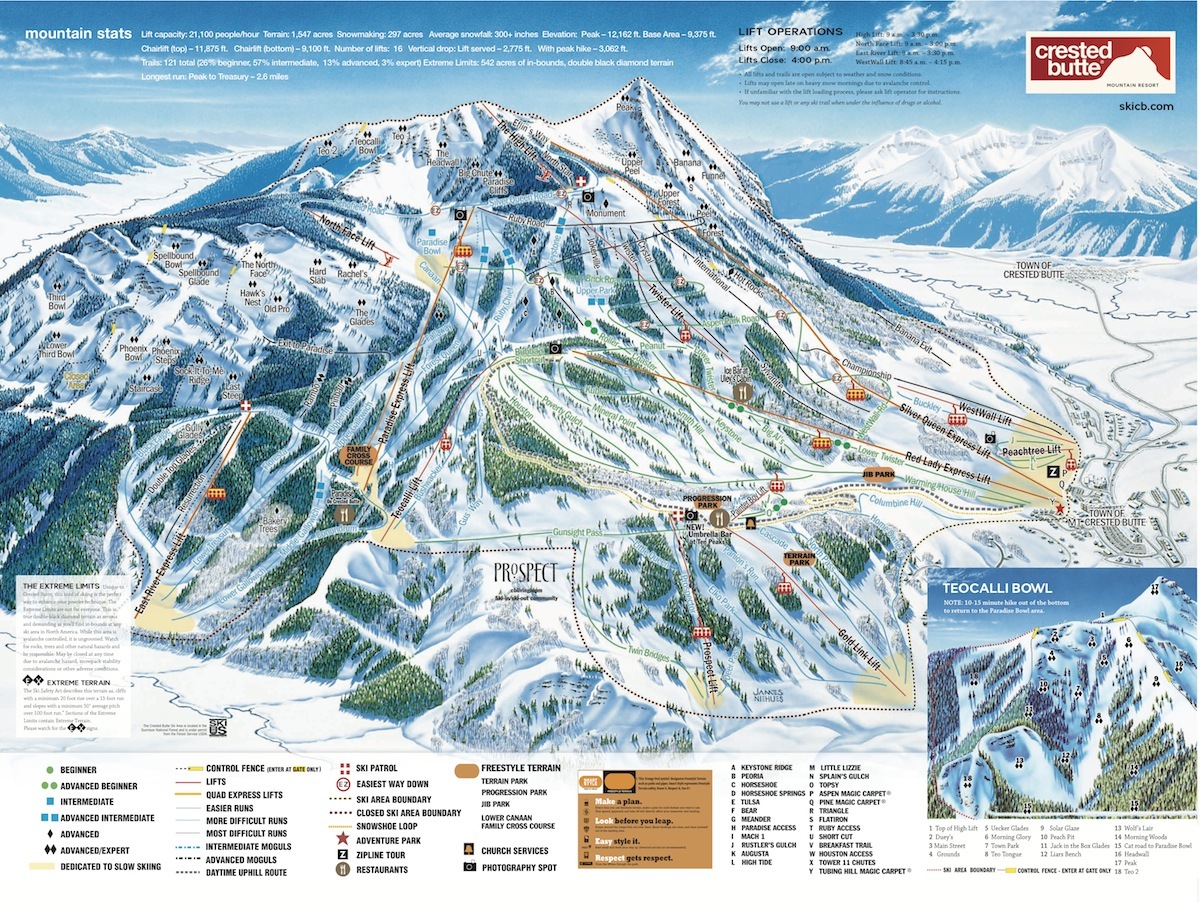
I saw that Crested Butte had two T-bars that serve double-black terrain. I was interested to see if I could ride a T-bar as a three-tracker since a lot of terrain in Europe, say, is only served by T-bars. Bryn, my instructor, had never ridden a T-bar as a three-tracker either, as most three-trackers are not skiing that advanced terrain. But, after a bit of strategizing we gave it a go. We had to take the High lift as the North Face lift was closed for an annual ski race. But, as you can see from the trail map below, one still needs to be able to ski advanced terrain to get back down. It was great to know that I could manage that as a three-tracker.

Check out all the awesome double black terrain on the North face

Check out all the awesome double black terrain on the North face (Source: http://www.skicb.com/the-mountain/trail-maps)

I sat on the left side of the T-bar, so that I could hold the middle of the T-bar with my right hand, have my right ski on the inside and have my left outrigger on the snow for balance. For my right outrigger, I kept the cuff around my right arm and balanced the outrigger on the top of my left hand. Bryn rode the T-bar more like a regular skier, skating on her left ski boot (she had a ski on her right leg). We congratulated ourselves on riding the T-bar without any incident! The next day, Tereza (another ASC volunteer/instructor) and I rode the North Face lift. Upon the recommendation of another instructor, I tried to ride the T-bar by myself. This did not work out as well. The lack of a counter-balance and the sudden jerks of the North Face lift had me fall within 10 feet of where I had loaded. Tereza and I found that it was easiest to the ride the T-bar with her having her ski on her left boot and sitting on the right side of the T-bar and we rode the T-bar quite a few times Sunday afternoon. This gives me confidence that, with the right partner (i.e. not a snowboarded and not someone who will knock me over) I will be able to ride T-bars all over the world again.

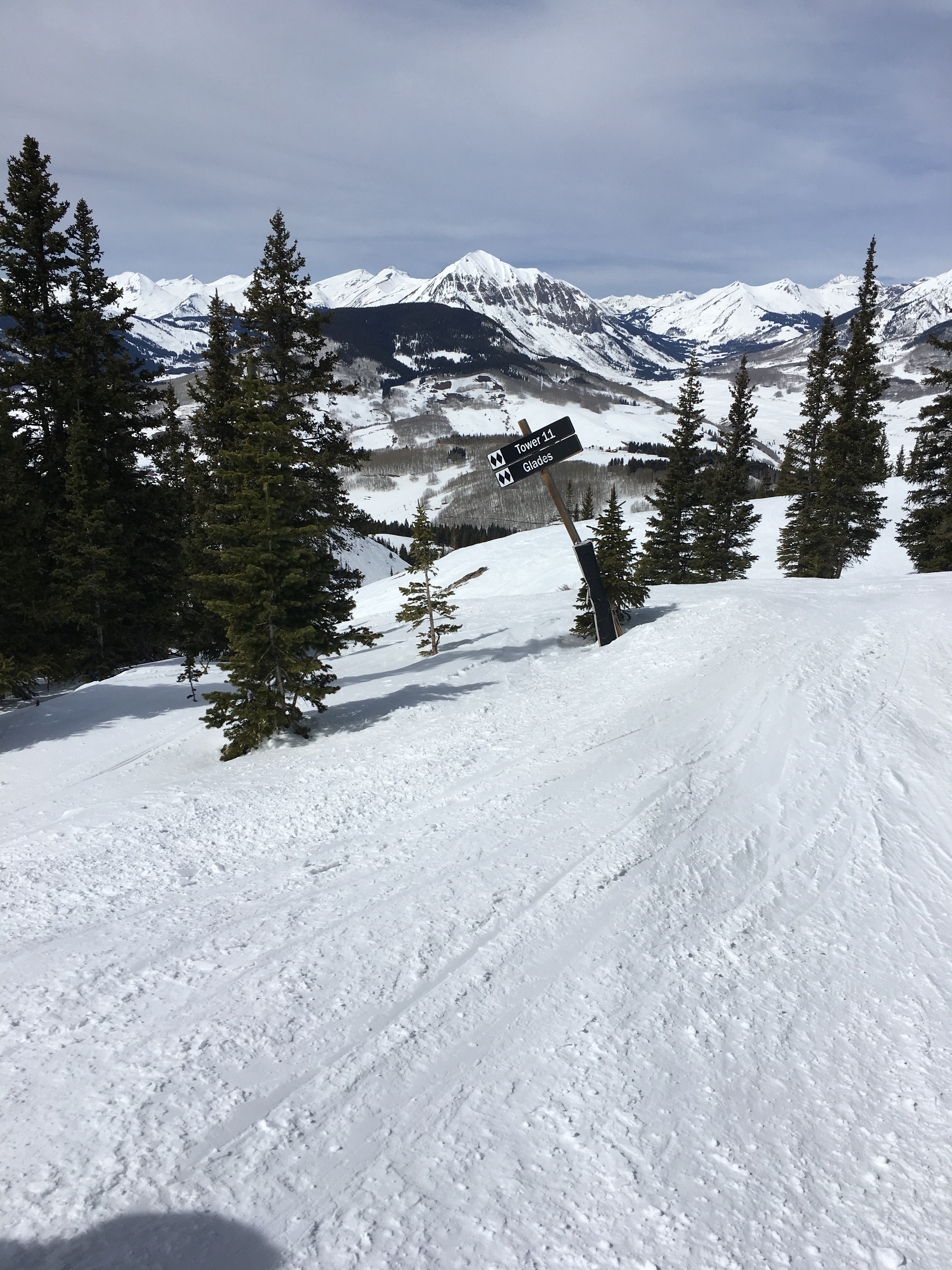
The best part about making it to the top of the T-bar lifts without incident was getting to ski the super fun double-black terrain at Crested Butte! My skill level as a three-tracker continued to improve leaps and bounds on Monday. I was able to build upon the skills I had picked up from the previous day and navigate rocky, thinly covered terrain, trees, glades, all in less than ideal snow conditions. Which is exactly what one (or at least I) needs to know how to do if they are going to be skiing advanced, off-piste terrain.

Very friendly warm-up double blacks off the North face lift.

Very friendly warm-up double blacks off the North face lift.

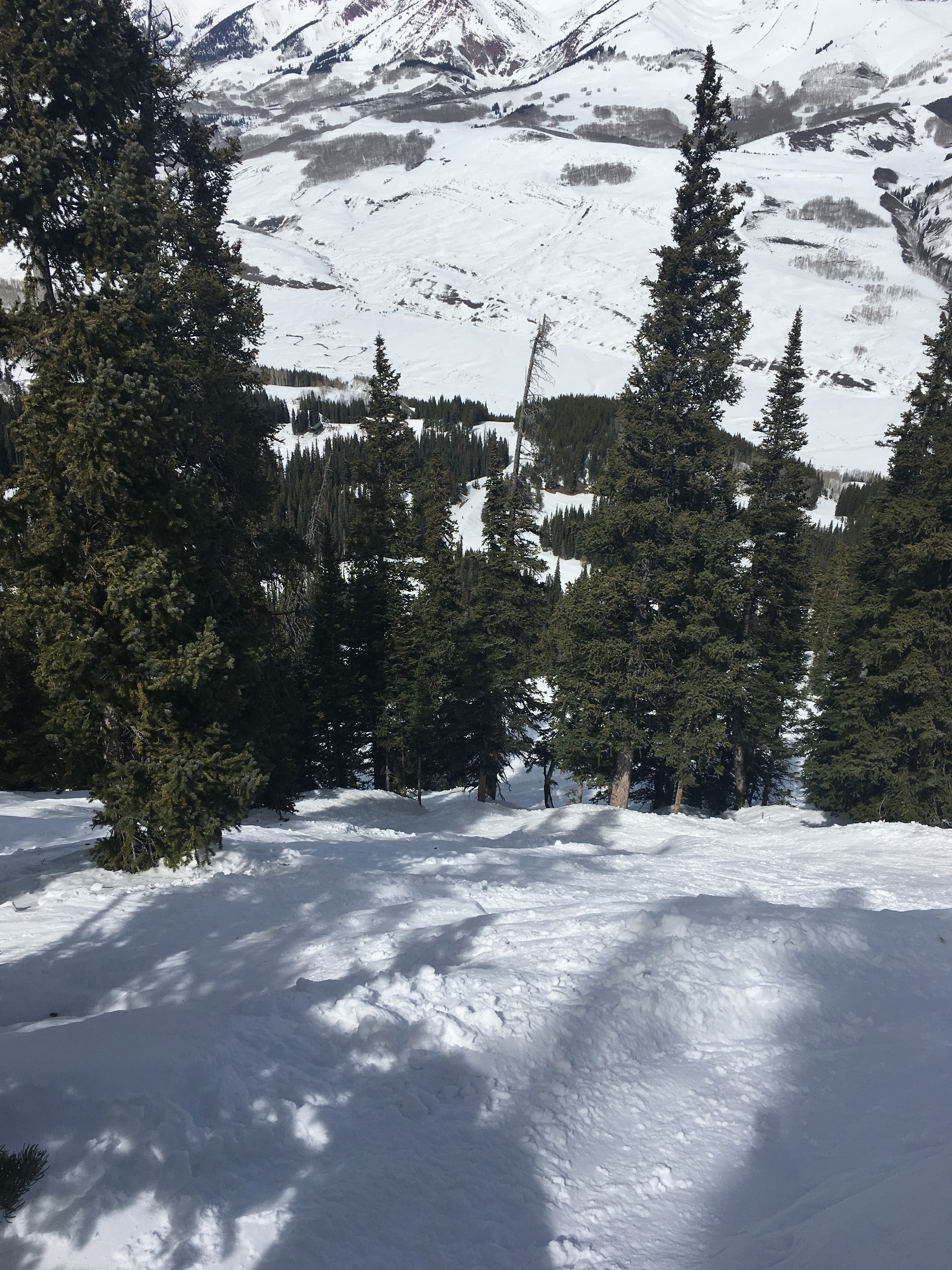
More challenging runs off the North lift.

More challenging runs off the North lift.

A bit more stuff to deal with.

A bit more stuff to deal with.

Tereza was terrific three-tracking company and it was very useful to see how she used her outriggers while carving on groomed terrain. It was incredibly useful (and fun) skiing with four-time Paralympian Sarah Will in the morning too. Monoskier tracks tend to be quite beautifully shaped and I was right on her tail (we both go fast). Later she said, you have the downhill mentality, which was nice to hear. Some women (and men) get nervous when they move “too” fast. When I move fast, things slow down. Time and senses dilate with the hyper awareness and focus.

I found that using my outriggers a lot in bumps puts a fair bit of pressure on the outside of the hand (little finger side of the palm) and my hands would involuntarily cramp when I was not skiing.

My fingers/hand are not doing this voluntarily.

My fingers/hand are not doing this voluntarily.

I would like to express my heartfelt thanks to the High Fives Foundation for their generous donation that allowed me to attend the Ladies camp. I had not heard of this organization till just before this trip; I wish I had been aware of them earlier! They could have helped me tremendously in the months/years immediately after my accident. While I am sad that I did not have access/awareness of such a resource for myself then,  I am very glad that such a resource exists for injured mountain sports athletes.

One last Alta Lakes backcountry pic and initial CB impressions

My pack is a tad bigger than most. Photo credit: Joshua Butson.

My pack is a tad bigger than most. Photo credit: Joshua Butson.

After an unplanned extension to my Telluride stay (more three-tracking in-bounds on my own and with TASP), I arrived in Crested Butte late Friday to take part in the Adaptive Sports Center Ladies weekend. However, after several nights of less than 1-2 hours sleep (spasms, neuropathy etc) and many consecutive days of skiing, my body and, to a certain extent my mind, shut down and needed a day of rest. It is unfortunate that as I have gotten more active with my lower body, the cramping, spasms and discomfort at night have worsened.

However, I am very much looking forward to checking out Crested Butte. The amount of double black terrain on its North face looks sick.

The drive from Telluride to Crested Butte via Montrose saw quite a change in the landscape, moving from the already arid Uncompaghre Valley along the Gunnison River and Curecanti National Recreation area, with mesas and mountains on either side, into even drier Gunnison county. Gunnison regularly has some of the coldest temperatures in the country and the landscape is sparse. I then drove from Gunnison through the town of Crested Butte to the town of Mt. Crested Butte, home of the ski resort. Crested Butte reminds me of a Southwest high desert town in some ways, with its abundance of art galleries. It is quite a bit smaller than Telluride and more of a “Western” town, given its rural setting.

My left leg has taken quite the beating on this trip though. The circulation in that leg is poor so it will take a long time for the bruising to go away.

Just in time for shorts/skirt season.

Just in time for shorts/skirt season.

Back in Telluride – first BC experience post-accident!

First time back in the BC post-accident (Alta Lakes, Telluride)

First time back in the BC post-accident (Alta Lakes, Telluride). Photo credit: Joshua Butson

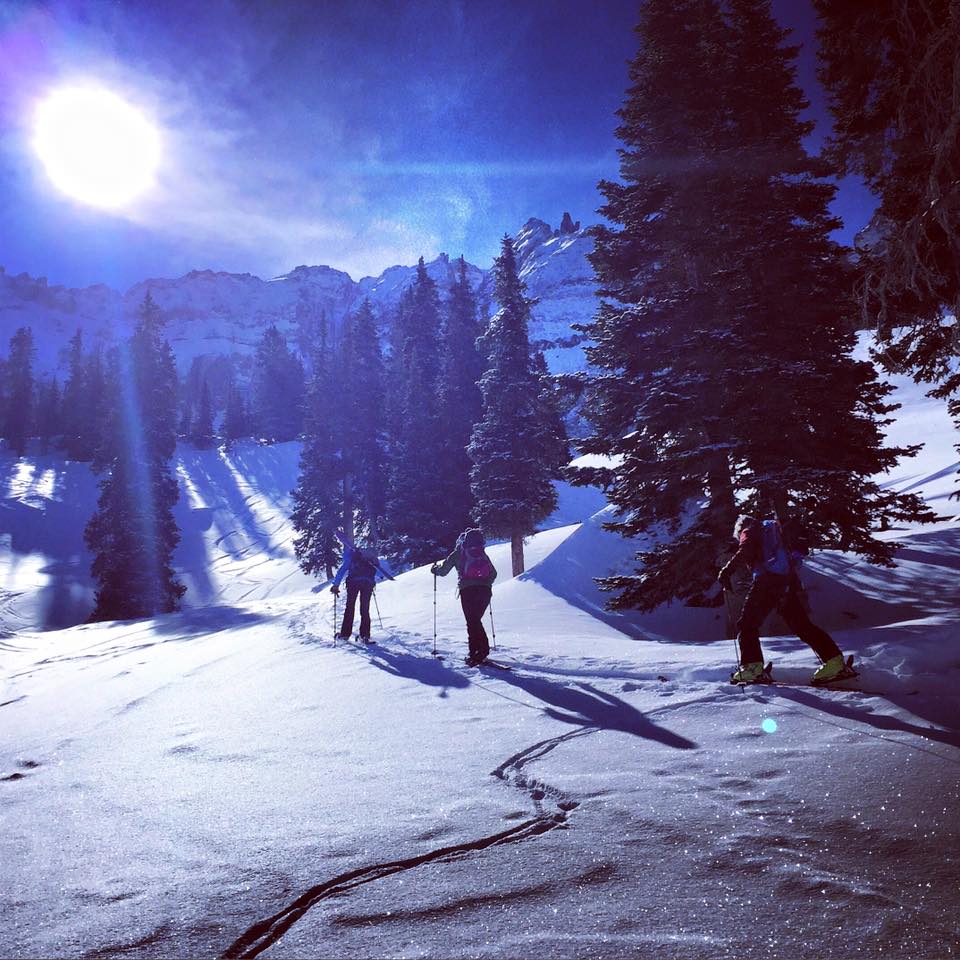
I am tired from the last week of in-bounds and out of bounds skiing, but feeling so lifted from the TASP backcountry weekend in Alta Lakes. This was my first time carrying a shovel, beacon, probe in over 6 years, and I really was not sure how things would go.

I had such a great time skiing at Telluride last year that I contacted Tim McGough, the Program Director at TASP, to let him know that I was interested in coming out again this season. He mentioned they were putting on an adaptive backcountry hut trip and asked if I was interested in joining. Despite some trepidations over how different/challenging skiing and traveling in the backcountry could/would be for me, it did not take me long to say Yes! as backcountry skiing was a big love of mine before my accident.

Coming up with a system was challenging given that I do not live close to Tim/TASP and there was no opportunity for hands-on experimentation. Tim asked if I was able to snowshoe. I did not know the answer to this, and had many doubts as I was not sure if my left snow shoe could clear the snow. I would not know the answer though until I tried. My first attempt was in Scott’s Mum’s backyard in Vermont. To my surprise, I managed to trudge around. The next step was to see if I could handle inclines. Again, I tromped around a bit around Jay Peak, VT and found that I could manage. I then tried to find places closer to where I live to practice. This was challenging due to the lack of snowfall we had received in/around Cambridge. I found a little suburban park to at least practice packing/carrying my equipment on my back, which also took a fair bit of time to figure out. The system I eventually went with to “skin” up was to wear snow shoes and snow boots. This means that I have to carry my ski, (heavy) outriggers and ski boot, and then find a way to transition out of my snow shoes/boots into my ski boot/ski. It does not really seem fair that I have to carry a lot more with a gimpy leg but you do what you have to do. 

I admit, I was a tad bit upset to learn that I was the only person in the group with a disability. I felt like I would just slow everybody down, always be last etc. This soon passed as I proved to be able to more than keep up, at least skiing wise, with an incredible group of TASP instructors and volunteers.

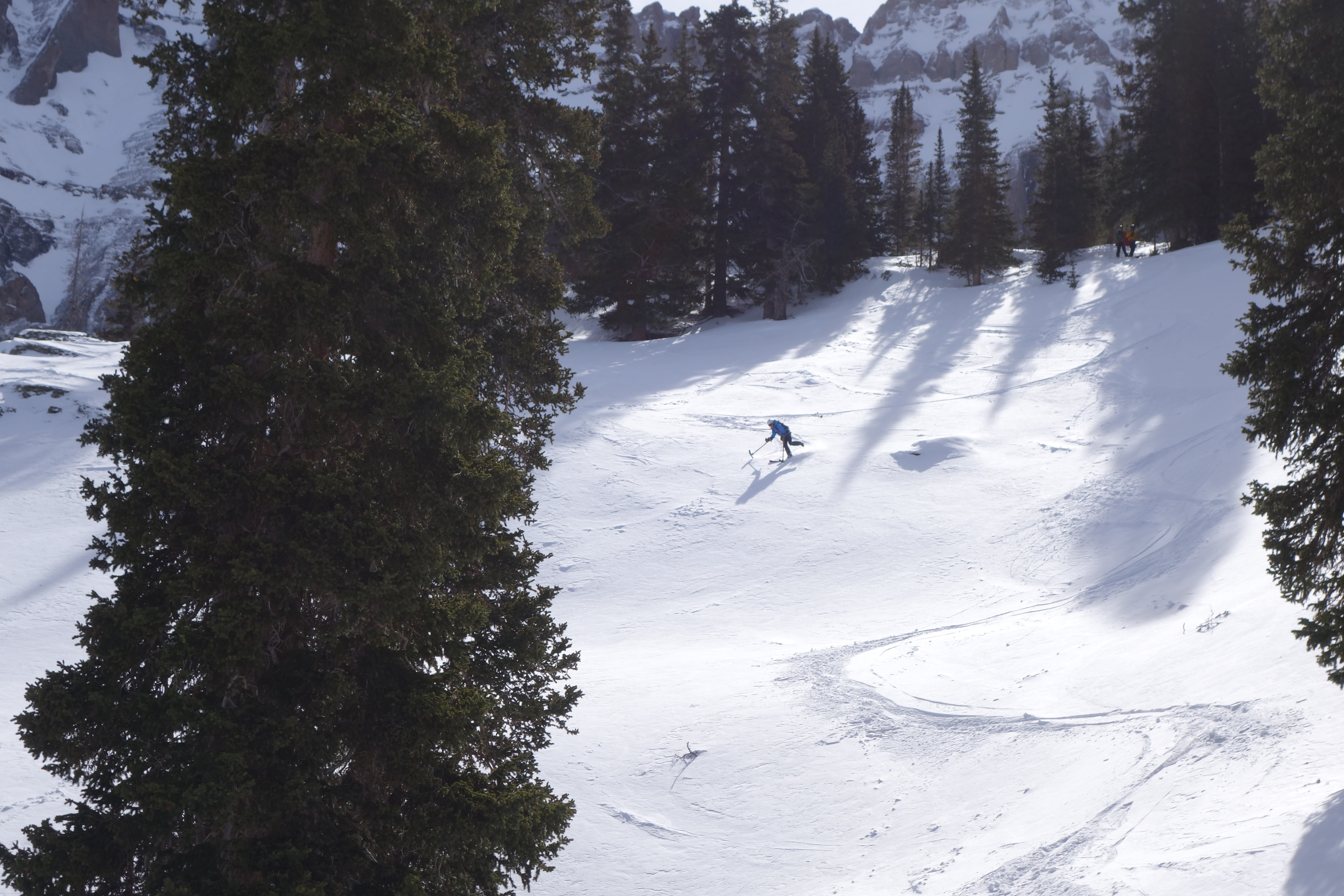
Conditions were very friendly: warm, low wind, firm snow underneath dust. The drop into the lakes was fine on one ski, despite lots of trees and shitty ice.

The ridge line from where we dropped in.

The ridge line from where we dropped in.

A bit of a snowy trudge in.

A bit of a snowy trudge in.

The snowshoe up to our runs was very tiring for me though. Firm snow is definitely easier than deeper snow, and we experienced it all over the weekend. We could not have had better guides than Joshua Butson and his guiding company, San Juan Outdoor Adventures, who was extremely skilled, knowledgeable, fun and patient. Joshua, btw, has done some pretty awesome first ascents all over the world. 

Photo credit: Joshua Butson

Photo credit: Joshua Butson

The slog up. You can tell just how happy I am, unlike the picture of misery behind me.

The slog up. You can tell just how happy I am, unlike the picture of misery behind me.

So many skiing options.

So many skiing options.

Butt shot. Photo credit: Joshua Butson.

Butt shot. Photo credit: Joshua Butson.

from behind

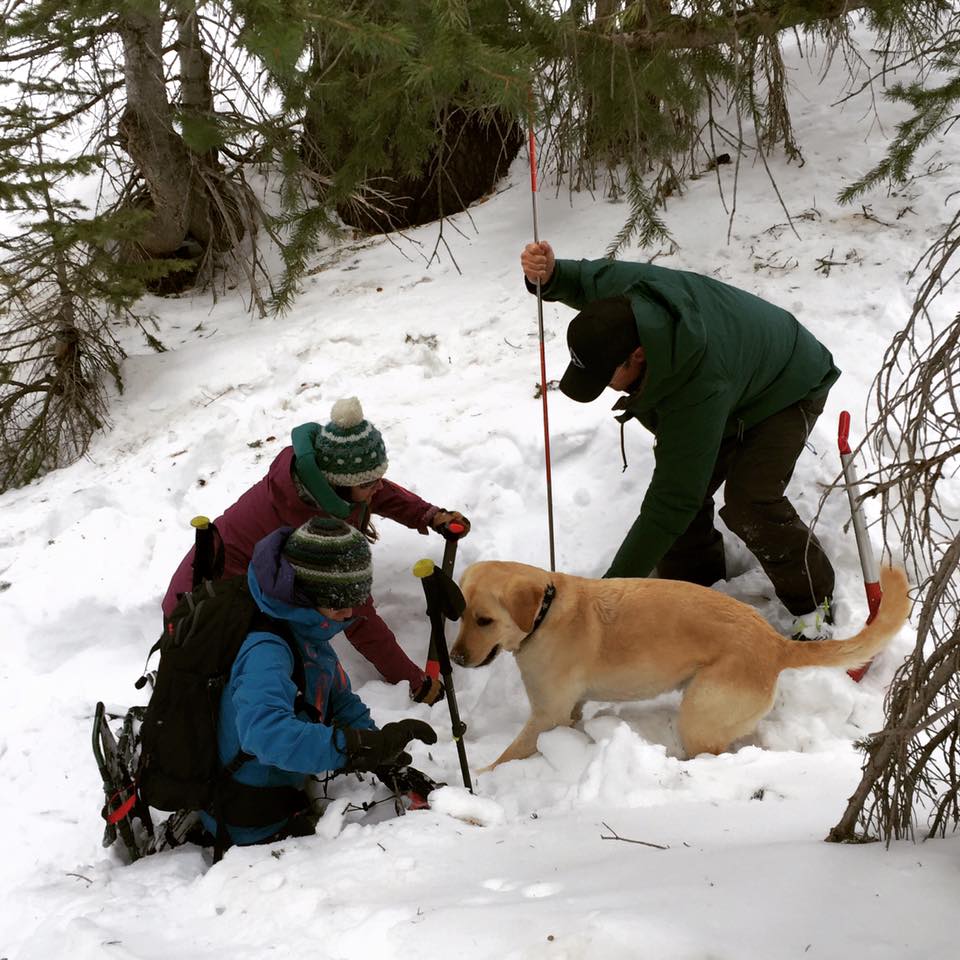
Aside from introducing me back into skiing in the backcountry, a large part of the trip was to cover basic avalanche skills (basically a Level 1 avy course – about 15 years since I took one!) It was interesting to see what had changed in terms of avalanche safety education over the last 1.5 decades. 

Searching for transmitting beacons is much easier when you have an awesome service dog with you.

Searching for transmitting beacons is much easier when you have an awesome service dog with you.

While other folks travelled with their skis, I stayed in my snow shoes.

While other folks travelled with their skis, I stayed in my snow shoes.

While I would sometimes get dejected for moving uphill slowly and tiring (the right leg because it was doing most of the work, the left leg because it is so weak and also working), I did feel we accomplished a fair bit and I am on my way back to doing another thing I love and have missed since my accident. Being surrounded by a wonderful crew who made me laugh so hard in our “hut” was such a blessing and I am reminded of how many good people there are out there. 

I was asked to help some of the TASP instructors with movement analysis and three-tracking instruction, as that is a component of their PSIA Level 1 Adaptive ski instructor exam. I spent the morning having my movements analyzed and giving them feedback, and the afternoon giving a little bit of bumps skiing instruction one-ski-style. It was just as instructional to me as it was to them, as trying to explain and teach something is the best way to learn yourself. Listening to them offer their analyses of my movements, the vocabulary they were learning to use, and trying to articulate my movements to them was incredibly useful. It also felt good to be able to “give back” a little and offer some of my skills and experiences (all two seasons’ worth!) to them.

I cannot wait to return next season.

Not a bad view to wake up/go to bed to.

Not a bad view to wake up/go to bed to from the Alta Lakes observatory “hut”.