Major health setback and meaning making

This is a difficult post to write. The severe pain, which started in the early Summer, turns out to have a severe underlying explanation. I have adjacent segment disease, where the vertebrae adjacent to a spinal fusion are degenerating. In my case, as I am fused from T12-L4, my L4-L5 vertebrae are doing things they shouldn’t be doing. In my case, L4 is sticking way the hell out (the medical term is anterolishesis) and in my MRIs it looks like I am about to topple over. The arthropothy and anterolisthesis in my L4-L5 has created severe stenosis, which is why I have been experiencing this pain. The neurosurgeon proposed (strongly suggested) a spinal fusion of L4 to my pelvis because if they just fused L4 and L5, the same thing would happen all over again with the next verterba down. The surgery was initially going to be ~4.5–5.5 hrs, but a CT scan revealed one of the screws in my existing hardware is loose (through no fault of the surgeon; it is just because L4 is failing), so they have to go in and replace all of the screws. This will make the surgery last more like six hours. In order to avoid all the scar tissue I have in my back, the neurosurgeon is going to first go in via the front. I don’t think I will feel good each time I have to look at that scar :( Then they have to flip me over and go in through the back to screw and replace screws. The recovery time is long: three months until you can return to any light clerical work (due to pain and fatigue) and around 8-12 months for full recovery.

When I first saw my MRI, even before I met with the neurosurgeon, I thought the situation was much less severe and that they would just need to do a laminectomy and L4-L5. Aren’t you so glad you are learning all this terminology? Even that made me cry initially. The neurosurgeon’s diagnosis hit me very hard. I cried and cried because I could recall the pain (spinal fusion is one of the most painful surgeries to recover from), being in the hospital with the thin sheet as a blanket in agony. But really, I cried because I felt like my world had grown smaller because of activities I will have to avoid. I only recently realized that there is a lot of medical trauma I have yet to process. For example, there is something about lying prone on my front and having sharp things, like needles and blades (acupuncture doesn’t count), against my low back. I recently had a caudal epidural steroid injection to try and help alleviate the pain, and I, spontaneously, started crying in the middle of the procedure. I explained to the doctors I was crying for emotional reasons, not because of pain.

But as I write this blog post, I am feeling calmer about things (I would not go so far as sanguine). This experience has made me think of meaning-making. In this context, it can be defined as the ability to find meaning in hardships and incorporate them into your life story. This aids resilience because it gives those hardships purpose. I am trying to think of how I am going to grow from this (enormous) life road bump, thrive even. I was able to do so after my big accident, but I am not sure I have the same fight in me at 42 years old as I did when I was 29. Maybe I should not view this surgery and its recovery as a battle. But even if I have accepted all this, how should I move through this experience? It is certainly not going to be with grace or extreme stoicism. I feel like all I can do is accept that this is going to be very very hard, but when times are particularly tough (i.e., painful), I can remind myself that this is not permanent and that the pain, feelings of helplessness, etc., will pass. All this has the potential to help me improve the traits of adaptability, hope, and self-esteem. Ideally, I will use a growth mindset to process these difficulties and trauma.

Northern Spain

I would never have had Northern Spain on my radar had I not competed in the IFSC World Sport Climbing Championships in 2014, which was held in Gijon. I really needed a break at the end of the summer and was deciding between the Azores and Northern Spain. In the end, I opted for the lazier option, as the Azores required planning around ferries between islands and that sort of thing. I had (and still am) been dealing with back and sacral pain and for a while, I was not sure if I could even go. As usual, I decided, fuck it, let’s do it.

We based ourselves in Oviedo in Asturias and San Sebastiàn/Donostia (in Basque). Oviedo is not a place on many tourist’s radars and Northern Spain is certainly different geographically, climate-wise, and culturally in some ways to the rest of Spain – I dig it. The weather was not very cooperative but we managed to achieve our aims of going to beaches and hiking while in Oviedo. Oviedo is a great base; not too far from beautiful beaches and decent hiking nearby. We wanted to go to Picos de Europa but it was a bit far and the hike we wanted to do would have been just a mud bath.

Somiedo
Playa Amio y Ballota (I think this one was Ballota)

Because both mountains and the ocean are important to me, having them both be proximate was wonderful. Really makes me think about moving there…not quite sure how though given my current work and school situation :-/

San Sebastiàn (Donostia in Basque) was very different. I loved how proud the Basque are of maintaining their culture. I mean, they are only one million people or so, yet they maintain their language and traditions. San Sebastiàn looked like an older, wealthy, but grungy city. I’m sure people love the narrow winding alleys filled with places to get pintxo. The place is, after all, the food capital of the world. That is not what draws me to the city. Really, it’s the beaches nearby.

Zurriola – a surfing beach on the edge of San Sebastiàn

I will admit, there was a sense of longing, sadness, and loss…that I would never be able to surf again. I am not 100% sure that is true. Guess I will not know until I try, but I’m not sure where.

The other main beaches in town are La Concha and Onderetta. The former is very long and seems to be the “town beach”, which is pretty ace. The latter seemed a bit lower-key. I really enjoyed morning swims at both. It’s a pretty great lifestyle; wake up, walk to the beach for a swim, get breakfast (that isn’t expensive), and then settle into the work day. Trying to figure out how I can make that happen but, again, the licensure requirements for becoming a licensed clinical social worker (LCSW) make things very complicated.

Perhaps I am wrong, but whenever I am in Europe (especially Portugal, Spain, Italy) I sense that people’s attitudes towards disability are different to those of North America. I feel that I am less open about my accident and explaining my disabilities, 1. because of the language barrier, and 2. feeling like people just won’t understand. E.g., why I have to consistently miss dinner parties because I am dealing with my bowels. It also seems like people with disabilities are more “hidden”. Perhaps that is because accessibility is a real issue in these areas. Of course, the task of making old towns and cities more accessible is more challenging than young cities in America, where, for one, space is less of an issue. Other European countries seem to have fantastic infrastructure for people with disabilities, e.g., Norway? People’s attitudes towards disability are a significant factor in deciding where I want to eventually live.

Wheelchair tennis

I had been wanting to explore sports where I could compete at a high level again (my climbing glory days have passed). I thought that playing lots of tennis growing up and into my twenties would increase the likelihood of me enjoying wheelchair tennis. Like most things, I decided to just dive right in and start by attending a three-day, 18 hours, wheelchair tennis camp organized by the USTA. Almost all the other attendees were competitive/nationally ranked players, so I fitted right in.

I felt like I was doing a Rachel Dolezal by being ambulatory and in a wheelchair, but learned that a lot of players are mobile and can just get out of their chairs and walk.

Photo credit: USTA

Wheelchair tennis really is 90% wheelchair skills and 10% racquet skills. And my wheelchair skills were/are APPALLING. The thing I probably had the most difficulty with was holding the racquet in my hand at all times while pushing the wheelchair rims. Not surprisingly, the thing I was most adept at and picked up the quickest was serving while in a wheelchair.

Wheelchair fit is everything. I got to borrow the coach’s super fancy chair for the event. Photo credit: USTA

At the end of the camp, my assessment was: wheelchair tennis is not the sport for me. I didn’t like how the sport made my body feel. My body wasn’t tired in satisfying ways and I felt very confined and restricted (no doubt due to my shit wheelchair skills) and I didn’t like sitting in the chair for such long periods of time. Wheelchair tennis players have ginormous trapezoids, while I like having a neck. It was a disappointing outcome, which means I am still on the lookout for fun parasports, or sports where I can perform as well as an able-bodied person.

Oh, Canada!

As I mentioned in my previous post, I have spent the last few winters in Canmore, Alberta, a town in the Canadian Rockies. As Canadian winters are long, this adds up to quite a bit of time. My main motivation is to ski. I originally decided on Canmore because I knew from my visit in 2016 the area was beautiful, but also because I had such a difficult time finding affordable, long-term accommodation in U.S. ski towns. Remaining in the U.S. would have been much simpler logistically (e.g., medication prescriptions, cathing supplies, etc.) This part of the Rockies does not get the same puking amounts of snow as British Columbia, but the precipitation is fairly consistent and temperatures remain low so that the snow is light and dry and stays around. It really is not uncommon to experience temperatures -40 degC. Canadians really do know how to handle extreme cold.

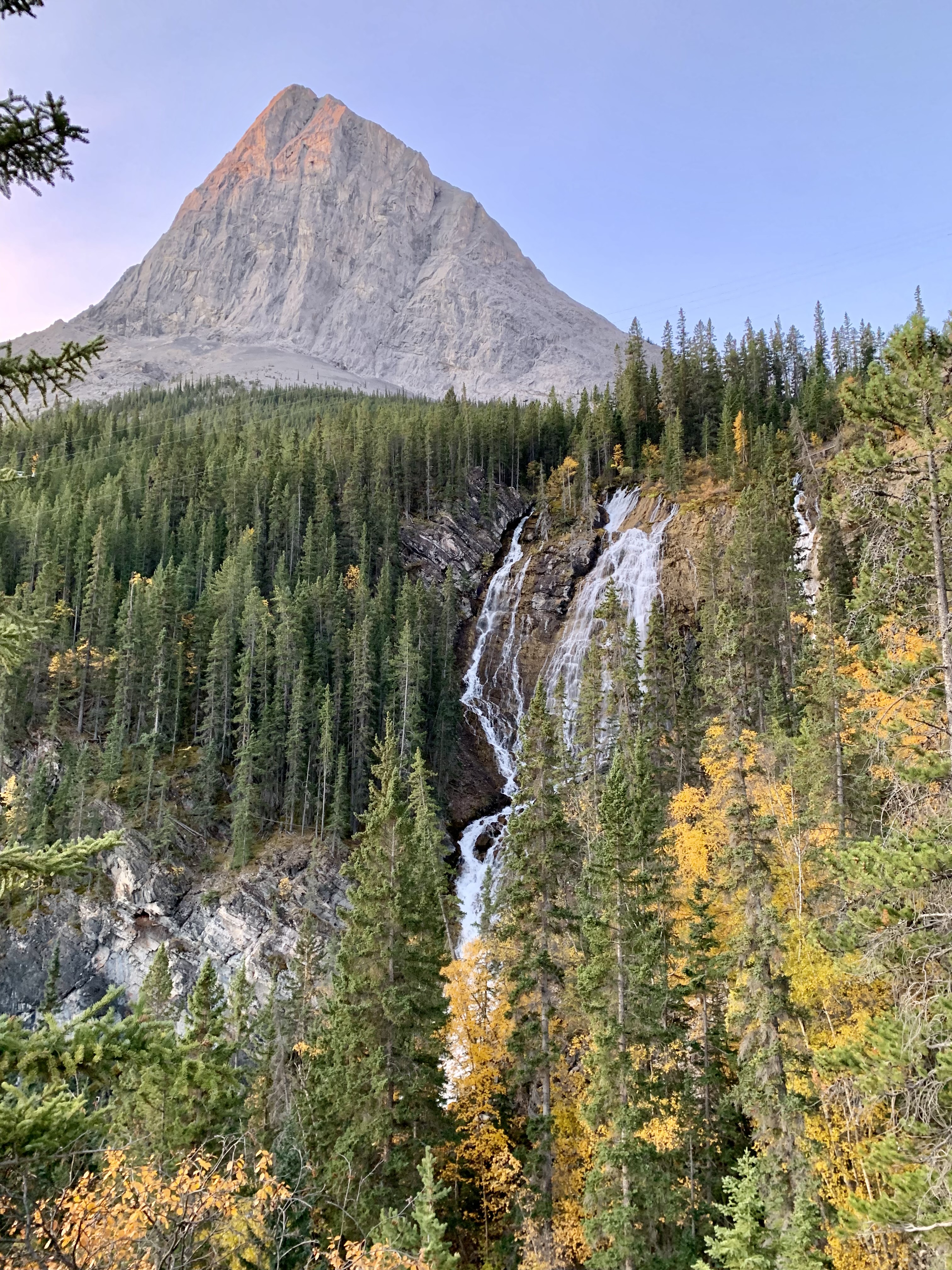
Rawson Lake. So much amazing hiking near Canmore.
View from Grassi Lakes trail. The trailhead is literally 20 minutes away from the apartment I stay in.

Alberta is supposedly the Wild West of Canada but at least in the Bow Valley area (Canmore, Banff…) people seem pretty liberal and sensible. Or, at least not bat-shit crazy like so many people in this country. I really appreciate societies that view healthcare and education as universal human rights.

I also appreciate the fact that snow sports seem to be much more democratic in Canada because lift ticket prices, while not cheap, aren’t as prohibitive as U.S. resorts. It’s always an internal struggle between enjoying a sport so much but also being aware huge swaths of the population are excluded due to financial barriers.

That’s why I appreciate Rocky Mountain Adaptive so much, an organization that aims to lower barriers (physical, cognitive, financial, etc.) so that more people get to enjoy the outdoors. I’ll save that for another post.

Lower leg problems identified and treatment plan – one activity causing problems for another

While I am trying not to slip into that negative space (too much) of feeling bad that I am not able to ski, I am getting answers and taking control of the situation, which always makes you feel better. It is unfortunate that I am getting to experience Jackson Hole in this way, but it is also good to be getting treatment in a place where there are so many athletes and so many health professionals who not only are knowledgeable about skiers/climbers, but understand the importance of these activities to us, and also trust our knowledge of our own bodies and information we have to give them.

I tried not to feel too bad waking up to all this new snow on my car this morning.

I tried not to feel too bad waking up to all this new snow on my car this morning.

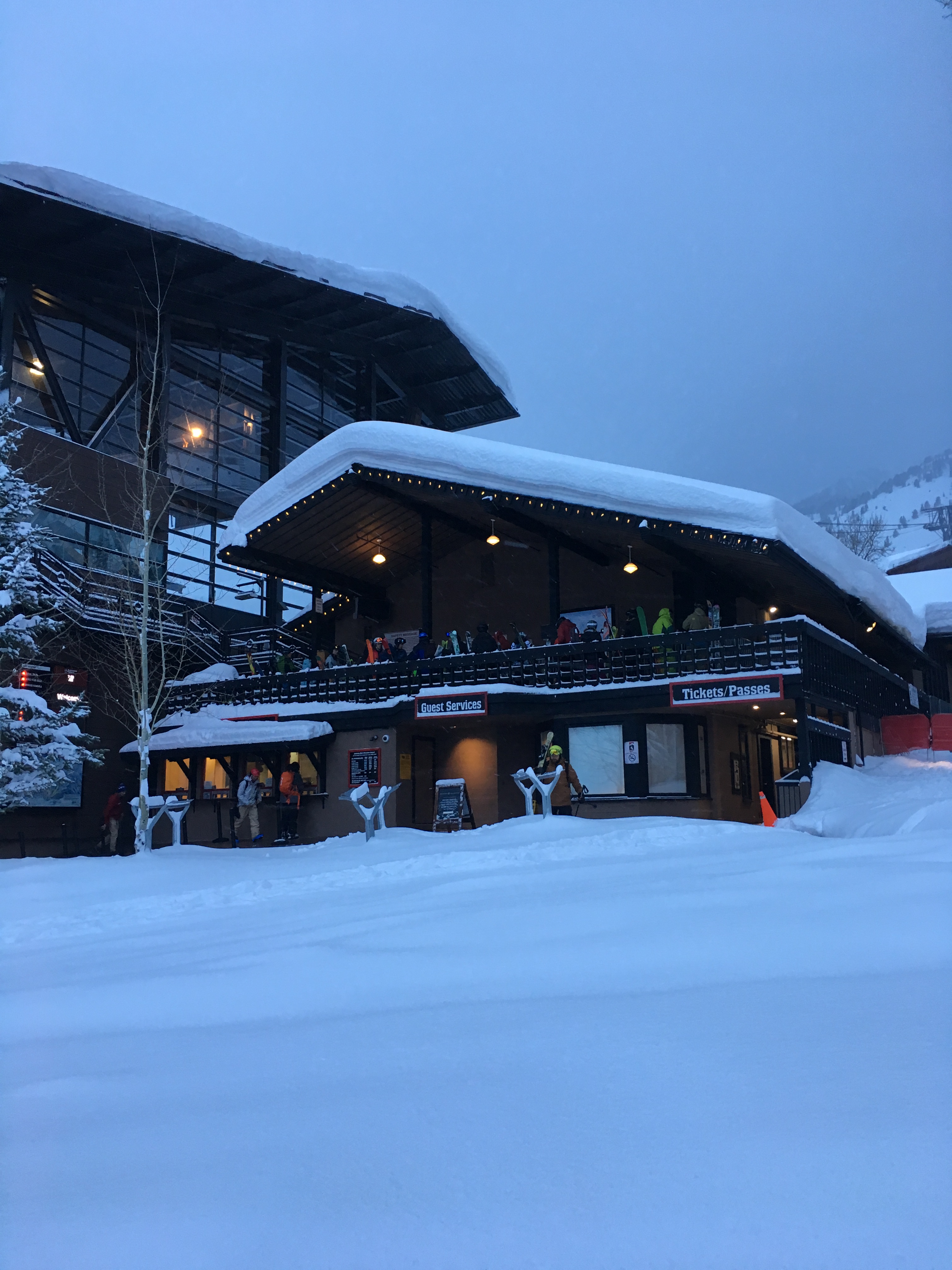
Rolling into JH resort this morning

Rolling into JH resort this morning

Pre- 8AM tram line on a powder day (I think the tram eventually opened at 9.30am or so)

Pre- 8AM tram line on a powder day (I think the tram eventually opened at 9.30am or so)

I went to the boot-fitter at the resort base as scheduled. I already knew that the Peroneus longus was the muscle that was hurting and I  have a history of right foot instability and very high arches; but I was interested to see what the boot-fitter would see. This is what he found:

  1. My boot-shell is a good fit for me (this is a good thing to hear after dropping money on ski boots!)
  2. I have a very very flexible right foot without much padding (e.g. he was able to feel all my metatarsals). It was pretty funny seeing this very calm person’s expression bug out when he moved my foot around
  3. My current off-the-shelf-orthotic in my ski boot is good but could be better
  4. There is nothing bad about my ski stance. I do not have strangely shaped tibia (bow-legged), my knee does not drop in, or anything like that

Given the above, there were not a ton of drastic options. But after discussion, we decided the best we could do was to:

  1. Get a custom orthotic to prevent my mid-foot from rolling around. While my current orthotic prevents me from sliding forward/backward and heel-lift, there was still a fair bit of lateral motion causing strain on my peroneus. He charged me half-price, which was nice. I am so used to having to pay what seems like “double” (even though I know it does not scale that way) for things related to my feet/legs.
  2. Heat the boot shell (this was done when I purchased the boot) and stand in it so that the boot can even better conform to the shape of my leg.

Clearly these are things that are not going to fix the acute issue. But I hope, and think, it will help going forward in the longer term.

The next stop was the physiotherapist. I really liked her because she said, Yeah, you know exactly what is going on. What I learned from her was:

  1. I have a “CRAZY flexible” right foot. Again, it was slightly amusing to see her remark how ridiculous it was, except that in this case this is causing problems and not some cool party trick I can show off.  Which leaves the number of cool party tricks I know at zero.
  2. The muscles under my arch are not strong. At all.

I was not aware of my super-human right foot, but I do know #1 stems from all the climbing I do with it and how I force and contort it into all sorts of strange positions. My right foot is also doing a ton of work stabilizing my right leg when I am skiing, climbing etc.. I know I ask a lot out of it and push it, but I did not know these would be the consequences. A case of one sport (climbing) causing problems in another sport (skiing). My indoor and sport-climbing shoe is also quite downturned and aggressive, farther exacerbating/causing these arch weakness issues.

I had some soft-tissue work done, and also ultra-sound to break up any possible starts to tendonitis. I am also starting my prescribed strengthening exercises, doing my hot-cold contrast therapy, and things to get the inflammation down. We also agreed that it was still worthwhile going to the orthopedic specialist on Friday to get the cortisone shot to reduce the inflammation. Her answer would have been different if I lived here, but given my situation and goals, getting a kick-start seemed like a good idea. We will have a better idea on Friday whether I can  ski on the remainder of this trip.

This adaptive business is very tiring some times and I have ambivalent feelings about the term and how it can be sometimes used euphemistically. Yes, we are adapting to our physical limitations, but these adaptations are not normal. They create problems in other sports, and other areas in our lives. So to sugar-coat this term, I think, is slightly disingenuous. Even as I write this, I feel slightly ungrateful, because there are many assets that are handed to us just by luck of the draw: family, socio-economic circumstances we are born into, a particular ethnic group, the place(s) we grow up, physical ability. Yet this strikes a particular nerve because, for the most part, most people are born with functioning, “normal” human bodies. Questioning what is fair and not fair about such things is futile, mostly (social justice issues are a different matter), but it is hard not to some times. I guess we just keep pushing on and make the most of what we have.

I have the okay to some easy snow-shoeing so I am keeping my fingers crossed roads will be clear for me to drive to Grand Teton National Park tomorrow to clear the mind and body a bit.

Lock-off season begins here

I packed my Metolius rock rings, having never used them before, but thinking they would be a good thing to have while I am otherwise not doing any climbing during my stay in Hong Kong. Part of my walk this morning involved scouting out places where I could hang these rock rings. It was not that easy. Eventually, I settled on Braemar Hill Playground (Braemar Hill is the hill behind our home, and where my primary school is located).

bms-park-entrance

The setup is far from ideal, but it had to do for this morning.

bms-rock-rings_1

The red circular things are actually not entirely stable.

It would be better if I could find something where the rings can hang more freely and without vertical bars on either side of them so that my elbows can move out.

bms-rock-rings_2

It never hurts to be reminded of the alphabet.

My finger and upper-body strength are atrociously weak right now. I started off with the simple 10 minute workout Metolius recommends; and even that was a bit of a struggle with the two-finger holds. I hope I won’t be totally useless for ice this season.

bms-rock-rings_3

bms-sign

I pass.

I am going to do more scouting today to find a better setup.

Gut health and off to Red Rocks

Yes, a natural combination, no?

Since coming back from the City of Rocks, I have been struggling with some pretty severe gastrointestinal issues. It can, understandably, be a bit of an embarrassing topic but it has been severely negatively impacting my life the last while. I have been displaying all the symptoms of severe Irritable Bowel Syndrome (IBS); extremely painful bloating and distention, messed up bowels, etc. The question is why? As most of you know, one of the biggest effects of my spinal cord injury was on my GI tract. Amongst other things, the motility of my intestines is much slower than a normal persons. My sluggish intestines can and have caused some severe problems, including my hospital stay right before I flew out to Salt Lake City.

Like, Salt Lake City, I was not sure if I would be able to follow through with a last minute invitation to climb in Red Rocks, just outside Las Vegas. I have not been to Red Rocks in close to 9 years; before my accident. Things were touch and go but I decided to take a chance and go and cross my fingers that my dysfunctional gut will not give me problems for the short four day trip. I return the day before Thanksgiving, will cook and clean a little, before heading to Northern Vermont (like, Canadian border Vermont) for Thanksgiving and perhaps the first ski day of the season! It will be dinky and there will probably be only a few runs open but what the heck.

I have an appointment with a gastroenterologist soon after that, so hopefully we can identify the issue(s) and possible solutions. In the mean time, I am embarking on a low FODMAPs diet in the hope it might offer some relief. It definitely makes meals and eating out a lot less fun, but it is temporary.

It seems like every one and their mother is in Red Rocks right now, and who can blame them. Unfortunately my stay is a short one and I need to balance my objectives with my partner’s and the group. The approaches in RR tend to be very long however, and that will limit the routes I can do. I would have loved to get on Levitation or Original Route, but with 3 hours approaches for people with two working legs, with significant elevation change, it is pretty much a no-go. As I was looking through routes, I had a hard time not feeling limited. My friend asked how I could feel that way when I was looking at 5.11+ routes. I appreciate his perspective, but still, evidence that I still find it challenging to not feel a sense of loss. I am looking forward to the sun and warmer weather though!

Paris bits and bobs

We got back to Boston last Friday, and even the morning of our departure, I was terribly down. I find myself torn between wanting to be in the mountains/by the ocean, but also wanting the culture and amenities of a proper city. Boston has a pretty good Western food dining scene, but I would not call it a city. I miss the ethnic diversity of major cities, the different neighbourhoods, a proper public transportation system. I am struggling to map out next steps, because I am not sure what the concrete end goal is. Do I try and pursue skiing and climbing as a full-time endeavor, while trying to make a difference in the world and in the lives of others? To do these things simply for fun is not enough. Or do I choose to have these be hobbies, while trying to find meaning and purpose in a career? How do I achieve either of these given constraints – financial, personal, physical etc.?

In the mean time, I am posting some of my favourite photos from my trip. Paris is just a hop-skip away so I know I can always go back. Yet, right now, it seems so so far away.

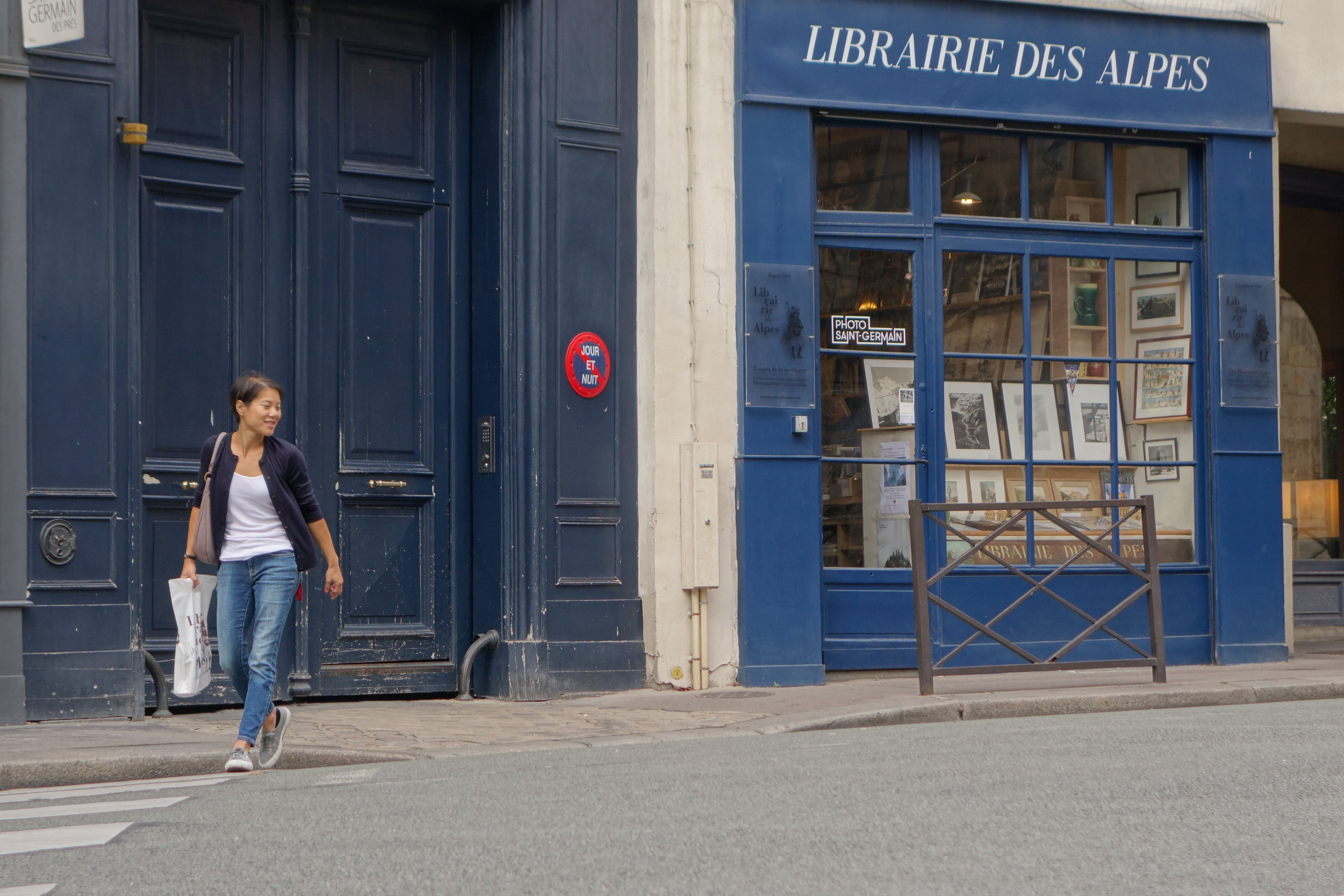
By total chance, I stumbled into a total gem of a shop: the Librairie des Alpes in the 6th arr. along the Seine. I highly recommend this book store if you are in Paris and at all interested in alpine climbing/mountaineering and the history of it. I got talking with the store owner and expressed my interest in old manuals for climbing, skiing, mountaineering.

librairie-des-alpes

I am not sure if there are enough shades of blue in the photo. (Photo credit: Scott McKay)

These are not the oldest texts I own, but they are still pretty damn cool. This is the 1934 publication of the Alpinism manual from the French Climbing and Mountaineering Federation. The two volumes together are remarkably comprehensive. The first volume covers the “Science” of alpinism e.g. meteorology, geology, snow science and much more. The second volume covers techniques and skills for alpine travel and climbing. It even had a diagram on how to do a hand-jam. Who said the French don’t climb cracks?

1934 publication of the Alpinism manual from the French Climbing and Mountaineering Federation

1934 publication of the Alpinism manual from the French Climbing and Mountaineering Federation

When I am in Boston, my back pain and leg neuropathy can get quite intolerable from work, driving, and the generally sedentary lifestyle outside of being in a gym/weekends. However, I found my pain levels were much lower when I was in Paris, due to all the walking/standing and not sitting at a desk.  This is a clear job requirement, but it is tricky because I need to move/can’t sit (or stand) for extended periods of time, but I also can’t take on a job that revolves around manual labour.

Morning calisthenics along the Seine

Morning calisthenics along the Seine. It is funny, one arm pull-ups are quite easy for me yet there are many other goofy exercises I cannot do. (Photo credit: Scott McKay)

All the walking in Paris meant that I could eat like this every morning. The croissants and baguettes at Blé Sucré are honestly the best I have ever had, and there other pastries are fantastic too (the madeleines are considered some of the best in Paris).

Blè sucre's pastries are unaware of the impending demise.

Blè Sucre’s pastries are unaware of the impending demise. (Photo credit: Scott McKay)


While I never tired of going to this bakery for breakfast every morning, I did tire of the museums and old architecture of Paris. Yes, that sounds a bit awful, but I feel like my tolerance/interest in these things is quite low. For our last day, I did not want to see yet another monument, building, etc. So we went to Belleville. This neighbourhood was a big surprise for me, in that I was not expecting to enjoy it so much. Quite a few things there reminded me of Hong Kong, and not just because there are lots of Asian people there: the slightly hillier residential areas, with lots of stairs, the density of restaurants (lots of Thai, Vietnamese, Chinese, Lebanese restaurants)…

I really enjoyed the Parc des Buttes Chaumont in Belleville because the paths, foliage, people using it reminded me a lot of the parks in Hong Kong.

Parc des Buttes Chaumont

Temple de la Sibylle in Parc des Buttes Chaumont, Belleville, Paris. (Photo credit: Scott McKay)

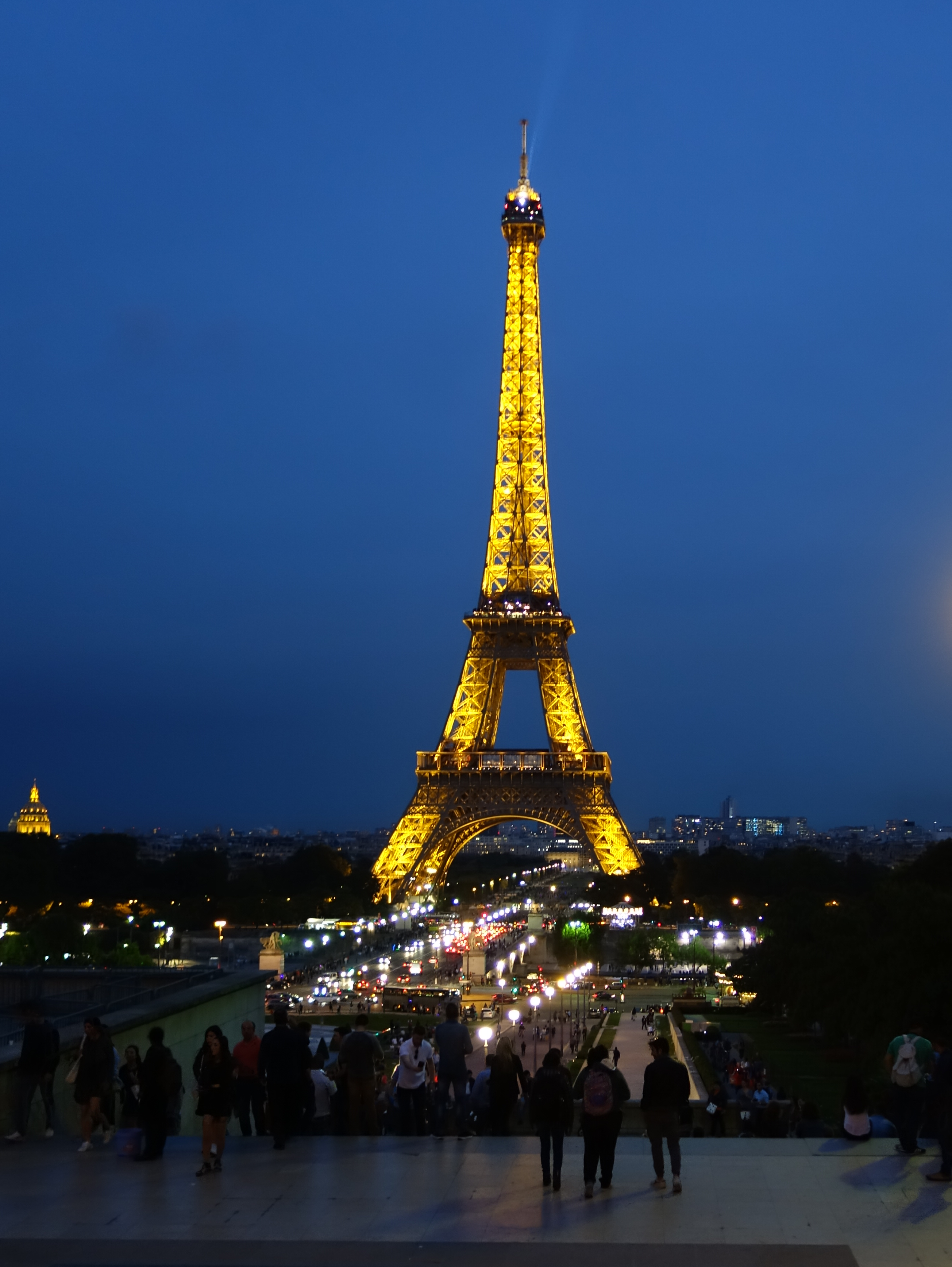
And, of course, we got up close to the Eiffel Tower. My friend Yves lives very close by to the Eiffel Tower, and picked a wonderful spot for dinner with a great view of it.

eiffel-tower_portrait

Eiffel tower from the Pont de Bir-Hakeim

View of the Eiffel tower from the restaurant on our last night in Paris.

View of the Eiffel tower from the Café de l’Homme on our last night in Paris. (Photo credit: Scott McKay)

The Eiffel tower later that night.

Same view, different light. (Photo credit: Scott McKay)

As a total aside…we were riding the Paris Metro and opposite from us, an African man dressed in baggy jeans, a flat brimmed hat, was carrying an instrument I had never seen before. He saw my quizzical look and said in English, It is a Kora. He proceeded to pluck a few strings casually. Beautifully. Then launched into a song in an African language. I have no idea what the origins are of that song, but the spontaneous act of playing this instrument and singing while riding a train, making the people around him smile…this man who would not look out of place on a basketball court in an inner-city neighbourhood…brought me to tears.