The road to…the Intensive Care Unit (ICU)

(Apologies for typos, spelling errors, poor sentence construction etc. This will be explained later).

My blog posts are infrequent, but when I do post it seems like I have something eventful to report and muse on. This is eventful.

I was grumbling about not being able to find a partner to climb outside with me over the long Memorial Day weekend (the previous Saturday to Monday). I was also experiencing very severe back pain (I could not stand anywhere near vertical) which I attributed to poor form while deadlifting. This continued into Saturday and Sunday, along with various waves of having difficulty with balance, walking; forgetfulness and general spaciness. These symptoms overlapped with a previous drug interaction I had between one of my usual medications and an antibiotic I had received from the dentist. Thus we thought if we can identify the one variable that changed and remove it, my symptoms would clear. This did not happen.  After consecutive days of being a pained, confused, teetering mess, Scott and I decided this might just be a bad UTI; why don’t we go to the ER of the nearby Mount Auburn Hospital, get some antibiotics, and be on our way. Certainly with plenty of time for Scott’s Monday late night flight to SF that evening.

I made my way to the ER, walking wobbly but still able to walk myself in. After a short wait, we were escorted in, had my temperature checked and sat waiting to be diagnosed and treated. I did indeed have a UTI and a very small kidney stone in my left kidney. To relieve the blockage, a stent was inserted (under general anesthesia) and I was brought up to the hospital floors for what we thought would be an overnight stay. Scott continued with his travel plans, encouraged by me and the doctors.

Then, things deteriorated very quickly. My blood pressure fell to 50/25, my heart rate was up at 150 bpm….and that is when I was rushed to the ICU for the second time in my life.

How do Paralympians make a living?

After I was approached by a Paralympian monoskier about getting into ski racing, I started to look more into how to get the ball rolling on this and see how far I can take it. Once I saw the cost of all the camps, the travel expenses to camps and competitions and, of course, the time it might take to train, I wondered how on earth can a person with his/her eyes set on making the U.S. Paralympic Team (Winter or otherwise) manage to support themself??

First off, Paralympians are probably  not being bombarded with sponsorship offers. Secondly, I don’t see many Paralympians doing manual labour jobs for companies like UPS and Home Depot; which I am guessing pay Olympians minimum wage and don’t mind if they have to take a good chunk of time off for training, events etc.

This is something I am struggling to reconcile. For example, could it come to having to make the choice between pursuing this Paralympic goal or, say, buying a house? If anyone has any ideas or knowledge about this, please let me know!

Crested Butte

I was not sure what to expect of my extended weekend in Crested Butte. Arriving feeling physically poor certainly did not help. But as I write this en route back to Boston, I can say with confidence that my time in Crested Butte and Colorado this season was a success, in terms of taking my three-tracking abilities to another level, reconnecting with old faces, meeting many new, wonderful ones, and being lifted by the incredible things the Adaptive Sports Center and its staff enable.

Part of my trepidations about the Crested Butte Ladies Adaptive weekend was how structured it seemed e.g. fixed instruction time, meal times, social activities etc. I generally like doing my own thing so this seemed quite restrictive. However, I found that I learned a tremendous amount being exposed to different instructors and a different program. The Adaptive Sports Center has a tremendous wealth of knowledge, yet also an open-mindedness to try new things. My instructor from my first day is actually a Professional Ski Instructors of America (PSIA) Adaptive examiner, so she was definitely very knowledgeable and skilled at three-tracking. While the mechanics of skiing, whether it be on one or two skis, are the same, it still was nice to be with someone who could ski as well as I could on one ski. I have had the experience of instructors needing to ski with me on two skis to keep up. In the space of my first day, my ability to ski bumps of all sizes, in variable snow conditions (crud, ice, softer snow) and ski bumpy traverses (this is harder on my uphill ski side) improved considerably.

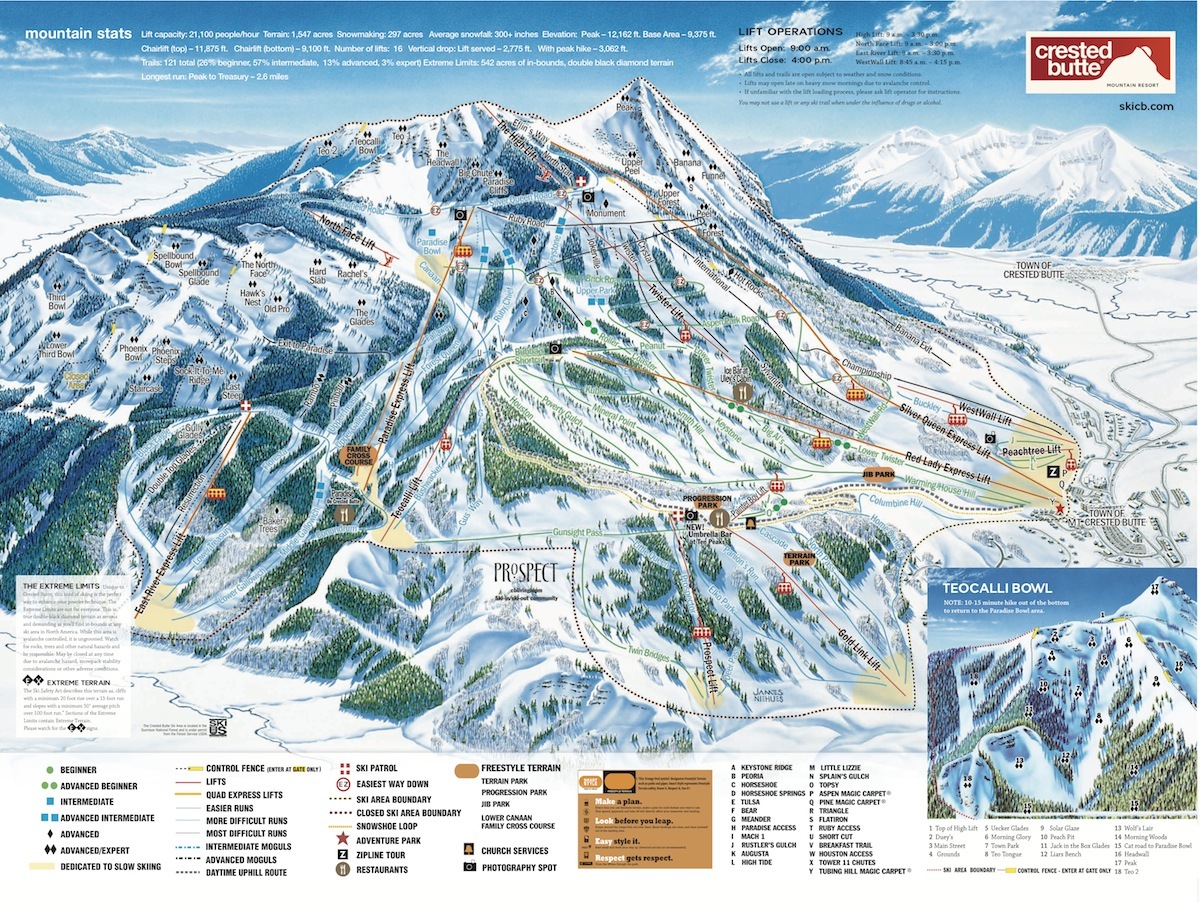
I saw that Crested Butte had two T-bars that serve double-black terrain. I was interested to see if I could ride a T-bar as a three-tracker since a lot of terrain in Europe, say, is only served by T-bars. Bryn, my instructor, had never ridden a T-bar as a three-tracker either, as most three-trackers are not skiing that advanced terrain. But, after a bit of strategizing we gave it a go. We had to take the High lift as the North Face lift was closed for an annual ski race. But, as you can see from the trail map below, one still needs to be able to ski advanced terrain to get back down. It was great to know that I could manage that as a three-tracker.

Check out all the awesome double black terrain on the North face

Check out all the awesome double black terrain on the North face (Source: http://www.skicb.com/the-mountain/trail-maps)

I sat on the left side of the T-bar, so that I could hold the middle of the T-bar with my right hand, have my right ski on the inside and have my left outrigger on the snow for balance. For my right outrigger, I kept the cuff around my right arm and balanced the outrigger on the top of my left hand. Bryn rode the T-bar more like a regular skier, skating on her left ski boot (she had a ski on her right leg). We congratulated ourselves on riding the T-bar without any incident! The next day, Tereza (another ASC volunteer/instructor) and I rode the North Face lift. Upon the recommendation of another instructor, I tried to ride the T-bar by myself. This did not work out as well. The lack of a counter-balance and the sudden jerks of the North Face lift had me fall within 10 feet of where I had loaded. Tereza and I found that it was easiest to the ride the T-bar with her having her ski on her left boot and sitting on the right side of the T-bar and we rode the T-bar quite a few times Sunday afternoon. This gives me confidence that, with the right partner (i.e. not a snowboarded and not someone who will knock me over) I will be able to ride T-bars all over the world again.

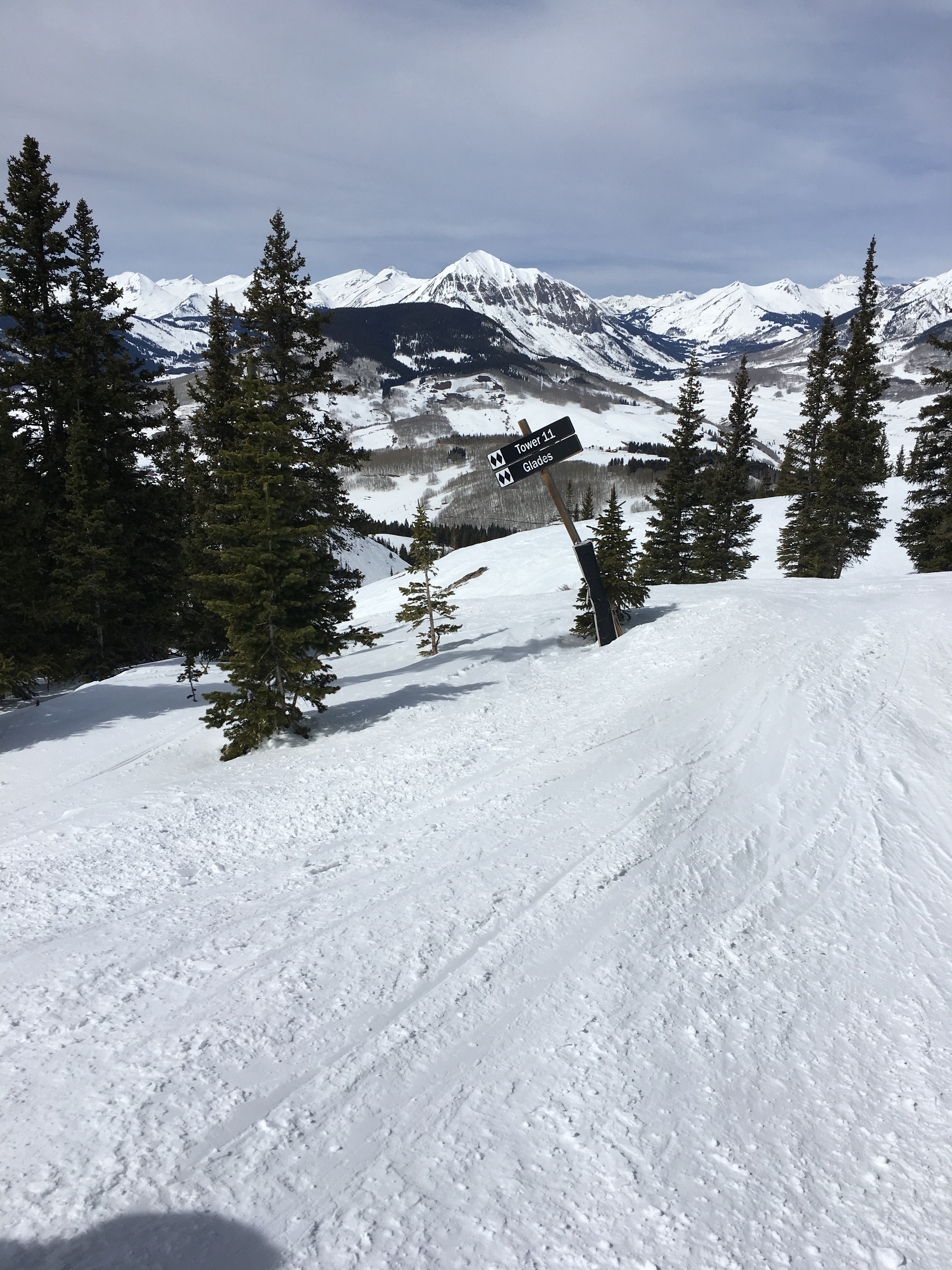
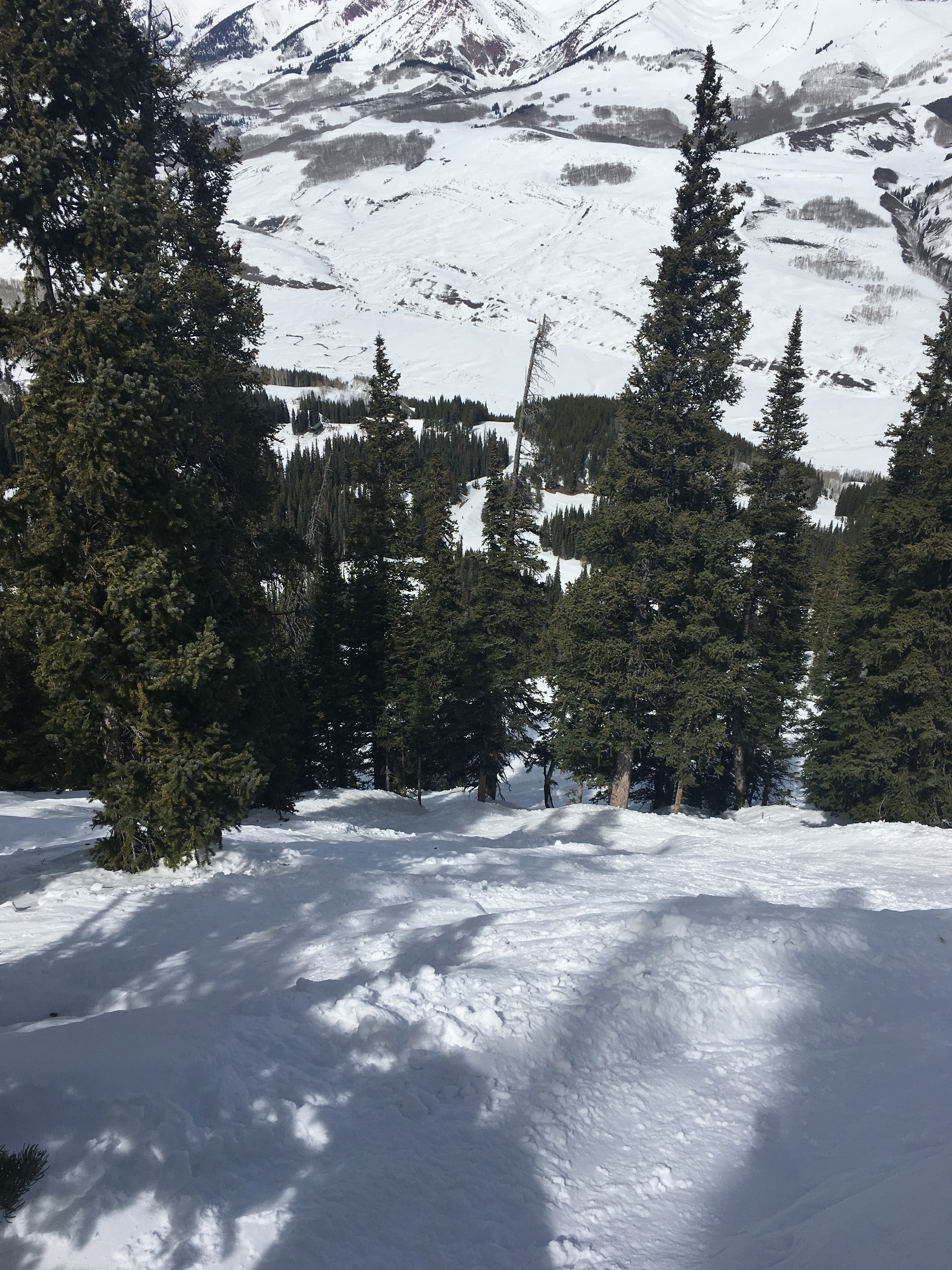
The best part about making it to the top of the T-bar lifts without incident was getting to ski the super fun double-black terrain at Crested Butte! My skill level as a three-tracker continued to improve leaps and bounds on Monday. I was able to build upon the skills I had picked up from the previous day and navigate rocky, thinly covered terrain, trees, glades, all in less than ideal snow conditions. Which is exactly what one (or at least I) needs to know how to do if they are going to be skiing advanced, off-piste terrain.

Very friendly warm-up double blacks off the North face lift.

Very friendly warm-up double blacks off the North face lift.

More challenging runs off the North lift.

More challenging runs off the North lift.

A bit more stuff to deal with.

A bit more stuff to deal with.

Tereza was terrific three-tracking company and it was very useful to see how she used her outriggers while carving on groomed terrain. It was incredibly useful (and fun) skiing with four-time Paralympian Sarah Will in the morning too. Monoskier tracks tend to be quite beautifully shaped and I was right on her tail (we both go fast). Later she said, you have the downhill mentality, which was nice to hear. Some women (and men) get nervous when they move “too” fast. When I move fast, things slow down. Time and senses dilate with the hyper awareness and focus.

I found that using my outriggers a lot in bumps puts a fair bit of pressure on the outside of the hand (little finger side of the palm) and my hands would involuntarily cramp when I was not skiing.

My fingers/hand are not doing this voluntarily.

My fingers/hand are not doing this voluntarily.

I would like to express my heartfelt thanks to the High Fives Foundation for their generous donation that allowed me to attend the Ladies camp. I had not heard of this organization till just before this trip; I wish I had been aware of them earlier! They could have helped me tremendously in the months/years immediately after my accident. While I am sad that I did not have access/awareness of such a resource for myself then,  I am very glad that such a resource exists for injured mountain sports athletes.

One last Alta Lakes backcountry pic and initial CB impressions

My pack is a tad bigger than most. Photo credit: Joshua Butson.

My pack is a tad bigger than most. Photo credit: Joshua Butson.

After an unplanned extension to my Telluride stay (more three-tracking in-bounds on my own and with TASP), I arrived in Crested Butte late Friday to take part in the Adaptive Sports Center Ladies weekend. However, after several nights of less than 1-2 hours sleep (spasms, neuropathy etc) and many consecutive days of skiing, my body and, to a certain extent my mind, shut down and needed a day of rest. It is unfortunate that as I have gotten more active with my lower body, the cramping, spasms and discomfort at night have worsened.

However, I am very much looking forward to checking out Crested Butte. The amount of double black terrain on its North face looks sick.

The drive from Telluride to Crested Butte via Montrose saw quite a change in the landscape, moving from the already arid Uncompaghre Valley along the Gunnison River and Curecanti National Recreation area, with mesas and mountains on either side, into even drier Gunnison county. Gunnison regularly has some of the coldest temperatures in the country and the landscape is sparse. I then drove from Gunnison through the town of Crested Butte to the town of Mt. Crested Butte, home of the ski resort. Crested Butte reminds me of a Southwest high desert town in some ways, with its abundance of art galleries. It is quite a bit smaller than Telluride and more of a “Western” town, given its rural setting.

My left leg has taken quite the beating on this trip though. The circulation in that leg is poor so it will take a long time for the bruising to go away.

Just in time for shorts/skirt season.

Just in time for shorts/skirt season.

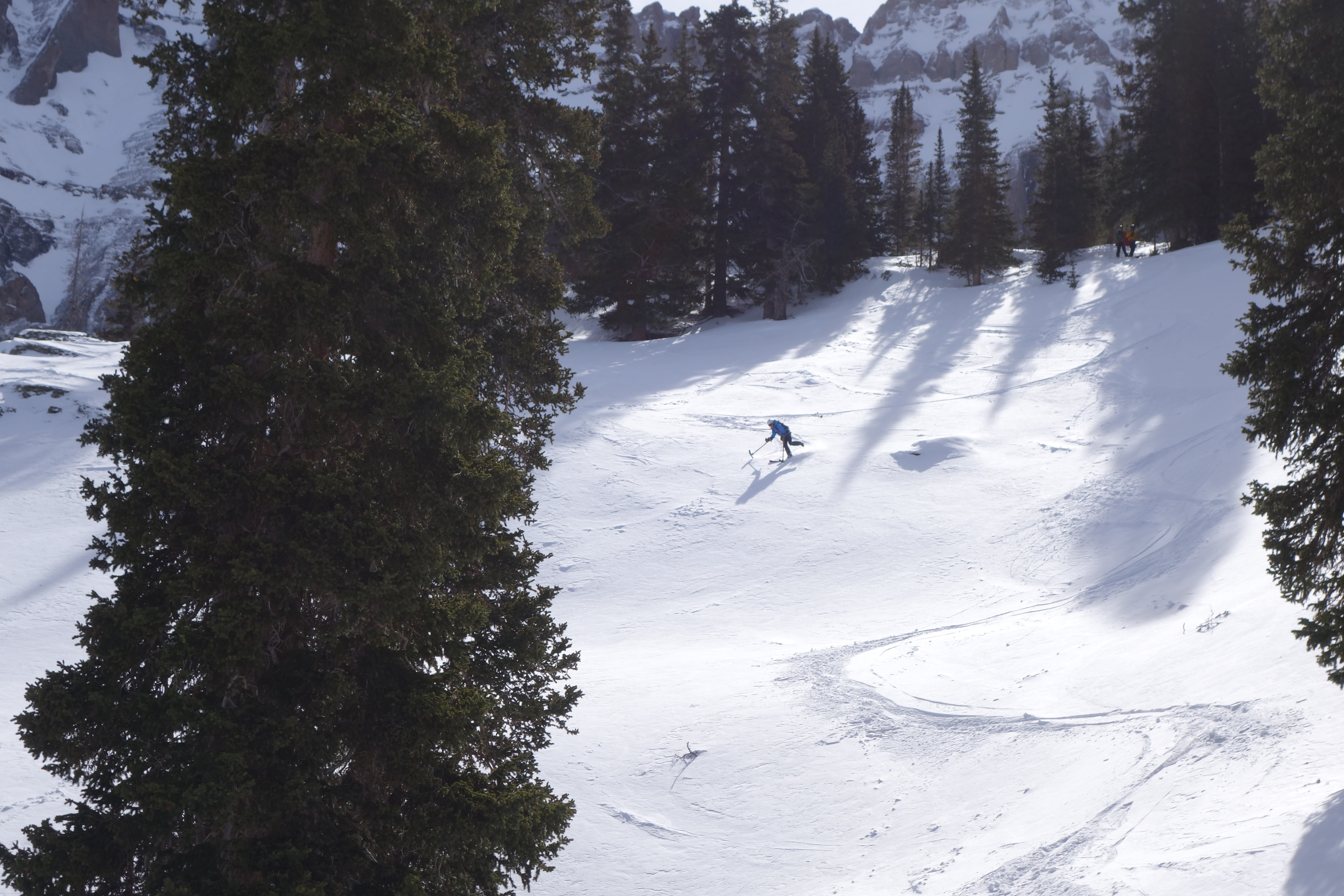
Back in Telluride – first BC experience post-accident!

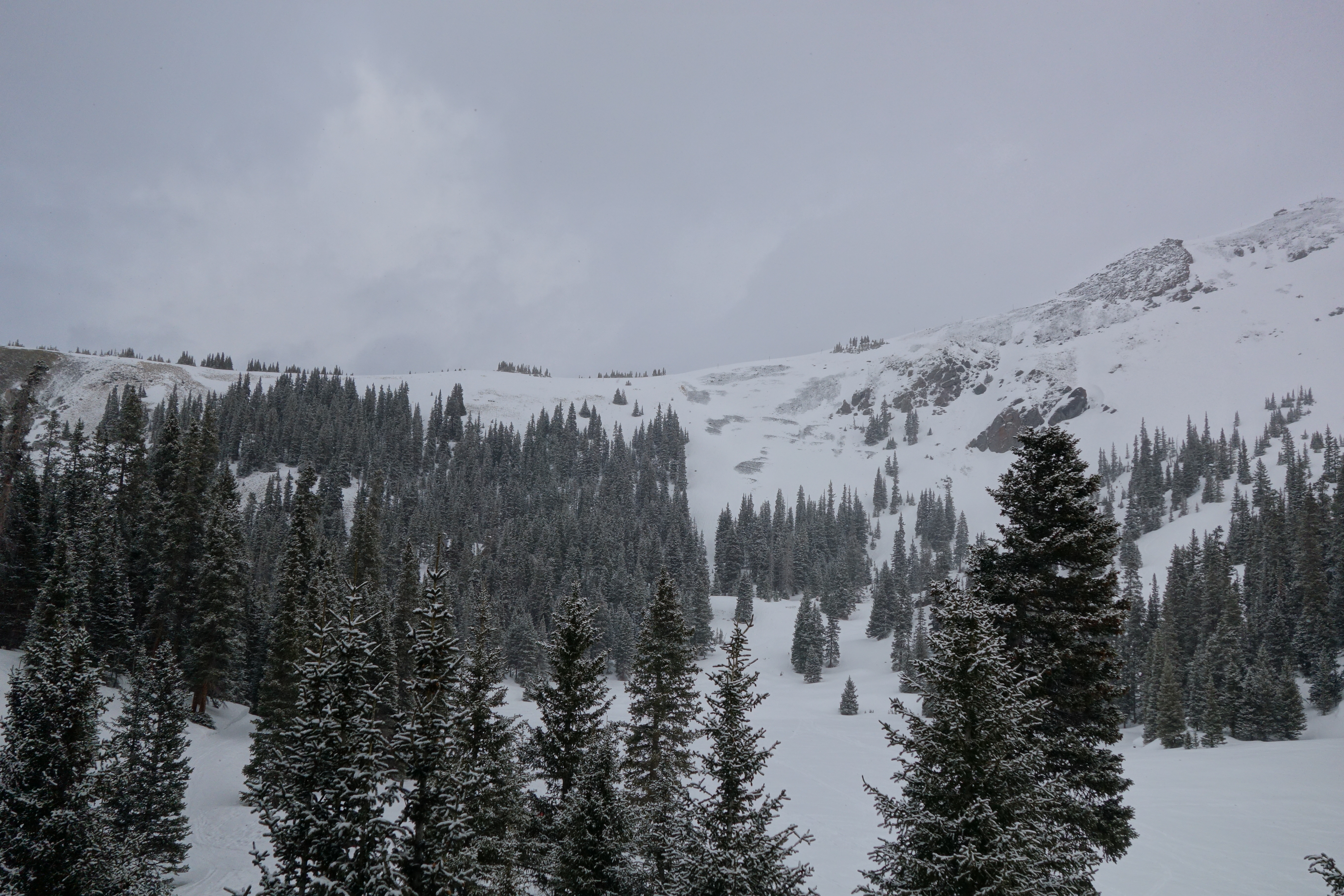
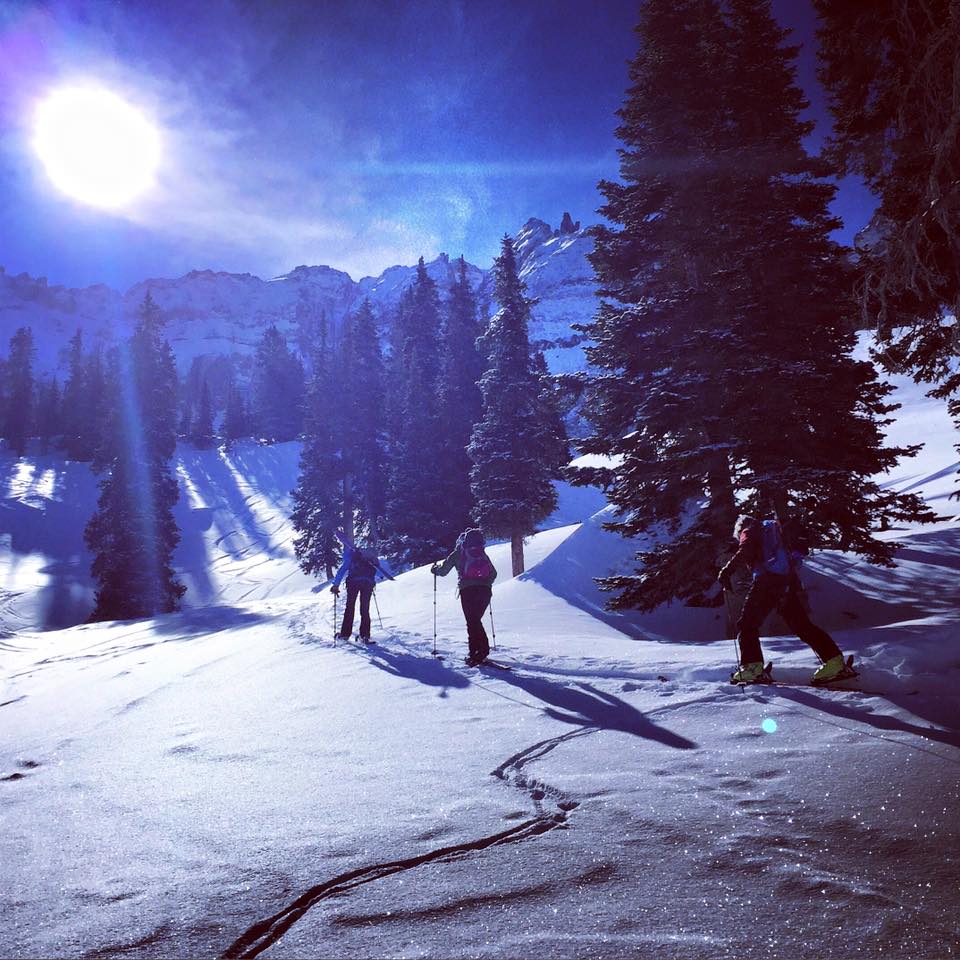
First time back in the BC post-accident (Alta Lakes, Telluride)

First time back in the BC post-accident (Alta Lakes, Telluride). Photo credit: Joshua Butson

I am tired from the last week of in-bounds and out of bounds skiing, but feeling so lifted from the TASP backcountry weekend in Alta Lakes. This was my first time carrying a shovel, beacon, probe in over 6 years, and I really was not sure how things would go.

I had such a great time skiing at Telluride last year that I contacted Tim McGough, the Program Director at TASP, to let him know that I was interested in coming out again this season. He mentioned they were putting on an adaptive backcountry hut trip and asked if I was interested in joining. Despite some trepidations over how different/challenging skiing and traveling in the backcountry could/would be for me, it did not take me long to say Yes! as backcountry skiing was a big love of mine before my accident.

Coming up with a system was challenging given that I do not live close to Tim/TASP and there was no opportunity for hands-on experimentation. Tim asked if I was able to snowshoe. I did not know the answer to this, and had many doubts as I was not sure if my left snow shoe could clear the snow. I would not know the answer though until I tried. My first attempt was in Scott’s Mum’s backyard in Vermont. To my surprise, I managed to trudge around. The next step was to see if I could handle inclines. Again, I tromped around a bit around Jay Peak, VT and found that I could manage. I then tried to find places closer to where I live to practice. This was challenging due to the lack of snowfall we had received in/around Cambridge. I found a little suburban park to at least practice packing/carrying my equipment on my back, which also took a fair bit of time to figure out. The system I eventually went with to “skin” up was to wear snow shoes and snow boots. This means that I have to carry my ski, (heavy) outriggers and ski boot, and then find a way to transition out of my snow shoes/boots into my ski boot/ski. It does not really seem fair that I have to carry a lot more with a gimpy leg but you do what you have to do. 

I admit, I was a tad bit upset to learn that I was the only person in the group with a disability. I felt like I would just slow everybody down, always be last etc. This soon passed as I proved to be able to more than keep up, at least skiing wise, with an incredible group of TASP instructors and volunteers.

Conditions were very friendly: warm, low wind, firm snow underneath dust. The drop into the lakes was fine on one ski, despite lots of trees and shitty ice.

The ridge line from where we dropped in.

The ridge line from where we dropped in.

A bit of a snowy trudge in.

A bit of a snowy trudge in.

The snowshoe up to our runs was very tiring for me though. Firm snow is definitely easier than deeper snow, and we experienced it all over the weekend. We could not have had better guides than Joshua Butson and his guiding company, San Juan Outdoor Adventures, who was extremely skilled, knowledgeable, fun and patient. Joshua, btw, has done some pretty awesome first ascents all over the world. 

Photo credit: Joshua Butson

Photo credit: Joshua Butson

The slog up. You can tell just how happy I am, unlike the picture of misery behind me.

The slog up. You can tell just how happy I am, unlike the picture of misery behind me.

So many skiing options.

So many skiing options.

Butt shot. Photo credit: Joshua Butson.

Butt shot. Photo credit: Joshua Butson.

from behind

Aside from introducing me back into skiing in the backcountry, a large part of the trip was to cover basic avalanche skills (basically a Level 1 avy course – about 15 years since I took one!) It was interesting to see what had changed in terms of avalanche safety education over the last 1.5 decades. 

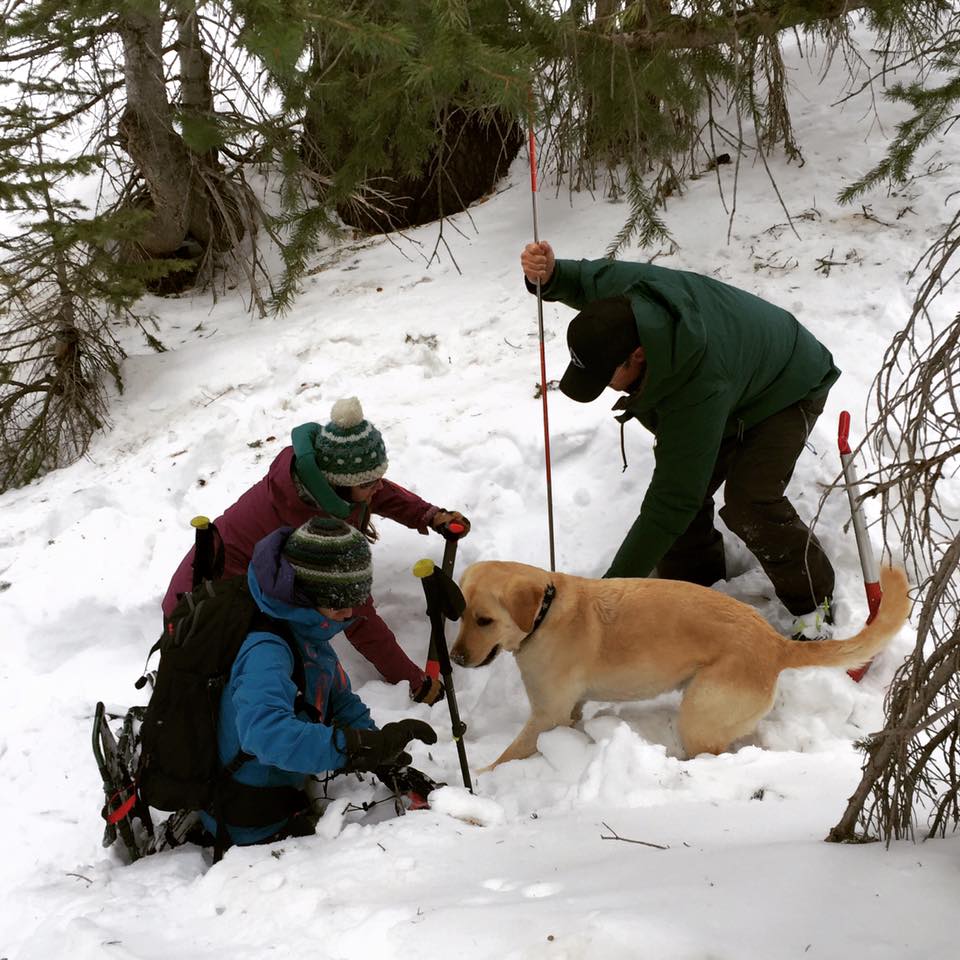
Searching for transmitting beacons is much easier when you have an awesome service dog with you.

Searching for transmitting beacons is much easier when you have an awesome service dog with you.

While other folks travelled with their skis, I stayed in my snow shoes.

While other folks travelled with their skis, I stayed in my snow shoes.

While I would sometimes get dejected for moving uphill slowly and tiring (the right leg because it was doing most of the work, the left leg because it is so weak and also working), I did feel we accomplished a fair bit and I am on my way back to doing another thing I love and have missed since my accident. Being surrounded by a wonderful crew who made me laugh so hard in our “hut” was such a blessing and I am reminded of how many good people there are out there. 

I was asked to help some of the TASP instructors with movement analysis and three-tracking instruction, as that is a component of their PSIA Level 1 Adaptive ski instructor exam. I spent the morning having my movements analyzed and giving them feedback, and the afternoon giving a little bit of bumps skiing instruction one-ski-style. It was just as instructional to me as it was to them, as trying to explain and teach something is the best way to learn yourself. Listening to them offer their analyses of my movements, the vocabulary they were learning to use, and trying to articulate my movements to them was incredibly useful. It also felt good to be able to “give back” a little and offer some of my skills and experiences (all two seasons’ worth!) to them.

I cannot wait to return next season.

Not a bad view to wake up/go to bed to.

Not a bad view to wake up/go to bed to from the Alta Lakes observatory “hut”.

Super late first day of ski season

Well, it has been a really abysmal ski season in the Northeast. Even life-long New Englanders will say that conditions are appalling. If there is any snow, it is chunky, granular, and icy. But mostly, it is just rocky and bare. Honestly, there are runs open at Jay Peak that you would never see open out West.

Nonetheless, like all skiers, I was jonesing to start the ski season, no matter how awful conditions were. The fact that my first day only happened in the middle of January is another sad data point.

For a variety of personal stresses, I have been very slothly for the last 6-8 weeks, so I was worried about how out of shape I would be, especially since I rely on one leg. My right glute, quad, and hamstring were pretty worked within two warm-up runs. But things got better after that. I was actually very surprised to be skiing as well as I did. In contrast to last season, I did not have to spend the first 3-4 months, setting up my outriggers to be the right length.

At the very end of last season, in Alyeska, we came up with a system of clipping my left foot up in order to get it out of the way of deeper snow. This continued to work fairly well going into this ski season. I have had to iterate on that though. I wear a belt on my ski pants (now, I can’t buy ski pants that do not have belt-loops), and clip a quick-draw to that. The reason for this is so that the rope-end of the quick draw sticks out below my ski jacket so that I do not have to reach underneath it every time I get started down a run. I used a crappy old oval carabiner attached to some cord I had tied around my left snow boot, to clip to the quickdraw. Dealing with a non-keylock biner, especially with mittens was a real pain in the ass. Next, I went with a non-wire gate notchless (keylock) biner. This was an improvement, but it was still not ideal as the non-wire gate reduced the gate opening space and made it harder to clip this biner to the quickdraw.

The next iteration was to use a keylock, wire gate biner on my left snow shoe (the quickdraw I use has all these properties). This turned out to be a big improvement, along with switching to gloves from mitten. Boo-yah!

I was quite surprised to find that I was skiing as well on Day 1 this year as the last day of last season. Scott thinks that the new skills I learned from last season had time to marinade over the last 10 months or so, and come together. Better than fester I guess.

Here is a video of me on my first day, skiing icy, black bumps in control, and also having the endurance to link a lot of turns. As usual, the video doesn’t quite capture the size of the bumps and terrain. I was rather pleased.

Wilderness First Responder training recap

There was no one reason why I decided to take a Wilderness First Responder (WFR) course and get WFR certified. There are many descriptions for the WFR program, but all follow this rough description:

“The definitive wilderness course in medical training, leadership, and critical thinking for outdoor, low-resource, and remote professionals and leaders.

The Wilderness First Responder program is the ideal medical training for leaders in remote areas including outdoor educators, guides, military, professional search and rescue teams, researchers, and those involved in disaster relief. The curriculum is comprehensive and practical. It includes the essential principles and skills required to assess and manage medical problems in isolated and extreme environments for days and weeks if necessary.” [1]

In the U.S., WFR is the nationally recognized standard for outdoor professionals. I knew a WFR certification was a prerequisite for becoming an AMGA Rock Guide, so that was certainly a consideration. But, more importantly, I wanted to feel like I was prepared to deal with a medical situation in the wilderness and/or backcountry. While my days of spending a lot of time many hours/miles/days away from a road are somewhat behind me, there are still a number of situations I can be in, either alone or as a group, where medical attention is delayed.

So when my friend and frequent climbing partner asked if I wanted to take a WFR course, I said, Sure! even though a WFR course is a significant time commitment (70 to 80 hours) and a fair chunk of change.

We had some constraints: the course had to be within 300 miles of the Boston area, and it had to be in January 2016. I suggested the condensed 5-day WFR course  (WFR courses typically take place over 7 days) offered by Wilderness Medical Associates since a) it would require less vacation days, and b) overall costs (accommodation etc) would be cheaper. Dave, being the good sport he is, agreed to my plan.

The condensed version of this course made for very long days. But I learned a ton. Aside from theory, the course really focuses on scenarios and the practical aspect of rescues. I found the latter to be the most useful thing for me.  It is one thing to learn, have the knowledge and understanding of what you should do given a particular circumstance. But it is a different think to be able to make decisions in a very stressful situation (severity of injuries, poor weather conditions, shitty evac options etc.)

Making a body splint for a full pelvic and leg fracture out of sticks, foam and paracord. I am the one in dark blue. Oh, I didn't bring a brush with me so I ended up looking like a Gremlin towards the end of the course.

Making a body splint for a full pelvic and leg fracture out of sticks, foam and paracord. I am the one in dark blue. I didn’t bring a brush with me so I ended up looking like a Gremlin towards the end of the course.

One benefit to taking the course in Central Maine in the middle of January is that we got a lot of practice working through these scenarios in very cold, snowy conditions. That is probably more realistic, and it also helped me practice how to make and apply decisions under stressful and inclement conditions. I definitely get stupid and shut-down when I am very cold.

WFR pic_splinting

Here I am splinting an injured skiers fractured and heavily wounded leg. Since I neither have a beard, nor am I blonde, you can guess who I am in the photo.

I learned how to do the appropriate scene and patient assessments, how to record this information and relay it to a rescue team (e.g. medical/helicopter dispatch); different techniques to treat injuries in the field, different evacuation options. And, most importantly, how to put all this together to maximize the likelihood that the patient has his/her best possible outcome.

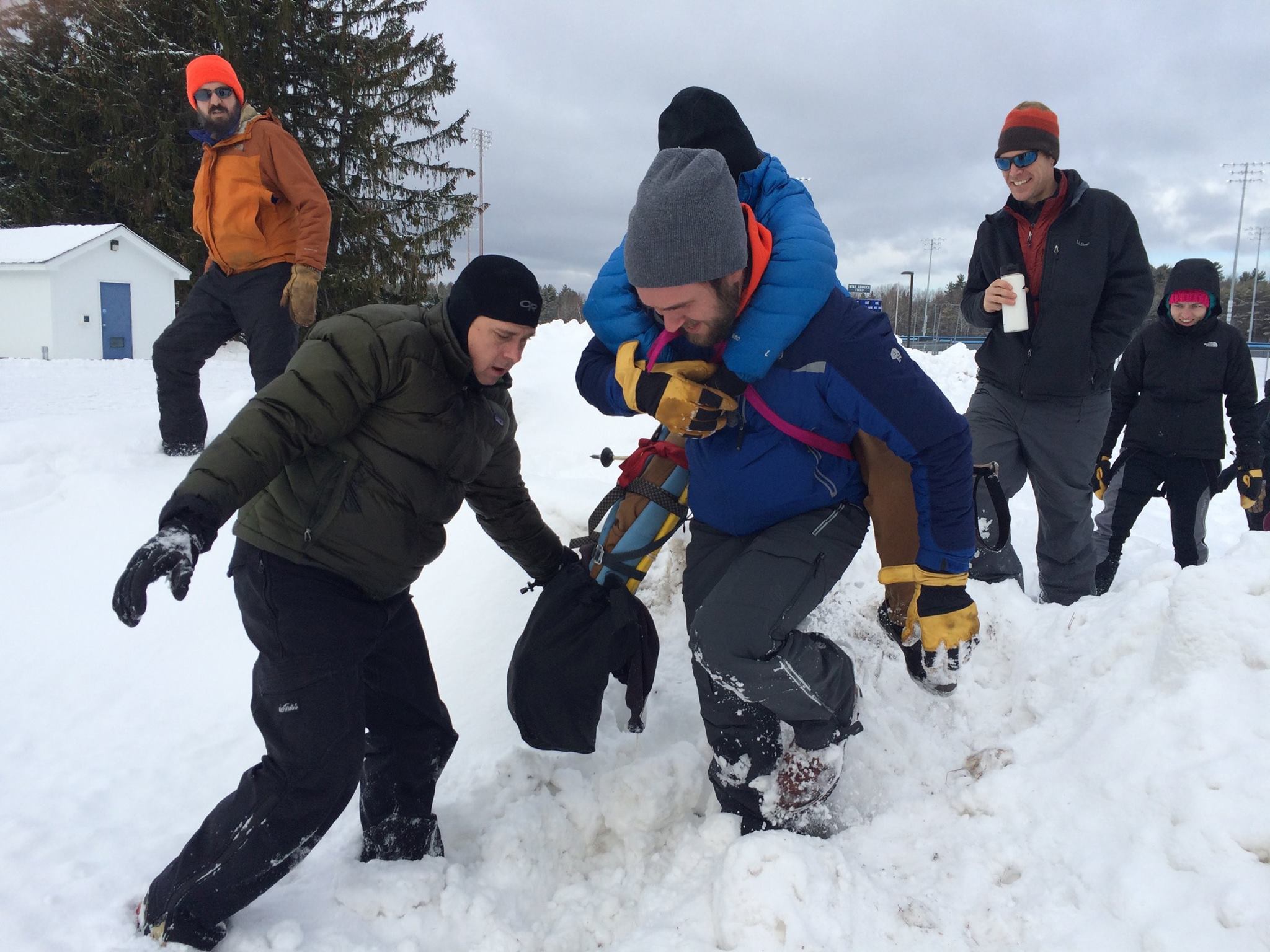
I did realize, however, how important being able to lift and carry a person/people is. I felt bad that I was limited here. I could manage carrying a litter with other people, but I still could pull my “full” weight. Obviously, I have a pretty good explanation for this, but I still felt bad.

My buddy is 6’4″ and around 210 lbs; so he is a total clydesdale and was able to be the workhorse in a lot of these practice scenarios.

Practicing a carry-out.

Practicing a carry-out.

Later, in the car ride back, Dave asked me, so, do you think you could carry me out in a rescue situation. I said, hell no and that he was fucked. While there is some truth there, perhaps, I am aware that having the skills to perform basic life support and treat illnesses and injuries in remote settings is a very useful skill for myself and my partners. And it feels pretty good to be WFR certified.

[1] https://www.wildmed.com/wilderness-medical-courses/first-response/wilderness-first-responder/
Realization (of the not-so-great kind)

A personal motto of mine, and one that is quite apparent as I climb, ski, and live life is “No excuses.” This past weekend, I realized that I was being hypocritical. I realized that I was using my introversion as an excuse to not go to large social gatherings, not hang out with friends sometimes, not do this and that. I realized that I was using the argument of “this is just who I am” as an excuse for avoiding certain things.

These kinds of realizations do not feel good. But shitty as it feels, I believe that one outcome of this is that I try and take ownership of my introversion, be in control of it, and turn it on/off when need be. It might be the only way I can fully maximize Wendy and, hopefully, the people around me.

Happy Thanksgiving

Happy Thanksgiving.

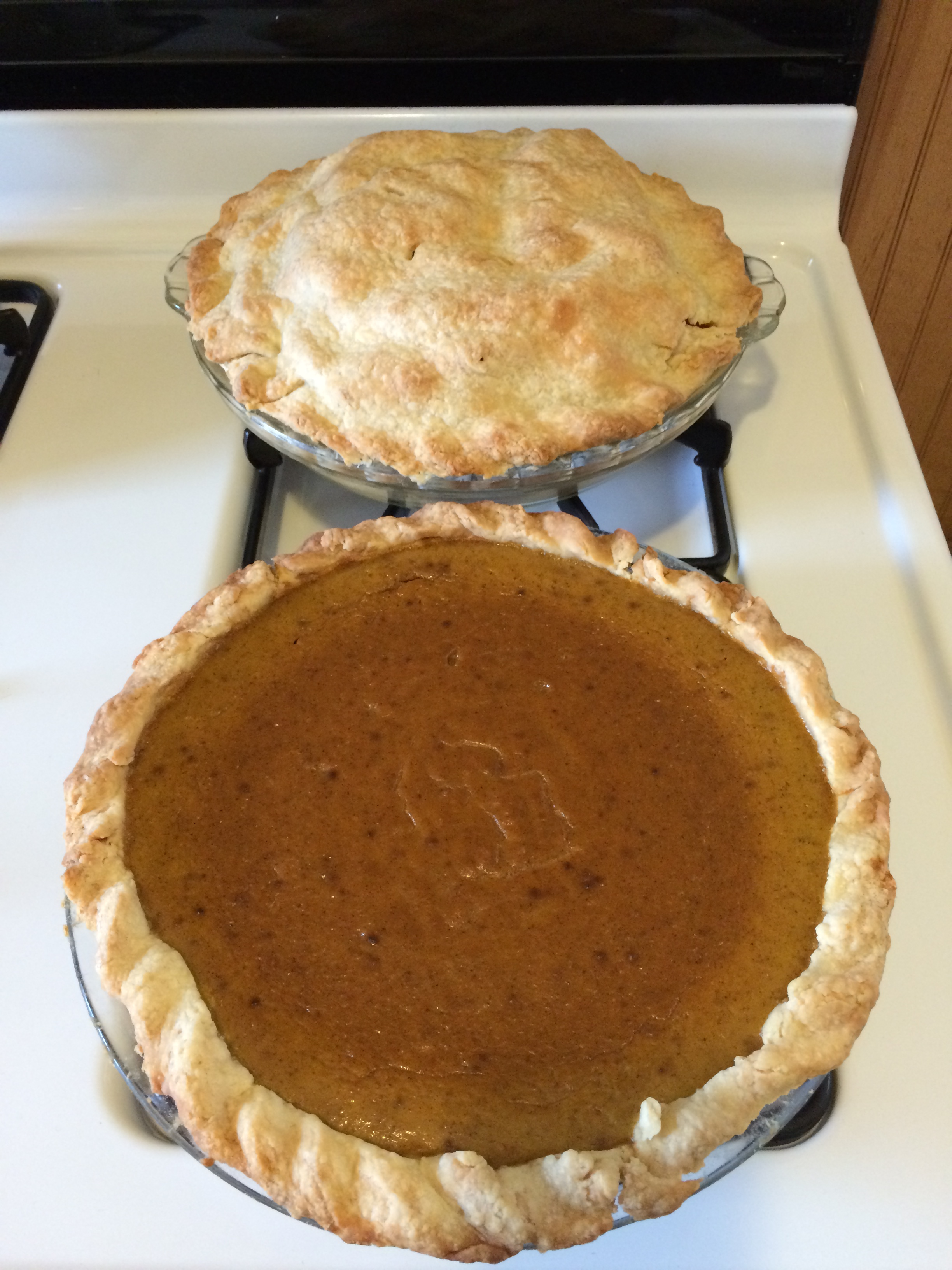
Our contribution to the Thanksgiving meal.

Our contribution to the Thanksgiving meal.

It is interesting that even though I have spent half of my life in the U.S., it is only in the last year or two that I have embraced some American traditions. Well, “some” meaning one: Thanksgiving. It is not a holiday that holds much significance to me as I grew up in Hong Kong. But having a true Yankee as a partner, and my sister and her family living fairly close by, has made it hard to avoid celebrating this occasion. I find it interesting to see what traditions I, and other people who arrive in another country as students and adults, choose to partake in, and which ones we do not. And what guides our choices?

Also, I never had a conventional Thanksgiving because previous Thanksgiving weekends prior to my accident were always spent on climbing trips, or some road-trip or vacation abroad. Work and insufficient vacation time to go to warmer climes; and temperatures that are too cold to rock climb but too warm to ski or for ice to have formed for ice-climbing have made me stay in town and actually do the whole Thanksgiving meal thing. I am trying not to stew too much for the next month or two. I am trying not to lose to much of my climbing gains this past season. The goal is just maintenance, or even just maintenance at a level from where I can bounce back/improve quickly. I am, however, thankful to be able to spend time with my sister’s family who live relatively close by (closer than, say, Hong Kong, Southeast Asia, Europe…). Time with family is precious, and I do not take it for granted.