Wabi-sabi

I recently came across the Japanese concept of Wabi-sabi: “Wabi-sabi is the Japanese idea of embracing the imperfect, of celebrating the worn, the cracked, the patinaed, both as a decorative concept and a spiritual one — it’s an acceptance of the toll that life takes on us all.” (Source here). I like it.

For a long time, I saw myself as this completely damaged person. I thought, who would want to be with someone as broken, physically and, to some extent, mentally, as I am?? It is only in the last year or so, that I’ve finally come to appreciate the burnishing I have, and how this makes me beautiful, rather than disfigures me. I used to be very self-conscious about the long, big scars on my back and hips, especially when I was wearing a swim-suit. Now, I almost take pride in my battle-scars – I have certainly earned them. It is funny when someone will describe a scar of theirs they think is super-gnarly. I just nod and silently think, I’ve got you beat on that one.

My partner used the word “patina” very early on in our relationship; and patina is, well, beautiful. He said, before your accident you were just another pretty, smart, athletic climber chick; but having come through your accident the way you have, makes you remarkable. He says he wishes I could see myself the way he and others see me. Self-perception versus truth has always been something I’ve struggled with, and I know many people do too. I am working on getting better at seeing myself in a more objective light.

Petzl Gear Reviews

Thanks for the schwag, Petzl! I should make it clear that I am not sponsored by any gear company so all of my gear reviews are unbiased and the opinions my own.

Untitled

I’ll start off with my review of the products above I have used. I use a lot of Petzl products; those gear reviews are forthcoming.

Petzl Luna Womens Harness

IMG_0111

While this harness is an attractive teal colour, functionally, it just did not work for me. Because of my dimensions, I always have to get harnesses with adjustable leg-loops. Maybe it is my thunder thighs, maybe it is my small waist. While I have quite a few harnesses, I like them to be fairly versatile in their applications. I asked to try this particular harness because of the adjustable leg loops, and ice-screw clip options (there are two slots for a caritool).

Immediately, I noticed that the two rear gear loops are very small. This isn’t uncommon for me; having a small waist means my gear loops are smaller than some other folks, but these gear loops seemed unusually small. When I wore the harness indoors, I found that when there was tension on my belay loop, the leg loops went straight into my crotch. Despite the padding around the waist, I found the harness to be extremely uncomfortable for me. It might work in an ice-climbing setting, where I am wearing many layers underneath; but I would never wear this harness in a trad or sport climbing situation.

Sirocco Helmet

IMG_0100IMG_0101IMG_0102

Okay, I admit, this is not the most attractive of helmets to wear. But, looking like a circumcised penis not withstanding, this is a pretty awesome helmet. It is incredibly lightweight and comfortable; the straps adjust easily and with minimal buckles; the strap closure system is easy and can be done with one hand; the helmet accommodates even the headlamp show above which has thicker straps. I really can’t think of too many failing of this helmet, except for its appearance.

Petzl Reverso Belay Device

IMG_0098This belay device really excels with thinner double ropes. I found it difficult to use with ropes over 10mm in diameter. As a result, I find my Black Diamond ATC Guide belay device to be my default belay device as it accommodates a wider range of rope diameters. I really don’t want to be dicking around, trying to force a rope through my belay device.

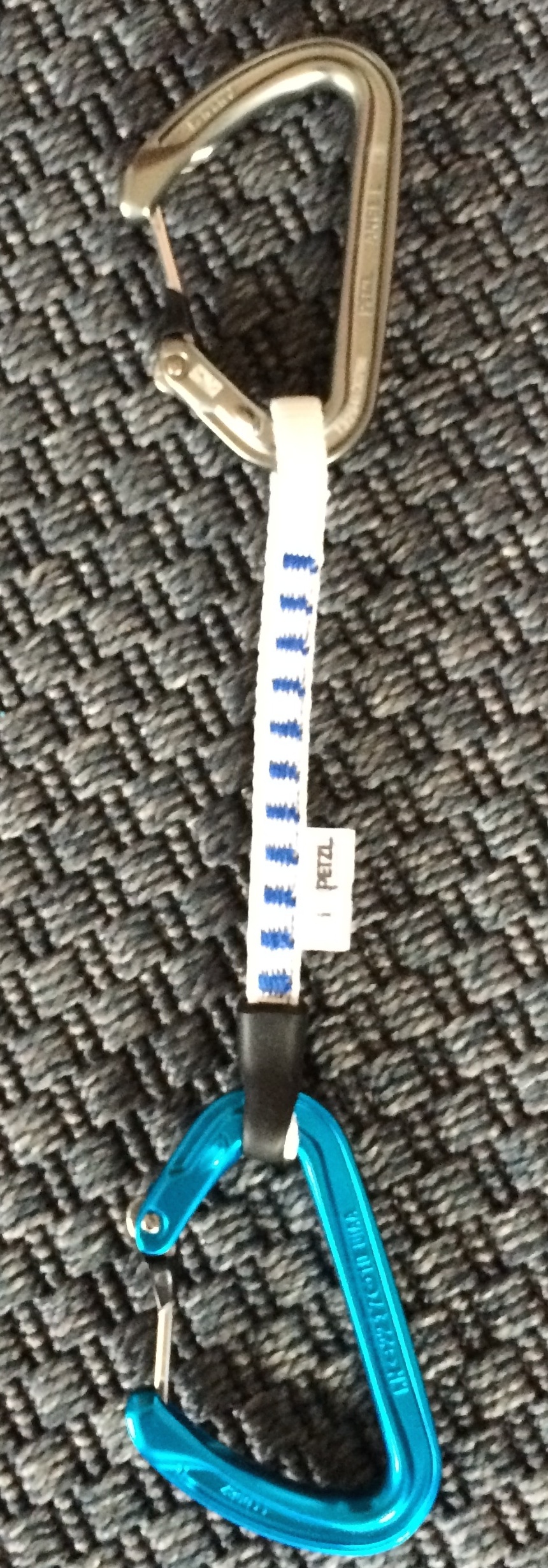
Petzl Ange Finesse Quickdraws

Untitled2

I was a bit skeptical about the unusual gate these quickdraws have, but upon use, found that these quickdraws are the bomb, and especially good in alpine/ice climbing applications. The quickdraws are very light weight, and the gate makes for very easy clipping. I tend to like biners with wider gate openings, so I like the Ange S Quickdraws on top and bottom. The Dyneema sling is lightweight but burly, and I like the rigid attachment to the bottom biner for easier clipping to the rope.


Second day on ski (not skis :)) in my post-accident life

Guess I’m putting the Adaptive in Adaptive Skiing. It was a very cold day in New Hampshire today, but the cold conditions and recent snow fall made for pretty good conditions in the morning, at least (a lot of stuff was scraped up and icy by the afternoon).

I was expecting to have forgotten every thing since my last time (and first time) on a three-track setup, but I seem to have improved a lot, graduating to New England hard icy blue runs! I still do not like icy conditions with 50% less edges than before. But, if I’m going to become a decent skier again, I’m going to have to get accustomed to handling all conditions. And if ice isn’t one of them, well, there won’t be very much skiing to be done around here because that is what New England slopes are known for. One habit I had leftover from learning to ski on straight skis (and never really changing my technique when we all moved over the shaped skis), was hopping/unweighting my legs a lot to initiate turns. So I worked on really carving instead of doing that, and also trying to maintain a more upright (really tilting my pelvis forward) posture but still pressing my shin against my boot.

Unfortunately I did not get any good vids or pics, so these will have to do. You will see that my form isn’t great as I was getting tired and bending at the waist and leaning on my outriggers more (a big no-no, especially on ice). But still, I did a better job of keeping my shoulders facing down the fall line than before and edging pretty well (an artifact of my able-bodied skiing experience, I guess).

That wobble was me hitting an icy patch and recovering from it.

I certainly have a bit more stamina (linking a lot more turns and getting most of the way down runs before getting really tired) than my first day a few weeks ago. But as I am moving faster and dealing with bumpier terrain, I’m feeling it a lot more in my back, since there are less free vertebrae to absorb impact. Left butt (because I don’t have much glute max function, so rely on smaller glute mid which fatigues more easily) and left hip flexors are pretty tired though.

My lessons were taught through a wonderful organization, New England Disabled Sports. It is a real testament to their organization how established and well run the adaptive ski program is, and how they make it financially accessible to almost anyone. The cost of my lesson, equipment rental and access to the mountain was less than the cost of a full day lift-ticket! Still a lot of work to be done and a lot to improve on, but NEDS have got me off on the right foot (*groan*).

First Ice

My first ice-climbing of the season got off to a discouraging start this weekend. Saturday was very cold; I struggled to stay warm in single-digit (Farenheit) temperatures, especially since my extremities tend to get cold with my poor circulation. There was no snow on the ground, so we were tromping about on frozen moss, leaves and lichen, getting leaves stuck in our crampons. Because temperatures had been very low but there had not been much in the way of precipitation/moisture, the ice was super brittle and locked up. I didn’t feel particularly secure with my footing (my right foot) or my tool placements. I really thought, man, maybe this ice-climbing business really isn’t my cup of tea.

IMG_1517

Thin, brittle, shitty ice on Saturday

I was anticipating a pretty shitty day of climbing in the forecasted freezing rain on Sunday. But, the day turned out to be unexpectedly fantastic. The “sn-icing” stopped by early morning and because of the overnight heavy snow and moisture, the ice conditions were fantastic. The approach to the cliff was not trivial for me; breaking tracks in deep snow is really hard for me. The ice was like butter compared to the previous day. Learned a lot about anchor/v-threads (ice-climbers love to bail!). I did my first multi-pitch ice-route and my first lead on ice! I think being methodical and deliberate, and pretty calm, makes me a pretty good ice leader. I think I do a pretty good job of taking the time to find a good stance and placing my ice-screws in solid ice, rather than rushing to shove whatever screw in, wherever. There’s a lot I still need to work on, like getting my feet higher up with each tool placement, rather than just matching tools and trying to yard myself up, although I do have to do that sometimes when a left high step is involved. I think staying warm will be key for me, because I shut down when I’m freezing.

IMG_1534

Love my warmer temperatures and the security of tethers to my tools

Old photos post-accident

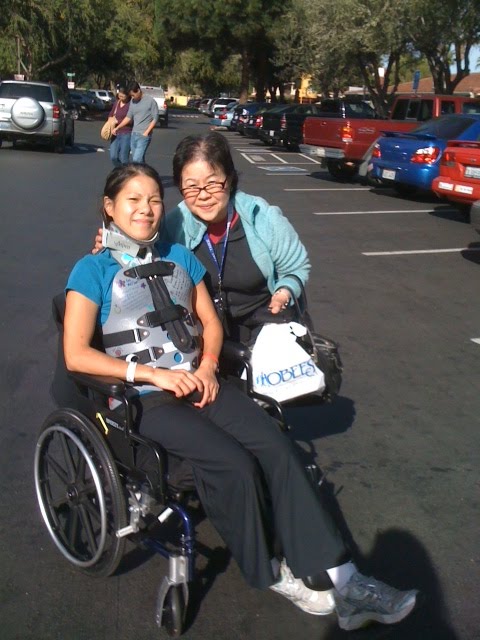
I made the conscious decision not to document myself right after my accident, because I felt like this was a part of my life I would never want to look back on and recall. I regret this decision because it would have been documentation of just how far I have come. So, I only have a few pictures. I found these two, which was my first excursion out of the hospital (acute in-patient rehab), just for lunch. It is funny how looking back, it is still very fresh how this was a really big fuckin’ deal. It took a lot of OT and PT to prepare myself to even handle leaving the confines of a hospital, and all the worries about having and handling a bowel/bladder accident. But the challenge was also largely emotional and mental, where I had to face my deep worries of anticipated self-consciousness and being in a public place where people could see me in this state. I am thankful to have my dear friend, Jen Sager, be there with me, and my mother.

You can see that I got friends to sign my turtle-suit. Eating with the full cervical neck brace was not easy either. I remember being so happy when that thing came off. It was like, wow, I have a neck!

I wore baggy sweatpants exclusively for many months because, with my paralyzed leg, I could not dress myself with any pants that were in the slightest bit form-fitting. Putting on my first pair of jeans quite a few months afterwards felt like such a triumph.


wheelchair

Smiling in this photo, but crying inside.

wheelchair2

Looking noticeably more pissed off with my Mum. She drove me bonkers (and still does) but I still love her.

First Post

(This is a repeat of what is posted under “My Story”, but it gives you some context to my blog).

In October 2010, while sport-climbing at Owens River Gorge near Bishop, CA, I was dropped and fell 140 ft, smashing to the ground. The result was a T-10 incomplete Spinal Cord Injury, shattered pelvis, sacrum, exploded L-vertebrae, a paralyzed left-leg and a lifetime of chronic pain and impaired bowel/bladder function.

Details about my accident can be found here.

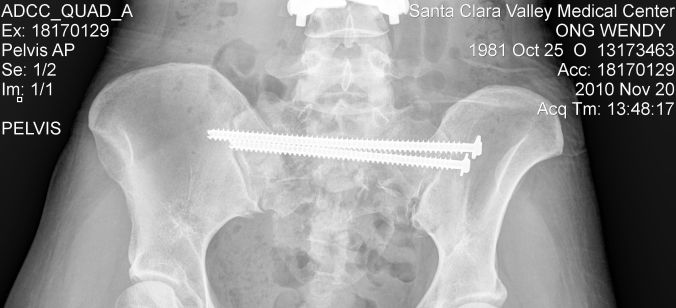
Aside from the vertebral fractures and Spinal Cord damage, my L2 vertebra exploded upon impact, my pelvis broke in multiple places and my sacrum was reduced to a collection of pebbles. The process of piecing back together humpty-dumpty was a long, arduous and very painful one.

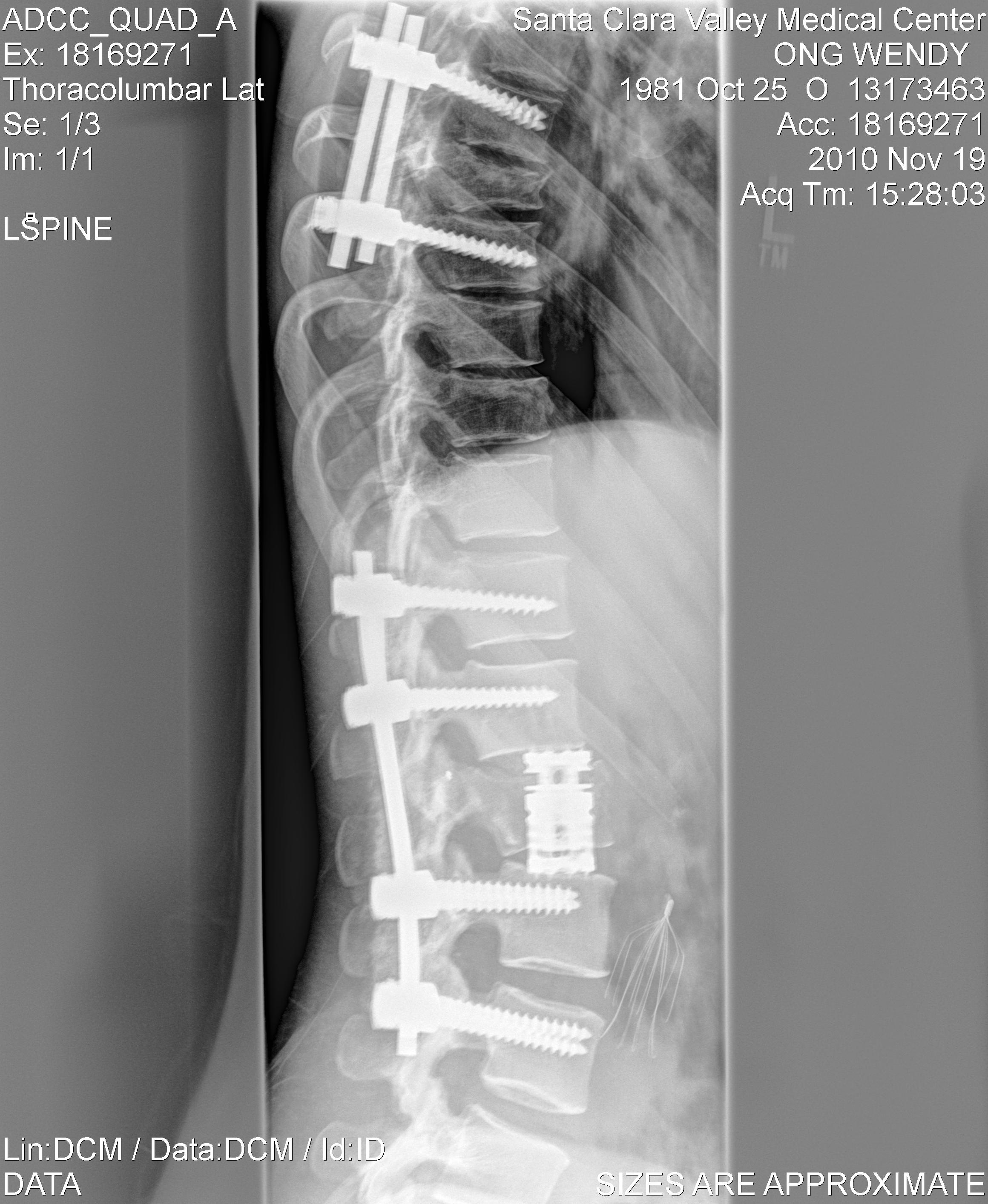
thoracolumbar LAT

You can see I am fused between T12 and L4, with a cage in place of my L2 verebra. I am also fused between T6-T8.
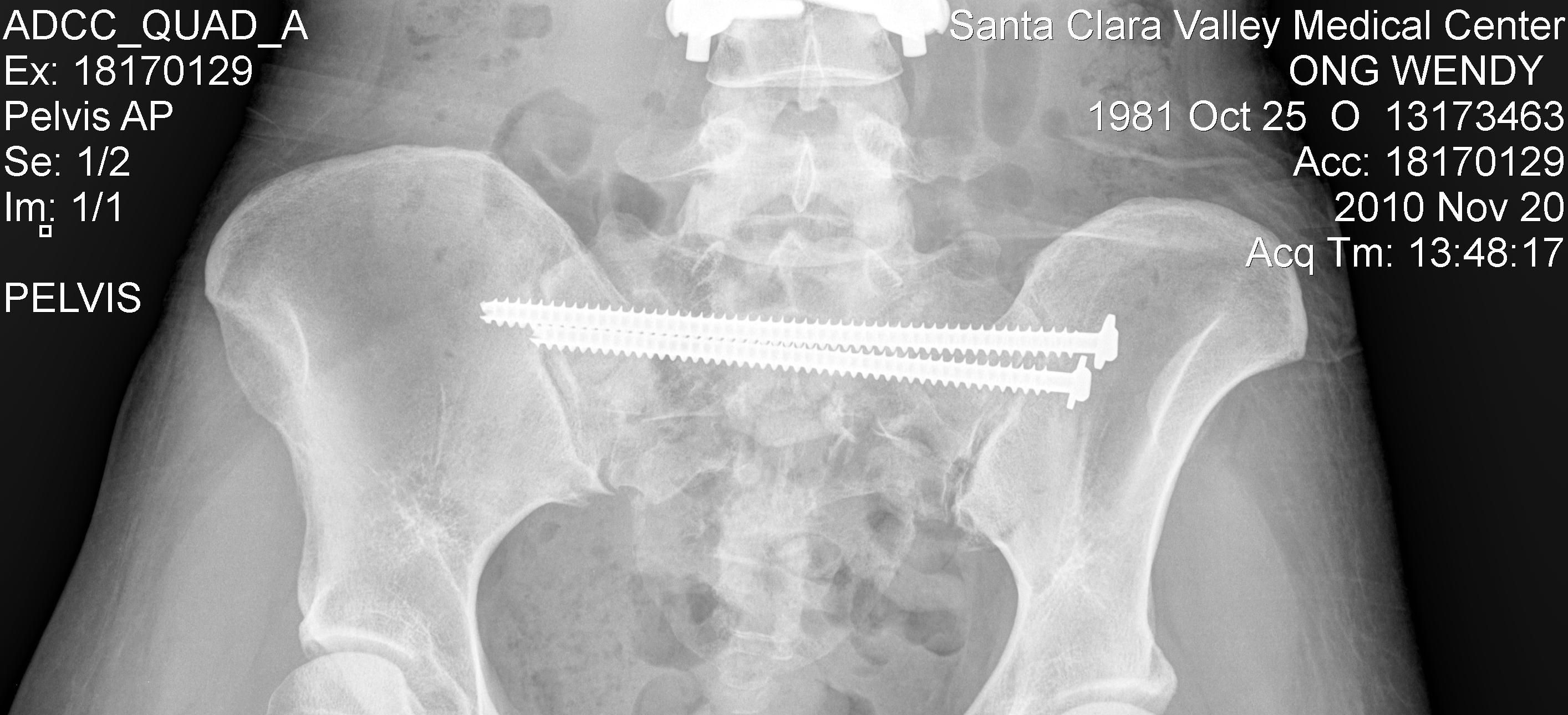
pelvis-AP-cropped

Two fat 15cm surgical steel rods are holding my pelvis together. Pretty hot, eh.

This accident changed my life completely. My identity as a physically strong climber, skier, tennis player, triathlete, cyclist, all-round athlete and mountain woman was ripped away from me. I had been blessed with athletic and other talents, and was used to many things (especially athletic endeavours) coming easily to me. Being strong, capable and independent had always been important things to me from a very young age; and now, I relied on others to help dress me, feed me, bathe me, help me go to the bathroom, and so forth. Being “weak” and dependent was not a position I was used to being in. Even when I did get out of the hospital, and then acute in-patient rehab, and started to learn to be more self-sufficient, I saw no possibility of future happiness. I saw no future where I could not be active. I thought I would never have a romantic relationship or sex because I thought, who would want to be with someone who couldn’t go running with them? Who would want to be with someone so fuckin’ broken. My outlook seemed to bleak that I was driven to trying to kill myself in January 2011, resulting in my one (and only) experience sitting in the back of a police car and an involuntary psychiatric hold over the weekend.

Somehow, I pulled myself up from rock bottom. I put as much effort into maximizing my physical recovery, or at least, the extent that my irreversible injuries would allow. I engaged in multiple rounds of physical therapy, treating it like a full-time job. I returned to work; but soon after, decided that I wanted something good to come out of what was otherwise a horrible thing. I thought I would not be very mobile again, that I would not be able to derive fulfillment from my recreational and athletic pursuits, so my work had to be all-consuming and my life’s work. Naturally, medicine fit the bill rather nicely, especially given my first-hand experiences in the hospital and with rehabilitation. I quit my job, volunteered in Guatemala (I documented my experiences here), moved to Cambridge, Massachusetts to embark on a pre-medical post-bac program, with my eyes firmly set on becoming a doctor.

Sometime in early 2013, I started to climb again, first on ice (because I thought that since I had not climbed on ice even before my accident, it would be easier, mentally and emotionally, for me to not hold myself to a certain standard), in North Conway, NH, then Ouray, CO; then I decided I needed to just go fling myself against rock to see if I could even climb at all; joining a climbing gym came last :) The last part actually has a lot to do with me taking a long time to overcome the self-consciousness I expected to feel, not being able to climb as well as I did before, and feeling self-conscious about climbing in a totally different manner to able-bodied folks.

As I climbed more and got stronger, I realized that I could still derive and enormous amount of satisfaction from my athletic pursuits, and the opportunity cost of studying to be a doctor – time-wise, financially, and vis-a-vis relationships, was just too high. I completed the post-bac program but then devoted the rest of the Spring and Summer to training for Paraclimbing competitions.

My older blogs capture my thoughts at particular stages of my life, all highly relevant and worth remembering. I started this blog because I felt that I had moved to a new epoch in my life, one where I felt strong, capable and comfortable in my own skin. Of course there is still much self-doubt and uncertainty – my accident didn’t change some things about me – but self-doubt and confidence are not mutually exclusive things. I hope to share my upcoming musings, stories, and adventures with you all.